
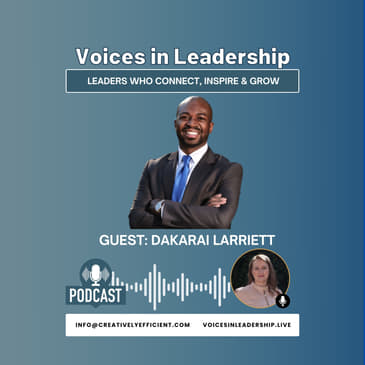
What if your career path led you from corporate success to political activism? Dakari Lariat’s remarkable journey takes center stage in this episode where we explore his transition from a thriving career in supply chain management at giants like L'Oreal and Whirlpool to becoming a voice for marginalized communities in New York. Sparked by a personal encounter with injustice during an arrest, Dakari’s story is a testament to the profound impact of channeling personal experiences into advocacy and action, culminating in his run for senator in Alabama and the publication of his book, "Don't Flush."
Gain insights into the challenges of grassroots campaigning and discover what truly makes a leader effective in both corporate and political arenas. Dakari shares the evolution of his entrepreneurial venture in aromatherapy for dogs into a full-fledged political campaign powered by human connection and the generosity of unsolicited donations. This episode uncovers the strategies behind building a supportive community, leveraging media attention, and the critical importance of leaders who listen and engage with experts.
Moreover, we celebrate the spirit of gratitude as Dakari honors Bill Babishak, a mentor whose fairness and advocacy greatly influenced his leadership style. Through Dakari's experiences, learn the significance of creating a workplace environment that champions justice and excellence. This episode paints a vivid picture of leadership that is deeply rooted in empathy, gratitude, and the relentless pursuit of justice, offering valuable lessons for anyone looking to balance professional success with meaningful community impact.
Keywords
Leadership, Corporate, Entrepreneurship, Political Activism, Injustice, Justice, Equality, Community Service, Inclusivity, Empowerment, Grassroots, Campaign, Support, Donations, Volunteering, Mentorship, Advocacy, Workplace, Empathy, Gratitude, Acknowledgement, Team Building, Excellence
Authentic and Insightful Leadership Conversations
Dr. Angela Buckley has a gift for drawing out meaningful stories and practical lessons from each guest. The conversations feel real, not scripted, and cover everything from decision-making to gratitude in leadership. I always walk away with fresh ideas and a renewed perspective.
Kirk McCarley Podcast
Angela is a stimulative host. She asks thoughtful questions and challenges her guests. This podcast is professionally done and provides the audience practical and applicable insight into effective leadership approaches.
Highly recommend
Dr Buckley is a true voice in leadership. Listening to this interview with her son is a must listen. So relatable! Likeable leadership and the spirit of acknowledgement explained clearly. Well done!
00:03 - Dr. Angela J. Buckley (Host)
Welcome to Voices in Leadership, where leaders who connect, inspire and grow come to share their stories. Live. I'm your host, Dr Angela J Buckley. Join us as we explore authentic leadership, gratitude and the power of connection through powerful conversations with inspiring voices. Let's inspire, uplift and elevate leadership that truly makes a difference together. Well, hello and welcome back to Voices in Leadership. Another episode here Today I have in the studio Dakarai Larriett. I have known him for a few years as a colleague and then watched as he has grown his own business and now is making a run for senator in the state of Alabama Correct.
00:58 - Dakarai Larriett (Guest)
Yes, thank you so much for having me, angela.
01:01 - Dr. Angela J. Buckley (Host)
Zakari, I'm so excited that you agreed to join us on Voices in Leadership. I am really interested in understanding how you have gone from corporate big, big corporate to entrepreneur to now yeah, political activism, and so I'd love to hear your leadership journey and learn a little bit more about how one maybe other people do that, but two, why you are doing it.
01:32 - Dakarai Larriett (Guest)
Well, you know, I'm a born and raised Alabamian and my dad was in the army, so we traveled everywhere all over the world California, oklahoma, washington state, germany, the world, california, oklahoma, washington State, germany and back in Alabama.
01:50
I excelled at school and graduated from University of Alabama, but I couldn't find work in the state and that sent me to New York and that's where I built my career in corporate supply chain, so working for companies like L'Oreal, louis Vuitton, and then later went to work for Whirlpool where we met. But what I really found in my calling was in service, and that was working for Bronx Community Pride Center advocating for homeless and LGBT youth in the South Bronx, and then later went on to join the Harm Reduction Coalition, so fighting the opioid crisis, building capacity coast to coast, and moved back to alabama in the midst of the pandemic, and that was an opportunity to re-engage my community, where I joined the university of alabama alumni association and they are advocated for cost effective, equal access to education. So all along my corporate journey I was always doing the work for the community and even in Whirlpool, for example, I led our Pride ERG Pride Employee Resource Group. So you can do both you can chew gum and walk at the same time.
02:59 - Dr. Angela J. Buckley (Host)
Well, I appreciate the work that you've done, and certainly that is how we first crossed paths, because we weren't at the same site. But running the pride activities from the manufacturing facilities was a different challenge in and of itself.
03:15 - Dakarai Larriett (Guest)
Right.
03:16 - Dr. Angela J. Buckley (Host)
So, but we, we were successful in our area, creating some structure behind having some of these things work and really driving that inclusiveness and letting people have some voice in their own workspace, right, right. So, dakari, please tell me what was the trigger, tell me a little bit about the story for you, and then we're going to ask a few questions just about some of the leadership things that you've experienced along the way, what you're really looking for. But let's start first with the story.
03:54 - Dakarai Larriett (Guest)
Yeah. So I was actually living in Alabama at the time. I was selling my home in Michigan and happened to be up there for a couple of weeks. And happened to be up there for a couple weeks and happened to be also arrested by the Michigan State Police, subjected to seven different sobriety tests and the coal you know what April is like in Michigan, so it's basically winter still and was ultimately jailed and told that I needed to sober up for driving under the influence of drugs, marijuana in particular Was forced to use the restroom publicly in the jailhouse and told don't flush, which became the name of my book, don't Flush.
04:37
And many months later, after fighting and fighting, I received the body and dash cam from that night and realized those troopers were trying to plant drugs in my vehicle. So they wanted a total ruin. And I am still fighting to this day for justice from that night. And I've gone through every step and had multiple meetings with Governor Whitmer's office, with my local legislator, Joey Andrews. I even attempted to file a police report against the police and truly every branch of government bailed me. So I finally decided I need to position myself in a way that I can write the laws and administer justice and prevent this type of thing from happening to anyone else, and that was the start of my campaign for US Senate.
05:24 - Dr. Angela J. Buckley (Host)
So you were already planning the move to Alabama. When that happened. You were just in the process of selling.
05:31 - Dakarai Larriett (Guest)
I was already living in Alabama. Oh, I had sold the house and we just had a kind of protracted close date.
05:39 - Dr. Angela J. Buckley (Host)
I got you, got you. I remember something about the house, because I think the triathlon ran right past it.
05:48 - Dakarai Larriett (Guest)
I feel like I've run past your house in my life on some of the race courses up there. Right on the marina, exactly, yep.
05:56 - Dr. Angela J. Buckley (Host)
Yep. So okay, I'm sure that that's very traumatic and I did hear and view some of the videos that came out, in particular some of the dash cam, body cam, and it's troubling, it's trouble there, I don't know any other word to say. Right, and so where was the resolve? And then also, where do you find resources to make that kind of a shift?
06:25 - Dakarai Larriett (Guest)
The result was just seeing how broken the system was and the lack of due process, and we're seeing that now with the ICE raids, and I know what that feels like. And imagine you're completely innocent and you're just seeing a complete loss of autonomy and control. And again, every single branch of government failed me. In fact, when we finally got the body and dash cam, we sent that over to the judge and the police sent their version of the cam over to the judge as well and essentially judge as well, and essentially that was spun to present me as being in the wrong. In fact, I was accused of being suspicious for driving at 3 am and all of the interactions that we thought were very clearly discriminatory and illegal were ignored. It was just so infuriating were ignored. It was just so infuriating.
07:24
And I just realized, as I started to speak to other folks, for example in Michigan, I learned that there are people stuck in these jailhouses for weeks and months because they don't have money to pay a bond. That's horrible and they lose their job and then they lose their car. So there are people really suffering and I decided that with my ability and resources I would have to fight and, you know, use those resources to prevent others from suffering, and that was really it. So, in terms of supporting the fight in the campaign, I'm largely self-funding and fundraising about half and half at this point and then as we get closer to the election we'll expect a surge, but we're getting a great amount of support from California in particular and communities that really see themselves in my story fantastic.
08:29 - Dr. Angela J. Buckley (Host)
I'm glad to hear that you're getting that support. What do you do to build that community and go out and create that? Because I think about this from the entrepreneurial perspective as well right, like you really, at least from my perception. It's always interesting look from the outside, looking in. But when you started your aromatherapy care line for the dogs, it felt from the outside that you just went straight up the ladder Like it was very, very, very successful very quickly and you built a community around that. How do you translate that kind of success into the grassroots community building that you need for a political race?
09:14 - Dakarai Larriett (Guest)
Yes, it starts from human interaction and so a typical day like today, I have three media appearances, then I'm going to drive like two hours upstate and meet some folks in Decatur and meet some folks in Decatur, alabama, and talk about what we want to do for them. So it starts small and then it balloons and reality is I started the campaign very early, knowing that this is my very first time running. So I started about a year and a half out. We're now at the one-year mark. Even at the one-year mark, even at the one-year mark, only politicals really care about an election.
09:53
People really will get engaged in the spring and, uh, it's kind of an uphill battle to get people to come out in the winter to talk about an election. That's next year. But you have to do it right so it'll bill organically. And we, as I, are really driving this conversation through the media. We're getting national media attention and it's starting to create a number of unsolicited donations. So folks are reading about the campaign, they're getting excited and you know, you get a $1,000 donation. You're like I have no idea where this came from, right, you know, I've never spoken to this person before, so we'll see more and more of that as we get closer to the primary.
10:37 - Dr. Angela J. Buckley (Host)
So if people are looking to support you, they can go and do that at your website. Is that correct?
10:44 - Dakarai Larriett (Guest)
Yes, so Dakarilariatcom and we are looking for donations, we're looking for volunteers. In fact, we'll be doing phone banking, probably January to February kickoff, and you can do that from anywhere. So we have software that you can. You know, cloud-based, web-based software where you can dial in and speak to folks and get them excited about coming out to vote.
11:08 - Dr. Angela J. Buckley (Host)
Okay, so for those of you who are watching, you can see that website scrolling across the bottom of the ticker, and we will also make sure that those comments are in the show notes as well as on all the comments where we find them on LinkedIn, facebook and YouTube. So always willing to help build that community as well. So, but talk to me a little bit about vision, about creating the message. How does this, how do we see the crossover between the leadership that you practice as a corporate person and now into the leadership of pulling out the masses? It's a little bit different and yet some of those skills definitely have to carry over.
12:02 - Dakarai Larriett (Guest)
They're so interrelated. In fact, just starting the process, sourcing vendors that's actually what I've done corporately for about 20 years and helping to build a team that wins and empowering people. So that was the first part is building that initial set of folks on the team. And then you know I'm a leader who wants to listen to people and surround myself with experts. So, similarly, we started with this video that said we need leaders who listen, and that's what we did.
12:42
We did a poll. We did a poll of hundreds of Alabamians and asked them what they care about. So, versus you see a lot of folks that come out and say these are my policy positions. So the first couple of months people were asking me well, what are your priorities? I said, well, my priority is to listen and figure out what matters to you. So it took a couple months. We spent the first couple months really just introducing me to the community and finally, once we got the results back, it was clear Alabamians care about kitchen table issues. It's economic opportunity, healthcare and education. And that's what we're doing. We're building out these very detailed proposals that you can lift and turn into policy and bills right away.
13:29 - Dr. Angela J. Buckley (Host)
Certainly all of the conversations running around, I'm going to say his name wrong New York Mayor.
13:38 - Dakarai Larriett (Guest)
Oh Mondani.
13:39 - Dr. Angela J. Buckley (Host)
Mondani has been his success in articulating the needs of the kitchen table conversations.
13:49 - Dakarai Larriett (Guest)
Yeah.
13:49 - Dr. Angela J. Buckley (Host)
And his willingness to go out and conduct those listening sessions with people in different perspectives. So, and he ran an incredibly successful campaign. Like you want to talk about I'm weak here, like he, and he reassessed like, just talk good business, good business acumen right, I'm weak here. I measured it. I see that I'm weak. I'm going toumen. Right, I'm weak here. I measured it. I see that I'm weak. I'm going to go fix that. I'm weak here. I'm going to go fix that. I'm strong here. I will maintain Try not to lose while I'm working. He did a great job of analytics, pivoting and responding.
14:25 - Dakarai Larriett (Guest)
Yes, people turned out.
14:28 - Dr. Angela J. Buckley (Host)
People. Yeah, it was an impressive campaign to watch, just as from a business perspective, right Like watching what leadership truly looks like pivoting, adjusting, listening and delivering a clear statement that people can follow.
14:46 - Dakarai Larriett (Guest)
Yes, yes, and we talked a little bit earlier about social media presence and things like that.
15:09
Remember at this point the one-year mark. I think he was at 3% to 5% of the vote, complete underdog and in hindsight I do, he was and that's how it starts. That is literally how it starts and it was interesting. Just a couple of weeks ago I went to a democratic event and people were recognizing me in the crowd and just networking. So that's how it starts and we're going to keep working and we have a lot of time to go.
15:31 - Dr. Angela J. Buckley (Host)
Okay, and so you said you're doing about three events per day. How are you keeping up with your business?
15:39 - Dakarai Larriett (Guest)
Who's running?
15:39 - Dr. Angela J. Buckley (Host)
the business in the background.
15:41 - Dakarai Larriett (Guest)
Yeah, so actually I hired a team last year anticipating this to manage the day to day. So there's a sales and marketing team and they're all over the world so like Tennessee, england and Philippines, so they manage the day to day sales and marketing. And then my distribution center and my factory are in Ohio. So we've always been a domestically based company, which keeps us agile.
16:12 - Dr. Angela J. Buckley (Host)
Well, let me know if you need any support there out of Ohio.
16:17 - Dakarai Larriett (Guest)
Yes.
16:18 - Dr. Angela J. Buckley (Host)
One of the things that I do. Yeah, we're not too far away. So well, excellent. I'm glad to hear that you've managed to like find that balance for yourself. So let's talk a little bit about your leadership skills and leadership model. What formed you Like what? Just looking at your academics, you have leadership experience. You have leadership training. What are the leadership models that you buy into and that you practice day to day?
16:56 - Dakarai Larriett (Guest)
Well, I would say it's really about empowering my people. I think a lot of people would call it leading from behind, you know. It's really making sure that they have all the skills, um, all of the resources and support to be excellent and that they're empowered, but, at the same time, strongly believe in frequent check-ins to make sure that we're not getting off course. So, um, in some roles I've had daily standing meetings, particularly when working remote my team now we largely check in weekly and we do a lot of checklists and ensure that we know what the goals are and that we're talking about them and that we're making progress towards them. And then, finally, not being afraid of making a course correction when needed, and that includes termination. So when things are off track and individuals do not have the capacity or ability to execute, making those tough decisions quickly so that we can move forward.
18:19 - Dr. Angela J. Buckley (Host)
So I hear elements of servant leadership in there. When I hear empowerment, then that also means making sure that they have the skills, the training and the support that's necessary to make those decisions, but then also the accountability associated with your day-to-day, week-to-week check-ins.
18:38 - Dakarai Larriett (Guest)
Yes, exactly.
18:40 - Dr. Angela J. Buckley (Host)
You kind of are putting maybe a system together around that in order to make that work. Does that sound?
18:49 - Dakarai Larriett (Guest)
pretty, yes, I think. So you know, um, I think we both kind of have like the academic business training, but some of it is just you know what works and um, what you've experienced in decades of uh, work in corporate america, in entrepreneurship, so I would say it's informed by in entrepreneurship. So I would say it's informed by some very pragmatic, disciplined models that I've learned about and, ultimately, what works, what works for people.
19:20 - Dr. Angela J. Buckley (Host)
What works for people. So tell me a little bit about a morning stand-up meeting. What would that look like? What are people? Let's do this when you start in a new location. What does that morning stand up look like? And then what does that morning stand up look like three months in. Are those the same meetings?
19:43 - Dakarai Larriett (Guest)
No, they should evolve. They really should evolve and I give myself personally a couple months really to learn people, learn their strengths, learn the business and with a demonstrated success, that's when you can start to step away from the detail and empower the individuals even more. But initially it really is very tight. It's understanding the very specifics and one of the things I really like to do is to learn every role. It's not to micromanage, but it's to be empathetic. So sit with the analyst, sit with the manager, go through their day, go through their screens, and that's always very eye-opening. You learn about pain points that they've just been able to live with for years, and oftentimes they'll say you know what? No one ever sat with me and no one ever cared to actually try to fix this issue. I've been working around for years.
20:47 - Dr. Angela J. Buckley (Host)
I hear that often. So tell me then what does it look like three months in? What does that meeting look like? Who's leading the meeting three months in, after you've started?
21:16 - Dakarai Larriett (Guest)
understanding we may become less frequent in terms of how we meet. So I kind of think back to my time at Whirlpool in the midst of the pandemic. When I got there would have been 2020. We were meeting I want to say weekly so each touch point, each touch base was weekly. As we got in person, we had those kind of hallway interactions and we had already built the trust and the relationship. We moved those to bimonthly, bimonthly meetings, bi-monthly, bi-monthly meetings, but then we still had our team group meetings at least once a week. So I think that happens a lot as the relationship matures and what you're allowing individuals to take and run with so the scoping projects, things of that nature it becomes less task-oriented and much more project-oriented and delivering those milestones. That's what I normally see as the relationship and maturity grow.
22:21 - Dr. Angela J. Buckley (Host)
Okay, and so now, as you're running campaign, you have are many people that are running on the campaign. Are they volunteers still at this point?
22:31 - Dakarai Larriett (Guest)
We're actually building the volunteer network, so we're recruiting volunteers. So right now it is it's lean, so we have a general consultant, we have a web team, seo team and I mentioned a little bit earlier, we're bringing on talent for social media. Again, it's need-based right, so as it matures you start to add on different layers. Fundraising that's really what the operation is in the first part is asking for money, so that was really the first hire after general consultant. So yeah, that's how it works, but we are recruiting volunteers and then we'll start to activate them around January, february.
23:20 - Dr. Angela J. Buckley (Host)
Okay. So the reason I was asking was what does it look like for stand-up meetings? What does it look for that kind of communication that's going out? You have someone that's managing part of that for you. I just imagine that your day is very full.
23:50 - Dakarai Larriett (Guest)
So right now, like I said, it's really about fundraising. So fundraising communications the person that's coming on board to help us with social media will start to add some input into that as well. But the fundraising team is pretty autonomous right now by themselves. So largely it's me meeting with these individuals or with the general consultant or the general consultant giving them direction and then, as we expand and really move into the spring, that's when you'll start having those layers and then my time will really be focused on fundraising and appearances. But right now I'm kind of all over the place.
24:28 - Dr. Angela J. Buckley (Host)
Well, I mean, it's an interesting, it's a small business model as an entrepreneur you're like. I have 25 hats today and my goal is to get down to 10 hats and eventually two or three hats as a CEO, but in the meantime, my table has a lot of hats on it.
24:47 - Dakarai Larriett (Guest)
Yes, and it's a good way to learn and be able to give guidance when you've done something at least once or twice. So I really appreciate that opportunity of writing the fundraising email and at some point handing that off to a team that writes it and they do, you know, a million times better than I do.
25:08 - Dr. Angela J. Buckley (Host)
Yes, million times better than I do. Yes, I was just engaged with another entrepreneur and I use really big words. I like big words. They come to me naturally and they are not good words for copyright and I know this.
25:21
I know this and I often am told that there's jargon in my conversation and I'm like these are literally the words I use, like I'm not using them to be big, I just like these words and they come to me naturally, and many people don't perceive that to be accessible, right. So I am. I am fully aware that. Here's my content and I would like to make it warmer. Someone, please use. Here's my content and I would like to make it warmer. Someone please use warmer.
25:52 - Dakarai Larriett (Guest)
And there's so many tools now too that campaigns would not have had five years ago. So AI can help you. You still have to provide, like the warmth and customization, but AI can do quite a bit to help you with crafting messages and you can literally say dial up the warmth or make it more legal, things like that.
26:13 - Dr. Angela J. Buckley (Host)
Yep, but the context, the human context cannot be replaced, right? So I?
26:20 - Dakarai Larriett (Guest)
think it's interesting. We'll see.
26:25 - Dr. Angela J. Buckley (Host)
Well, I mean, I am appreciative of AI, but I don't think that AI will replace humans.
26:33 - Dakarai Larriett (Guest)
Yeah.
26:35 - Dr. Angela J. Buckley (Host)
That's not going to be a thing. So we'll see how it all ends up working out. But yeah, well, unless it could, it could do all like really heavy lifting and we can all go play in the fields. Let's go hiking, biking and camping, but AI isn't going to harvest for us either. So we'll see. So listen, dak Takari, what would you like to share with the people right now?
27:06 - Dakarai Larriett (Guest)
Well, I think this journey has taught me how we use all of our experiences in life and how they're so interconnected. So I think about my first jobs and how they propelled me into executive roles, and now running a national campaign because we're going on the road to DC to start raising money in New York City. So you just never know where you're going to land and how you can take from each experience. So I say, cherish those experiences. You may not love the role you're in that moment, but use it to build for the next one, use it to bill for the next one.
27:51 - Dr. Angela J. Buckley (Host)
I love that. I love that for you and watching this growth of you know leadership skills, applying them in a way that is helpful to the community and also meaningful for you. So it'll be exciting to watch that. Dakari, we have now reached the point in the program where we talk about gratitude.
28:14 - Dakarai Larriett (Guest)
Oh.
28:15 - Dr. Angela J. Buckley (Host)
And so one of the things that we do at the end of each one of our episodes is acknowledge a person who has helped you on your leadership journey, and we walk through the process of acknowledgement. It's called the process of acknowledgement, it's called the spirit of acknowledgement. So who would you like to call out as a support role, person who's done some specific things to help you in your life?
28:41
Okay Now by support role, tell me a little bit more about that it can be retrospective a teacher or somebody that really was pivotal to you, or it can be a person who, day to day, is supporting you and your career, political aspirations. And what we're going to walk through is the spirit, and so the spirit stands for, specifically, what are they doing for you? Yes, making it personal. So we're going to ask what it costs them in energy. Well, how does it reflect back on their character, et cetera? Okay, it's going to have an impact.
29:23
So really, we're going to ask in the I portion there on impact, what are the metrics that those activities have influenced? And then the R stands for relevance, and relevance is really referring back to the values, so the values of your campaign, or the values that you hold dear to your life, or the values that you espouse in your aromatherapy, care for the dogs. And then the other I is inclusive, so that means making it public, which, by default, it is right now and T is timely, right. So you can make this a retrospective, as many people do when they're here on the show. But if you use this as a formula in your day-to-day with working with your teams, you can really use this as a formula in your day to day with working with your teams. You can really use this as a powerful feedback loop for teams, right? So that's the spirit we can walk.
30:19
So I gave you kind of a quick overview, but I'll get it to you question by question. You sort of answer the questions and at the end I summarize that for you and kind of hand that back to you. Okay, Okay.
30:33
All right, so we'll go back to the original question. Who would you like to acknowledge?
30:41 - Dakarai Larriett (Guest)
I am going to acknowledge Bill Babishak, and he was an executive when I worked at Elizabeth Arden At Elizabeth.
30:49 - Dr. Angela J. Buckley (Host)
Arden, Elizabeth Arden.
30:51 - Dakarai Larriett (Guest)
Elizabeth Arden.
30:52 - Dr. Angela J. Buckley (Host)
Oh, Elizabeth Arden, Sorry, wow, that did not come out right, okay, nice, Bill Barbashak. Yes, right, got it Okay. And what did Bill do for you specifically?
31:06 - Dakarai Larriett (Guest)
So I believe that Bill was always an advocate for fairness and was a very level-headed and respectable leader at a very difficult time and very stressful time for the company.
31:29 - Dr. Angela J. Buckley (Host)
Okay, and how did he?
31:30 - Dakarai Larriett (Guest)
specifically influence your career then Well, when I think about Bill, it's in the moment it's. He was an advocate, so when I needed help in dealing with difficult political situations, he was willing to step in and to look at the situation fairly. And then, even after that role, years later and roles later, he was willing to offer recommendations to secure one of my early executive roles.
32:08 - Dr. Angela J. Buckley (Host)
Okay, and what did that cost him, or what did that reflect back on his character?
32:18 - Dakarai Larriett (Guest)
In terms of cost time just a little bit of time, okay and in terms of his character, I think that it's a selflessness, I think it's a respect that he conveyed and an appreciation for the service that I put in as a member of his team.
32:41 - Dr. Angela J. Buckley (Host)
Okay, and then? How did that impact your career? How did that impact?
32:49 - Dakarai Larriett (Guest)
your career. It secured some significant roles for me then, and then those became the baseline for other roles that came after, and I think he also, as I mentioned before, was able to guide me in some very difficult political situations where I didn't feel that I was being treated fairly, and I think that he was able to administer justice in those situations, something that, you know, I frankly can't even get our political leaders to do with evidence.
33:42 - Dr. Angela J. Buckley (Host)
Okay, and then so.
33:42 - Dakarai Larriett (Guest)
I and then R, and how does, how did or how do his actions reflect back on what your current values are? Wow, 10 years since I worked for him. I just think of his example, both in the workplace, as a family man. No matter what, if you forget the specifics over a course of 10 years, remember how you feel right, how you felt working for him. So that's something that I keep in mind when I think about my team, building my team and how I interact with them, that I want to replicate that feeling of excellence.
34:22 - Dr. Angela J. Buckley (Host)
OK, that's the first time you said that word, but it, but I like it. And then the I and the T at the end of spirit are inclusive and timely, so little less applicable for right now. So do you mind if I give a stab at wrapping all of that up?
34:42 - Dakarai Larriett (Guest)
Yeah please.
34:44 - Dr. Angela J. Buckley (Host)
Okay, bill, I'm here with Dakarai Larriett today and we would like to thank you for the support that you provided him during his time at Elizabeth Arden. You created a fair workplace that also reflected back on your character of sharing excellence and wanting to be an advocate for the people on your team. By doing so, you helped Dakarai's career and in some critical, pivotal roles, which then became the foundation for future roles. But this importance, the relevance that you have had, is not just in advocating for the roles for him, but you have provided an ongoing role model that he thinks of and carries with him, as he is a leader in his workplace and now in his political advocacy himself, and so thank you for being a role model who shines a light on justice, on fairness and advocacy that leads to excellence in the community. So thank you for your support. Does that summarize it? Did I get?
36:09 - Dakarai Larriett (Guest)
I don't feel like I got emotion maybe, or something no, that was excellent.
36:15 - Dr. Angela J. Buckley (Host)
I've never quite vocalized it that way so it's, it's powerful to try to tie the specifics into that, the the character that they are as well, right? So yeah, we're trying trying to really turn Q1 feedback instead of Q4 feedback, right? Like, how do we, how do we build on that throughout the year?
36:40 - Dakarai Larriett (Guest)
Yes.
36:41 - Dr. Angela J. Buckley (Host)
Instead of the missed goals feedback that we get at the end of the year, right, right. So, um Dakari, what are next steps? How can people get ahold of you? Um, you have a book out. How do they get ahold of the book?
36:57 - Dakarai Larriett (Guest)
So everything is at DakaraiLarriett.com, so click on publications for the book, and we're also again looking for donors as well as volunteers, so click, get involved, learn more about how you can help the campaign from anywhere in the United States. And this campaign is real, about those kitchen table issues that matter to all of us. It's about education, healthcare and the economy and giving everyone a fair chance.
37:22 - Dr. Angela J. Buckley (Host)
Well, thank you so much for joining us today. Thank you for sharing your leadership journey and also your vision for the future. Excited to see what next steps look like for you.
37:33 - Dakarai Larriett (Guest)
Well, thank you so much, Angela, and thank you for everything you do in this opportunity.
37:37 - Dr. Angela J. Buckley (Host)
My pleasure. So this is Angela Buckley. We will be signing off and until next time, do good. Thank you for joining us on Voices in Leadership, where leaders who connect, inspire and grow share their stories. I look forward to welcoming you back to our next conversation. In the meantime, visit www.voicesinleadership.live to access show notes, links, and to subscribe and stay connected. And in the spirit of gratitude, let's remember to thank one person near you Until next time. This is Dr. Angela J Buckley signing off.