
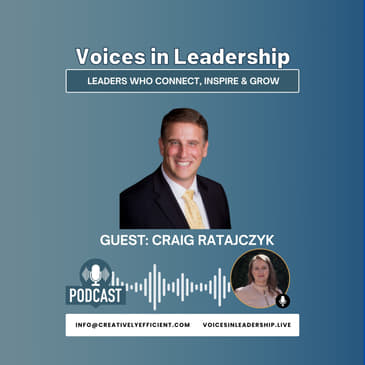


Can strategic military insight transform the agricultural industry? Join us for a compelling conversation with Craig Ratajkic, a visionary leader whose journey from naval intelligence commander to CEO of CropOne Holdings offers a unique perspective on agribusiness innovation. Craig reveals how his deep-rooted farming heritage and strategic acumen are reshaping the future of sustainable agriculture. Learn about the challenges and breakthroughs in indoor vertical farming, and how precision agriculture is paving the way for more efficient and resilient food systems.
Explore the dynamic interplay between technology and traditional agriculture as we confront the pressing issue of inefficiencies within the agricultural sector. Craig introduces us to "Agri," an AI advisor poised to revolutionize farm operations by reducing waste and optimizing productivity. Discover the potential of farmer cohorts, where resource-sharing and community collaboration can bridge the gap between individual farmers and large agribusinesses, fostering innovation and resilience in an ever-evolving agricultural landscape.
Craig’s inspiring story is a testament to the power of hard work, leadership values, and sustainable practices. Discover how integrating solar panels with traditional farming can enhance profitability while maintaining environmental integrity. As Craig reflects on his father's legacy of resilience and community, we gain invaluable insights into the importance of teamwork and compassion in both personal and professional spheres. This episode is a masterclass in strategic thinking and agricultural innovation, offering listeners a roadmap to a more sustainable and prosperous future in farming.
00:03 - Dr. Angela J. Buckley (Host)
Welcome to Voices in Leadership, where leaders who connect, inspire and grow come to share their stories live. I'm your host, dr Angela J Buckley. Join us as we explore authentic leadership, gratitude and the power of connection through powerful conversations with inspiring voices. Let's inspire, uplift and elevate leadership that truly makes a difference together. Hello, welcome to today's episode of Voices in Leadership. Today I have a maybe a new friend growing relationship here with Craig Ratajkic. We've known each other for a few months and it has been interesting to hear his leadership journey, get to know how he is pivoting within the agricultural sector and, of course, he's been in the Midwest a little bit. If you look at his bio, there's been a few episodes of soybeans in Midwest, so it speaks to my heart. So welcome, craig. Thank you so much for joining us today. I really appreciate that you're here.
01:13 - Craig Ratajczyk (Guest)
No same thing, Angela. I appreciate the opportunity and thank you for your time and everybody else's time.
01:19 - Dr. Angela J. Buckley (Host)
So, craig, before we kick off, I have to do my due diligence here and read out your bio. So that means you get to kind of smile and enjoy the experience, ok? So Craig Ratajkic is an experienced agribusiness executive board advisor and founder of AgriProai. That's an agentic AI powered advisory advisory platform designed to deliver enterprise-level, real-time insights for agricultural producers. He brings more than two decades of global leadership in agricultural sustainability and strategic innovation. Craig has most recently served as the Chief Executive Officer of CropOne Holdings, a leading technology-driven indoor vertical farming company committed to meeting the global demand for fresh, local and safe food through sustainable production. Prior to that, he was the CEO of the Illinois Soybean Association, where he led a $40 million organization representing 43,000 soybean farmers and 200 employees. Under his leadership, the ISA increased operational efficiency, deployed advanced technologies and aligned strategic initiatives with the United Nations Sustainable Development Goals. Earlier in his career, craig served as the Director of Global Issues and Alliances for the US Soybean Export Council and as Division Director for the American Soybean Association. He oversaw operations across the Western Hemisphere, europe, africa and the Middle East.
02:52
A retired US Navy intelligence commander, craig served with distinction for over 28 years. He held a BA from Southern Illinois University, an MBA from the Thunderbird School of Global Management, and he is a graduate of the Harvard Business School Advanced Management Program. Craig, I love reading your bio. It's fantastic. Thank you for joining.
03:14 - Craig Ratajczyk (Guest)
No, it's kind of embarrassing that people talk about this, right, I mean, that's just. I don't like hearing about myself.
03:23 - Dr. Angela J. Buckley (Host)
But incredibly active, and thank you so much for being here and doing that.
03:32 - Craig Ratajczyk (Guest)
All is well, I'm ready.
03:34 - Dr. Angela J. Buckley (Host)
Okay, ready, ready for all the good stuff now.
03:37 - Craig Ratajczyk (Guest)
Yes, ma'am.
03:38 - Dr. Angela J. Buckley (Host)
Craig, how did you get started? How did you make a jump from naval intelligence to agribusiness?
03:47 - Craig Ratajczyk (Guest)
Well, I'm a fifth generation farmer. That's where it really started. My father was a coal miner at nighttime and a farmer during the daytime, and his father before him was a farmer and so forth and so forth. But so it's always been in my DNA agriculture. So, as in the military, I tried to get out of that Back in the 80s. Agriculture was not a great place to be. Try to pivot into the Navy intelligence community, but on an active side, but also in the tri-graph type enterprises in Washington DC. But that did come to fruition. So agriculture was a good way to pivot into, or a good could initially pivot into back in the mid-90s and I did both concurrently, which was really a great place to be because one gave me a very broad strategic perspective on global geopolitical issues, military issues, supply chain issues, food security issues. At the same time I was on the food security side, trying to make sure people had food on the tables and families had a future for themselves. So it's a very complementary. I see enterprises going together.
04:53 - Dr. Angela J. Buckley (Host)
So when I was working at General Motors, I had quite a few of those employees that were doing foundry and farming at the same time, and since then I have learned that harvesting after sundown is actually far more inefficient. Now that we have equipment that measures yield, you can actually see the yield drop off, the collection yield drop off once the sun goes down and the humidity changes. Right. Where are you in? You talking about innovation and technology? I'm not that familiar. I do know a bit about like. We also are family farmers, but it's been a generation or two since we've really been directly involved. So can you tell me some of that evolution?
05:45 - Craig Ratajczyk (Guest)
Yeah, it's interesting how that's going. That's what I took the helm at problem holdings. Indo vertical farming is at the epitome of precision agriculture, where you're also, you're frankly, just replacing Mother Nature. And that does come with a cost and that's why so many people out there have seen the demise of that particular industry in most geographies on the planet. It's just a high cost between the electricity Electricity is the high capex driver, opex driver for the enterprise and that extra cost for lettuces and leaves and greens and these kind of things. Consumers are just not willing to bear that any additional cost in those type of realms. But nevertheless, high tech, you controlled every, every bit of the flow of water, air, any kind of other seed distribution, light, humidity, you controlled it all. But, like I said, the cost was a major, major impediment for the development of that industry.
06:38
Backtrack into the row crop and it's trying to get there. It's a challenge. Mother nature, she changes on a day-to-day basis and you try and predict what's going to happen in that space is going to be almost impossible. But you can find, as you know, uh, generalities on ways to navigate certain things right time to harvest, right time to spray, right time to plant, right seeds and plants, for your soil type for, for your geographic space in your marketplace and a lot of other factors. Algorithms are out there to help a producer really become highly efficient in this space.
07:14
So technology has really I don't know it's developed over the last 5,000 years. The last 50 years have been some pretty phenomenal trends and things. The next 10 years are going to be extremely phenomenal in the way things change because we see our rate of marketplace from jobs shifting from certain things to other things, because AI is actually coming out there much more aggressively. I saw yesterday where Microsoft is laying off some people and getting replaced with AI. Agriculture is not going to be immune to those type of changes as well, but, as a fifth-generation farmer, there have got to be solutions for farmers and that's why I created this company, agriproai, and to start it. So I'm getting some compliments or some advice. People come on board to really help me refine this, get this thing executed and get it into the hands of the farmers.
08:08 - Dr. Angela J. Buckley (Host)
So will you be searching for private equity support in that startup phase?
08:14 - Craig Ratajczyk (Guest)
then, once you're ready, yeah as you know, it's going to be really looking at the probably family offices the venture capital. I think it's going to be too immature for private equity. But to your point it's those people that have that higher risk tolerance. I think it's going to be the VC family office world, but those specifically in the agriculture industry are going to be top of mind.
08:35
But there are many that are not agriculture that may have an interest in this, but are very tech savvy. Whether it's OpenAI, Microsoft, AWS, Google tech savvy, whether it's OpenAI, Microsoft, AWS, Google, I've got relationships with them or I had in my first CEO role at the Illinois Soybean Group. So I'm going to be knocking on their doors here trying to get their insights on how to really make this world much better.
08:58 - Dr. Angela J. Buckley (Host)
So, craig, let me lean on my manufacturing background just a little bit and frame this next question, if you give me a second. We talk about industry 4.0 when we so we have one, two, three and four, right, and one was basically industry like here is mechanical, we're using the physics to do things more productive levels. So you're talking, I say turn of the century, but turn of the 1800s into 1900 century, and then you move from mechanical to a little more digital and that would be your phone, your communications, et cetera, where you're starting to begin I guess that's analog, where you're starting to look more at some of the sensing, but still you don't have a lot going on. Then you have 3.0. Now you've got fax machines, emails, communication sensors are starting to happen, but they're not fully evaluated and implemented. And now we're here at 4.0. I'm going to argue even maybe 4.3, as we start into the AI, right.
10:08
What are all of the sensors? Like? We can't do industry 4.0 if we don't have the sensors. And then, once you have your sensors and that data feedback and we're still bridging digital and analog in some manufacturing facilities, digital and analog in some manufacturing facilities Moving forward, you have to have all those sensors in place to move into the AI, to really have the AI be supported, successful and really make that translation between what's happening with machines and the person that actually needs to make some decisions. What does that look like in your field? If you're talking AI, are you talking sensors throughout your field? I know there's sensors all over. The tractors are not an old-fashioned tractor anymore, right? They are highly automated computers, gps and everything else that are running them. What does it look like for the sensor development in fields and crops, for what you're trying to do?
11:10 - Craig Ratajczyk (Guest)
That's a wonderful question. It's complicated, as you can imagine.
11:14 - Dr. Angela J. Buckley (Host)
Sorry, yes.
11:15 - Craig Ratajczyk (Guest)
Because the soil. I know companies that are looking at the genomics and the bacterial loads in soil. Does that need to be leveled at that, measured at that space? There has to be some logic around this because, as you know, as a PhD, I'm not sure if it's in a grime or not, but nevertheless it's that soil type that's changing, not all the time, but there's different bacteria, different this, different that all the time. Are we going to be able to spray some type of either biological or a chemical product in order to control that thing? I think we're still pretty far out with that, but I think the enterprise I'm creating here is really trying to help that farmer look at their enterprise and determine what is the best seed type for their soil type, for their environment. What is the best equipment type for their soil type, for their environment? What is the best equipment type for their farmer and I told this to several other people my father, fifth generation farmer, had some lovely green equipment.
12:12
I think people know what green john deere there but he had enough equipment to farm like three or four thousand acres when he only farmed 600 acres, right, not sure why. I have my own suspicions of why he did that. It wasn wasn't ego, but there's got to be a better rationalization for producer profitability and it's not just one component of an enterprise. That's one thing you learn. You don't have to be a CEO to understand this. You got operations, you got finance, marketing, communications, all these different things, but you also have a team of people helping you out and ultimately the CEO makes a decision. But it's with a very good group of people that are direct, want this company to be successful for and a farmer should be that person.
12:58
They do have people to go to, but it's still a very complicated situation to make the right decision at the right time. Me as a farmer should I be marketing 10% of my soybeans for fall delivery or for spring delivery next year? Should I be buying my seed now for the future? It's these type of questions that are out there. Some systems help. There's a lot of people that help from the government, like the Farm Service Agency or your accountant or your banker can give you advice. But again.
13:27 - Dr. Angela J. Buckley (Host)
The farmer still has to process all their mind.
13:29 - Craig Ratajczyk (Guest)
My, my company is being set up to be that advisor to the farmer, to ask that question, to have that dialogue, to move things forward, because that does not exist today. As I'm aware, I've done an analysis on, say, 400 different companies out there and they're addressing one component, or two components, of a 20 variable algorithm. As a farmer, I need help with all 20 variables because they all have an impact on my profitability and net income and, uh, as a farmer, that would be a phenomenal asset for me to have, and I'm not sure if that happens in your manufacturing world that such thing exists. If not today, I can guarantee you it's on the horizon. It's been the next six months.
14:12 - Dr. Angela J. Buckley (Host)
Bunches of people are working on it Exactly that. How are they doing it? And some of them are taking it from the enterprise level. Some of them are taking it from the manufacturing level. Some are taking warehouse right, like, how do you? Even we have dedicated segments for it. And then some of the larger companies are going to try to tie all that together, but the knowledge isn't quite there. And I will also say, from a cybersecurity perspective, because we are attached to the machine, there is cautious acceptance. Right, it's coming. Everybody knows it's coming.
14:56
I have worked in organizations that have suffered the impact of cyber attacks. I've worked in organizations that have suffered the impact of industrial espionage. They are right in being cautious in their approach. But how do you be cautious and fast, like the fastest guy is going to win as long as you don't get hacked Right. So there there's, you have there's a lot of tension, but the quality guys, the IT guys, are like no, and the operations guys are like go faster. And they're right on both sides. So it's it's going to be a little bit of threading the needle to see what the next steps are that's correct and that's as a leader.
15:38 - Craig Ratajczyk (Guest)
That's where it comes into experience and wisdom and to navigate through that space and agriculture, like you said, are there going to be sensors in the fields? Possibly in the future? There's already a lot of technology out there satellite imagery, weather, weather mapping. That's being just released, I think, from NOAA just released 200 years with the weather data. That's hard to predict, but as the algorithms get smarter AI gets smarter than humans it's going to be much easier to come up with the equation. 1 plus 1 plus 1 is actually 3 and not some obscure number. So it's getting there. But first out of the shoes is going to be the one that's going to be the leader, hopefully particularly in the space I'm navigating in, and it's that type of experience and wisdom that I think I can bring to the table for this particular enterprise and those that are interested in participating.
16:33 - Dr. Angela J. Buckley (Host)
It's definitely exciting innovation. So what are your next steps and what are the risks that you foresee for yourself going through this enterprise?
16:46 - Craig Ratajczyk (Guest)
Right now, the next steps are really giving several advisors to look at this plan. Execute on this plan. I've done a lot of work over the last several years. To be honest with you, it's always been a pet project. In 2016, I started seeing a lot of the ag tech evolution take place and I can see the farmers my father's a prime example of their reluctance. There's still a lot of reluctance on the ag tech space because it comes with price and there's no guarantee that it's gonna have a return. That is the problem, and I'm not sure that space has actually changed.
17:18
I know a half a million dollar tractor has a lot of technology on it. Is it really being utilized to its optimum capacity? Probably not. So again, nobody likes paint or something that they're not going to use. So again, it's about the inefficiency of the system. To your point about the manufacturing side of the equation, I can't guarantee it, but my guess is that many of these manufacturing facilities, there's not a lot of waste. Everything's accounted for. Everything is pretty streamlined and efficient In the agricultural world, despite what people may say it is. It's as streamlined as possible. I know it is not. It is not. Is this as streamlined as possible? I know it is not. It is not. There is probably 40%, if not more, inefficiencies in that seed-to-consumer space and I'm going to squeeze it out and it's going to be in my case, it's going to be for the benefit of the farmer and the technology is there.
18:11
I've got a great team already being built out. That's one of these first things, like I said the advisor to see what's being done out there, how to streamline this. Get this right advisory board, right board right investors that will support a veteran-run organization, that will support a B4 certified organization, but one that, like with Indoor Broker Farming, has the aspirations of changing the planet for agriculture producers.
18:35 - Dr. Angela J. Buckley (Host)
Craig, I have a whole cadre of Lean Six Sigma black belts that would be happy, happy myself included to reduce some of those inefficiencies and we can name the wastes. You want to know the wastes? We got them right in my hip pocket.
19:02 - Craig Ratajczyk (Guest)
We can name them and look for them, right? So, um, very, we were introduced by a mutual colleague of ours. Um, so that was a great, uh great introduction to both of us.
19:06 - Dr. Angela J. Buckley (Host)
So I look forward to us continuing this. Yeah, so yeah, that that's an interest that would be an interesting element into the AI too. Is building some of that in, I call?
19:15 - Craig Ratajczyk (Guest)
it Agri. Like people know about Siri, people know about Alexa. You ask a question. I'm not sure I don't participate with either of those, but this I'm going to call it Agri and you ask Agri the question.
19:27
And you have a conversation with Agri as a trusted advisor that knows everything about your enterprise, the history of your enterprise, knows you, your aspirations and goals for the enterprise and works with you on developing the right course, going forward. And I think there's a lot of other industries where this can apply, like you said manufacturing, the defense industry. A lot of smart people, a lot of cash being spent. I'm not sure it's always for the best outcome, but that's that's. That's a scotch conversation or a tea conversation, whatever your preference is both depends on the weather.
20:03 - Dr. Angela J. Buckley (Host)
You know could be, it could be both could be combined. So, um, okay. So what are the types of things? Because now you've got my Lean, six Sigma Black Belt ideas rolling, where do you see some of the greatest wastes in the agricultural business? Agribusiness indoor business or outdoor?
20:29 - Craig Ratajczyk (Guest)
No, we'll keep it the outdoors. I want to start with the row crop industries, because the CEA, space Controlled Environmental Ag there's a lot of, since you are mother nature already there's a lot of solid forest systems that control everything in that building.
20:43 - Dr. Angela J. Buckley (Host)
Got it.
20:44 - Craig Ratajczyk (Guest)
And my guess greenhouse is maybe a bit more complex because you've got sunlight to deal with. You do have the humidity factors. That's hard to control at some points. One or another Gets even more complicated with outdoor agriculture.
20:55
So I have not yet assigned in this 25 variable equation, from seed to wherever our farmer delivers our product. What are those weights I would assign to each of these variables in this algorithm of where is the highest amount of waste? But I know there's companies that are looking at placement of tractors, placement of equipment. Uh, there are companies there's 90 of the companies are looking at agronomics. They're always trying to increase yield per acre. I think increasing yield per acre is is not difficult to do, but do it in a way that you're making money sustainable also right exactly that's exactly correct.
21:35
That's exactly correct. You can get 150 bushels per acre of soybeans, but you're not going to be making any money and it's not going to be very environmentally sustainable or economically sustainable. So I think that's still a. A question to the answer is when to plant. Uh sure, what type to plant? People think they got the answers. I know there's a lot of. There's hundreds of billions of dollars being spent on that and that's great. But again, when you start seeing multi-billion dollar companies that are worth of multi-billion dollar companies and the farmers out there are not multi-billion dollar companies, no, there's. There's a. There's a. An unfair balance here. Somebody's making a lot of money off of somebody else who's barely making a living.
22:17
No offense to the multinationals that are doing well, because with all their technology a lot of things will not get done, but at the same time the farmers out there could use some help other than the Farm Bill, because the Farm Bill is part of the equation that's not really embraced. The United States, states like europe are very hard, very highly subsidized yes there's also preferential.
22:39
There's a lot of preferential things going on in the agriculture economy that needs to be part of this algorithm as well, so I know that there is things that are not utilized as highly as they should be. So when you start looking at the right seed, you start looking at the right seed, you start looking at the right equipment, the right equipment size. Again back to my father. Enough equipment to farm 3,000 acres when he only has 600. There's some type of a problem with that.
23:05
Make that business more efficient. The delivery, the marketing of the equation.
23:10
Maybe look at some of these more higher value markets out there for your commodity bean or commodity bean or commodity corn or wheat, whatever it may be. But then looking at your entire enterprise and all your acreage, whether it's a thousand acres or a hundred thousand acres, it gets more complicated as it gets bigger because of the timing situation and I think it's really personal. I think it's really hard for even a team of human beings to write time this thing out where this is where algorithms and AI and math can really help the the results of these inefficiencies in this whole value chain so, drawing on some experience that I've seen, some people I've met I came across a farm co-op I don't know five to six years ago, and they shared equipment, so equipment too large for the smaller family farms.
24:00 - Dr. Angela J. Buckley (Host)
But they were able to map out a little bit north-south but we also had some micro weather that happens in the area, and so they were able to understand who harvested when it was really the harvester right, able to understand who harvested when it was really the harvester right, and this was highly automated, tracking volumes, gps, what was coming in per minute I don't know if it was per second, but definitely per minute. And that's when they literally were looking at their yields and told them dad, stop. He's like, oh, I just have one more line. And he's like nope, you're just shooting it out the back. Stop it, dad, come back in. Right.
24:40
Like hearing the guys tell us clearly who's running the tech and who's running the machines Right, definitely a generational perspective of let me get it done versus no, there's no money in getting it done tonight, start again in the morning. But these guys were able to coordinate to a certain extent and so then they could have that larger equipment and then share those costs associated with that. Is this also something that maybe would work for some of these? You know, these are only like, obviously, five or six farmer co-ops that are working together when you do something like that, but it could be a larger enterprise because, to your point, it is incredibly difficult for the family farmer, which is still a multimillion dollar business when you start looking at all the capital and the land involved, to compete with the multibillion multinational companies.
25:34 - Craig Ratajczyk (Guest)
Exactly right, and You're exactly right, and that's exactly it. We see these swarm farms out there, whether it's big equipment or small equipment, but the farmer themselves has to ask. Even a co-op team has to ask Go hire people. Like in the manufacturing industry, you'll hire teams of MBAs and other teams to analyze, overanalyze and reanalyze the decision to make sure it's the right decision. Agriculture maybe not so much. For my family farm exactly in Illinois, should they participate in this?
26:03 - Dr. Angela J. Buckley (Host)
Well, they'll look at it a little bit.
26:05 - Craig Ratajczyk (Guest)
Are they going to run it through a rigorous financial algorithm to determine is that the best recourse for them? Or because of tax policies farm bill Is that the best recourse for them? Or because of tax policies foreign bill, other state, local, national tax policies? Is that the best approach for them? There's no reassurances. That's right. It sounds great. It sounds like my cost is going to be going down. My OPEX costs are going down, but the fact that I don't have equipment what does that do to my balance sheet at home? Again, trying to turn around more farmers into frankly sophisticated business managers where you've got your MBA, but it's through this AGRI that's helping you analyze this, because then they come back and say that sounds like a sweet deal. In reality that's not a good deal for your particular operation, but then again, it may verify it may verify.
26:53
That's the best way forward. At the same time, negotiate with them on these five key points, because these are going to be your profit makers or breakers as this go forward. But is anybody helping the farming farmer make those determinations and make those decisions, rather than just wisdom and experience? But you also have to have that analytical mindset which many people do have, but you don't have the 20 MBAs as a family enterprise to help you out. Analyze this to make sure it is the right financial decision.
27:24
And that in itself will be an easy lift, to be honest with you, because it's about crunching numbers and crunching returns. The harder lift is inculcating this into the entire farm profitability enterprise, because if you've got land thousand acres, 1500 acres across different geographic zones it gets more complicated. Are you close to a grain elevator? Are you close to the distribution for the equipment? Are you close to fuel stations and what's the price of the fuel stations? And really analyze this fuel stations and what's the price of the fuel stations and really analyze this, like gen ai or in this case agentic ai would do.
28:04 - Dr. Angela J. Buckley (Host)
It sounds like there's an opportunity for a farmer cohort like an executive level co. We run executive level cohorts, mind groups, mindset groups et cetera, where individuals come together and discuss the challenges that they're facing and how to proceed. I don't know if farmers like to work together at that level. I mean, my experience has been not so much, but the economics have changed significantly anymore. Um, there's. I wonder if it's time to have that conversation it is.
28:43 - Craig Ratajczyk (Guest)
I think I would say this farmers are very competitive. I'm competitive. This raised on a farm is part of the dna. But if I'm from southern illinois, got a farm. There's a farmer in ohio, a farmer in ind, a farmer in North Dakota. There'll be much more of a propensity to have a conversation because we're not competitors but not neighbor competitors.
29:05 - Dr. Angela J. Buckley (Host)
Exactly. The conditions are different and even if you're talking about employee situations, right, some of these CEOs are like what am I going to do with my next hiring, firing season, et cetera. If you're not a direct competitor, then there's an opportunity to discuss through those things and just make sure you've evaluated. At the end of the day, the decisions are always yours, but it's helpful to make sure that you've evaluated it from multiple perspectives.
29:34 - Craig Ratajczyk (Guest)
Exactly, and my roles as a leader for the last 15 years. I've had that ability to evaluate, make the decisions, but you've got some pretty strong resources inside your enterprises to make to ensure that you may not have a 100% answer, but you're going to have a pretty high probability of success in that answer and in the farming community, a lot of smart, great people. But there's still a lot left. And again, I'm representing the farming industry the farmers, not the industry. Right, I think there's more room for farmers to put more dollars in their pockets and to really plan this thing out much more quicker and, uh, with much more confidence.
30:16
And I like your idea about the cohorts. I'd love to participate with that. I think that's a great way forward to get more not just buy-in, but better clarity on how to build out agri and to make it a system that farmers trust from a security perspective. To your point about security from a privacy perspective and making sure that all the data is anonymized in this system, but, um, I think there's a tremendous opportunity, not just with american farmers, but european. That's a very complicated environment.
30:47
You know in your career as well you got south america, very complicated, very different, but I'm just starting to see more but, I'm just starting to see more gen AI come out Good, bad or ugly.
31:00
There's fearful things. We've always got the negative scenario, but I'm not sure how to manage those things when you've got Terminator out there deciding that the human is the biggest threat to this planet and those kind of things. But nevertheless, very optimistic about this enterprise. The success, because there's nothing out there like it. Again, I've looked at a few hundred different companies. Nobody's touched it, maybe for a reason. But I think between the wisdom and experience and the teams and the cohorts we can put together, I just think it's going to take off like a bat out of Hades.
31:36 - Dr. Angela J. Buckley (Host)
One other question, right Since you mentioned my European. So when I was in Europe we had basically rented out all the farming land, so we weren't doing the farming in the farm where I was living, but we still had cows and chickens. I didn't say I said cows, I meant sows. We had pigs and chicken. So we would raise would raise a pair for slaughter each year, and then we had chicken for eggs. Your AI is dedicated to crops.
32:08 - Craig Ratajczyk (Guest)
Yes, For now, I understand where you're going.
32:11 - Dr. Angela J. Buckley (Host)
Yes, Yep, ok. So just to be clear what you're, where you're starting, and maybe it expands, maybe it doesn't, depending on what the market needs are it needs to.
32:20 - Craig Ratajczyk (Guest)
You're right about that. I know a lot of chickens and hogs and cattle out there for nostalgic purposes, not just for economics. But uh, the anticipation is that agri would be advising you to say just get rid of those chickens. Uh, maybe increase your hog herd from 200 styles000 to maybe 400,000. This would be a better economic point, based off of the European subsidy programs, the market demand, the market drivers, the tariffs, the policies, all these things that we as humans cannot process as of yet into our minds. That would be, I guess, a phase two. But I'm looking at this. I mean, we're getting challenged with putting some of our farmland under solar panels. Is it more economical to do that or to farm it? I already got my mind made up Solar is the way to go.
33:07 - Dr. Angela J. Buckley (Host)
I'll tell you my goal is solar plus goats.
33:12 - Craig Ratajczyk (Guest)
There you go, I agree.
33:13 - Dr. Angela J. Buckley (Host)
It's like work it together. There's a piece of land that I'm, that I know of, that is, I'll say, near and dear to my heart. It's not in my pocketbook, but that that's. That's where I think it's at, not the whole, not the whole parcel, but there's no reason not to be using it. And then I'm personally. I do grow a lot of herbs. You can do herb around solar panels very, very well. Herbs are profitable. Goats are easy to manage within reason. You still have to do. You have to do management. Don't get me wrong, but that's good meat, it's easy to manage. It's right Like there's a lot of opportunity to think about holistic systems and still feed a world and create energy. So I think there's, and I'm also even though I come from from all this different background, I drive an electric vehicle. Full disclosure, right. So I don't understand why we wouldn't do at least some of it.
34:17 - Craig Ratajczyk (Guest)
I'm with you 100 percent as well, and that's. That's exactly right. It's just, there's a lot of farmland on this world. People don't like it when I say you put farmland under glass or solar. They say, well, there's only a finite amount of soil. There is a lot of untapped opportunities for agriculture production on the planet in the United States and around the world. You go just look at the price mechanisms in CBRT. That tells you whether or not there's a shortage of land or not a shortage of land around the planet for agriculture.
34:42 - Dr. Angela J. Buckley (Host)
Well, and you can put the solar panels in areas that are not farmable. There's ways of coordinating and being just a little more open to how they work together. Right? I'm not saying go take up all the fields, I'm saying let's figure out how we work it, maybe around the edges, and then you have. It's so interesting to me. What I've never understood is the absolute independent farmer, and solar allows you to be far more independent correct, and that's, that's the business mindset yeah we've all learned in our careers.
35:15 - Craig Ratajczyk (Guest)
But your point here as well with agri, is take the geocorneus of your land and capitalize it on as much as possible and you start thinking of all of your assets like you would in a manufacturing operation or a coal mining operation. Every asset needs to be working 24-7. The same thing here with agri is to make sure you're optimizing that farm. Now, if you want to be a gentleman farmer or gentlewoman farmer, that's fine too, but just know that you're leaving money on the table and that's a choice that you can make. Like you said, it's all up to you. It's not going to be agri telling you what to do, controlling your assets Although in the not too distant future, agri will be controlling your assets from moving your equipment around if you choose it. If you choose, yep, correct. But again, the farmer is going to have that sole discretionary authority on the decisions. But at the same time, the benefit for the banking industry, the insurance and, frankly, the government, is less losses, because Agri should help navigate in advance of a potential loss.
36:17 - Dr. Angela J. Buckley (Host)
Right, right. So, Craig, so many potentials that we've sort of untapped here. And then just thinking from that entrepreneurial perspective of seven different streams of income, right Like that's what the farmers are doing. Some of the conversations, even here, lead into that doing. Some of the conversations, even here, lead into that. But it has come to the time in a program when we turn our focus to people who have helped you along the way. So who would you like to honor and why and how? Those are my questions.
36:54 - Craig Ratajczyk (Guest)
It's not a platitude I would have to say my father. My father was a fourth generation farmer.
37:00 - Dr. Angela J. Buckley (Host)
Okay.
37:02 - Craig Ratajczyk (Guest)
He was a quiet leader who taught me more about being resilient, disciplined and providing stewardship. Like I said before, he worked at nighttime as a coal miner for our family. So 11 o'clock at night to 7 o'clock in the morning, coal mining, he went right to farming for our family. So 11 o'clock at night to 7 o'clock in the morning, coal mining, it went right to farming. Now he may have took it to the extreme because he worked 18 hours out of a 24-hour day, but I see the returns because myself, my brother, my sisters, we had the same kind of work ethic and the same kind of perspective on things. And I guess you reap what you reward or what you reap, or get what you reap what you, what you reward or what you reap, or whatever.
37:38 - Dr. Angela J. Buckley (Host)
I'm not sure you reap what you sow there you go, I'm not sure, I'm not a farmer phrase.
37:43 - Craig Ratajczyk (Guest)
I'm never good at those. Uh, my memory doesn't operate as well sometimes, but uh worked his ass off. Sorry, my navy coming out there a little bit. He could have probably enjoyed life a bit more. Uh, to be honest with you, and that's, that's the hard part where I've got a family here that helps me balance out things, but at the same time he would be a key figure. Another person, of course my mother. You've got to give attributes to mom Very disciplined, very structured, get up, you go to sleep, you have this regimen, so very good.
38:15
Military life for me was a piece of cake. It was actually a vacation for my household. A lot of folks crying and couldn't deal with the military environment because of the abuse back in the day was very strong in vocabulary and pressure and these things Piece of cake compared to an agriculture, farmland and farming operation, because you've got to get things done. You've got to have that plan, have that vision and execute. There was a multitude of other people, one of my first chiefs at E7, he said you're a hot shot star in Alaska for the Navy. You're not doing so well here. He was the first one to give you a kick in the pants and that was when I was 19 years old. That was a few decades ago and I still can't remember his name. I need to find him and thank him for that, because it really wakes you up when somebody has that kind of conversation with you that you're still a young person.
39:10
You've got a chance to turn yourself around. Focus on your values, focus on delivering to your team. Become that leader you should be, because everybody is a born leader. There's no reason why people can't be more successful and really follow their dreams and passions.
39:28 - Dr. Angela J. Buckley (Host)
Okay. So when we talk about the spirit method of acknowledgement, we talk about specific. So let's take your dad as an example. So we talk about specifically what did he do for you, and we make it personal by acknowledging what he also gave up. What are the obstacles he overcame in order to do this for you?
39:55
And then when we talk about the I in spirit, the first one is impactful, and impactful, literally, is talking about metrics what are the discernible metrics, measurements that you have been able to achieve as a result of their support in your life? And the R stands for relevance. And that's talking about values we usually use for organizational metrics for I and organizational values for R. So what are those type things that they're reflecting so specific, the actions, not just thanks, dad for working really hard. But what does that mean? Personal, what did they overcome to do that? Impactful, relevant. And then the second I and T are inclusive and timely, which we don't practice so much here because we're looking back in a retrospective, looking back in a retrospective, but we can use that method on a regular basis in our workplace, in our organizations, to help build the bench, build leaders, build recognition and highlight behavior that is having a positive impact on the organization All right.
41:11 - Craig Ratajczyk (Guest)
So for my father, yes, that's a good algorithm.
41:14 - Dr. Angela J. Buckley (Host)
Thank you.
41:15 - Craig Ratajczyk (Guest)
I need to get that better on a piece of paper so I can fill that blank in better than just what I'm going to say here. Some more thoughts behind it. But on a personal side, he worked hard but he didn't graduate high school. We lived on government cheese, government milk back in the early 70s because he didn't have a job and he wasn't college educated. He didn't go to an Ivy League school but you can see he was caring for his family. He knew he had to get up because he had four kids to take care of us. So he showed us on the value basis of all these things, like I said about being resilient and disciplined and structured and, frankly, stewardship of the family itself, the family household. And so he overcame a non-wealthy lifestyle to work, the one of driving, where he had a personal vision to see that he could be better. And, frankly, when he became a coal miner back in the mid 70s, that's when really things changed for him, because it took away that insecurity of I can't put food on the table for my family. I'm getting it from the government here to make things work, and that's just a place that he didn't feel that was right, a right place for him to be Because his parents weren't there. They were also dirt farmers Back in the day. That's what we were called when you're tilling the soil and working your knuckles to the bone.
42:40
Impactful did he give back a lot to the community. We would go to church very faithful family. We didn't discriminate. Everybody was a human for us. You treated everybody the same. Picks them up. Somebody was down. You picked them up. You helped them out and that's how my father got ahead as well. People would help him. Help them find jobs, find careers, network. They didn't use networking back then. It was just a thing that you did. Nobody got left behind in these kind of situations.
43:08 - Dr. Angela J. Buckley (Host)
Everybody cared for everybody else and how was that impactful for you in your career?
43:15 - Craig Ratajczyk (Guest)
that's been top of mind always. I always take care of the people, whether I was a 19 year old in charge of two people or somebody in charge of 500 people. Take care of the people inside your organization, because if they can't get their jobs done, you're going to fail as an executive in the board and anybody else that you're accountable to is gonna see that you're failing and if you're failing because you're not helping your team out.
43:37
That's your, that's your personal problem. Uh, your team has to be number one in your mind because, uh, yeah, without them, your company's gonna fail, your farm's gonna fail, everything you do is gonna fail if your team is not taken care of and you're not thinking of them. Um, values the military got to meet young by honor. Courage and commitment Got to be critical. What that means is that when I lead organizations, it's about the vision, the mission. Get the team aligned around, that I come to the table saying we are all in this together.
44:08 - Dr. Angela J. Buckley (Host)
How did his hard work and dedication reflect values for you?
44:19 - Craig Ratajczyk (Guest)
That's a good psychological question here, dr Buckley. It was just one of these things that you could see. He always tried to do the right thing. Like I said, he took care of his team. He took care of, he made sure he got his job. He made sure that he was not the one holding everybody else back. So he took it personally on himself to make sure he got his job. He made sure that he was not the one holding everybody else back. So he took it personally on himself to make sure he was contributing to the growth of the organization by doing his job, going to work every day to get things done, being participating in the team organization itself, doing what had to get done.
44:51
They would have office off-duty activities. You participate as an employee, you're part of that team and that culture and that organization. So you just don't come in and get out and just take it for a paycheck. It's your new family. Back then. That was the thing. Your workplace was your family environment to a big degree as well. You would go bowling, you play baseball, you go to amusement parks as a family with other family members of that enterprise, and you built this entire society around community exactly your community it's a beautiful way to put it.
45:23
yeah, uh, so that just resonated with me, so I take that with me wherever I go, so I go to places like eastern europe. Back in early 90s now I'd have people crying on my shoulder when I was a young guy because I worked for the World Trade Center Association, the Illinois Office of Economic Development and International trying to develop joint relations. This was in 93, right when Russia pulled out. They didn't have anything, food was difficult to find and these guys were in their 40s 50s, crying on my shoulder, looking for work because they had four kids living in dirt. Our hogs in the United States live better than they did.
45:58
You don't forget about that right and I take that and take that, convey that to my team when I'm leading my organizations going. We have to be better. We have to be in this together. We are a family. We bring our values together. We support each other.
46:13 - Dr. Angela J. Buckley (Host)
Nobody falls down somebody falls down, you pick them up, you don't step on them.
46:16 - Craig Ratajczyk (Guest)
You pick them up, you don't step on them, you pick them up and you help promote them If they don't stay in the organization and grow something better, then amen to that. That's what your goal is as well. If they want to stay in the organization and are continuing to grow through the organization, amen to that too. It's just about human, be human.
46:33 - Dr. Angela J. Buckley (Host)
Craig? What's your dad's name? Gerald?
46:36 - Craig Ratajczyk (Guest)
Ritajic.
46:37 - Dr. Angela J. Buckley (Host)
All right, can I try to summarize?
46:41 - Craig Ratajczyk (Guest)
Go ahead, you'll do much better than I can. I like to talk and I don't say a lot, I guess.
46:45 - Dr. Angela J. Buckley (Host)
No, you do, I just have practiced this a little bit. For all of the hard work and the support that you not just showed and gave to Craig but also demonstrated and role modeled when you made significant choices that took you out of the home to add to your workload to be a coal miner, but continuing the vision of growing a family farm, the vision of growing a family farm, you demonstrated and instilled in your children a sense of community, a sense of value for human life and a sense of hard work. These values that you demonstrated impacted Craig's success in the Navy, worldwide and throughout his executive career he has been able to demonstrate these values to his teams as he worked around the world, focusing on the well-being and the serving of others. That is how we start bringing all of the spirit of acknowledgement together where we talk about it, and sometimes it's just as simple as taking out some of the extra, putting it all together in a few sentences and delivering it that way.
48:09 - Craig Ratajczyk (Guest)
That's beautiful. Well, you're hired.
48:12 - Dr. Angela J. Buckley (Host)
Thank you. Well, I offer workshops. Let me know when you need one. So I am cheering when you need one. I am cheering for you over here. Craig, do you have any other final words that you would like to share? How can people get a hold of you? What should I put in the show notes so they can reach?
48:33 - Craig Ratajczyk (Guest)
you? Yeah for sure, use my LinkedIn account. It's the best way. I'm active on LinkedIn as an ADI intelligence professional. I love LinkedIn. It gives you a lot of insight into people a great networking professional tool. By all means, type in Craig or Tychik and it'll take you. There may be a couple of other ones out there. One's an accountant, one's somebody else in Wisconsin, etc. That's a great place to go, etc. Etc. That's a great place to go.
48:59
But I think one thing. As a leader, I would say this, and I've learned this recently to be honest with you, I say leadership isn't about the title. I've always thought it was about the title. So it's not about the title, but it's about stepping into the leadership role. When others hesitate, when things hit the fan, you need to step. Don't run away from the firefight. Run into the firefight smartly and intelligently, but take the lead Again, because your people are depending on you as a leader to make that difference and to be that person that they want to be someday as well, that you are their stalwart. You are the person that they respect and if you get shot, you know what you get shot. That's your job as a leader to take the bullets when other people cannot, but don't manage people.
49:46
I think we've all heard that for decades. I mean, you go to the library or the bookstore. There's tons of books on leadership out there, but they've always said this is what don't manage people. Align the people to the mission and to the purpose of the company. Crop on holdings beautiful place to be. I'll tell you what, if I could hire all of those people back, I would. They were there because they were at the precipice of changing the planet on way food production is going to take place, and they were there because it hit in the heart and the soul, but also the mind and the same thing here, as a leader going forward for any organization.
50:20
Just don't manage your people. Give them a reason for being there. I don't care how many people are in enterprise 5,000, 10,000, 100,000 as well. The Navy does extremely well. It can. Different scenario, different situation, but nevertheless, if you've got that many people, be that inspiration for everybody in the organization, not just for the senior executives but for the most junior person coming into the organization. Go out there, shake their hand, meet them. Meet the people, not just the people sitting around in the Ivy Tower. Don't afraid to get you. Don't be afraid get your hands dirty just because you're making a billion dollars, which I am not, of course. But, um, get out there, visit the people. I've seen some great leaders on linkedin going out there. Their hands are in the dirt as cdos of companies. Beautiful thing, not just for showmanship, but for to show people that you care leadership.
51:13
That's exactly it and maybe that's a military, maybe my farm raising background, farm raising background. Take care of your darn people.
51:20 - Dr. Angela J. Buckley (Host)
Yeah, we'll go sign off with that one. That is a fantastic way to end up Take care of your people. Thank you, have a great day.
51:28 - Craig Ratajczyk (Guest)
Thank you, angela, thank you as well.
51:35 - Dr. Angela J. Buckley (Host)
Thank you for joining us on Voices in Leadership, where leaders who connect, inspire and grow share their stories. I look forward to welcoming you back to our next conversation. In the meantime, visit wwwvoicesinleadershiplive to access show notes, links and to subscribe and stay connected. And, in the spirit of gratitude, let's remember to thank one person near you Until next time. This is Dr Angela J Buckley, signing off.