
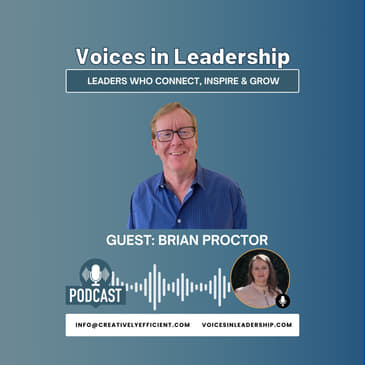
Gratitude is not just a warm fuzzy feeling—it's a powerful leadership strength, especially in the hospitality industry. Join us as we chat with Brian Proctor, the insightful founder of Leeds Hospitality Group and host of the podcast Tuesday's Thanks. Brian shares his journey of transforming gratitude from a perceived weakness into a formidable leadership tool that enhances profitability, customer satisfaction, and employee engagement. He unveils his personal strategies for making gratitude an everyday practice through digital tools and reminders, proving that even in a fast-paced environment, there's always room for appreciation.
The hospitality industry thrives on diverse leadership experiences, and we spotlight the fascinating career trajectories that shape it. Brian and I reflect on leaders like John Murray, CEO of Sinesta, whose transition from accounting to hotel management emphasizes the value of varied perspectives. We exchange stories about evolving leadership skills, from managing small teams to navigating the complexities of hotel operations. The conversation also touches on the early challenges of remote work, underscoring the timeless importance of hiring well, setting clear objectives, and empowering teams with autonomy.
Gratitude in the workplace isn't just about feeling good—it's a catalyst for success. Through the lens of the Tuesday Thanks podcast and keynotes, Brian discusses how gratitude-driven environments reduce turnover, spark innovation, and foster operational continuity. He shares compelling research on the economic advantages of gratitude, along with personal anecdotes that highlight its impact on career growth. Discover how recognizing potential in others leads to transformative career opportunities, as seen in Brian's own unexpected promotion at Starwood Hotels. This episode is a testament to gratitude's universal applicability, enhancing leadership and nurturing a culture of appreciation across all industries.
00:03 - Dr. Angela J. Buckley (Host)
Welcome to Voices in Leadership, where leaders who connect, inspire and grow come to share their stories. Live. I'm your host, dr Angela J Buckley. Join us as we explore authentic leadership, gratitude and the power of connection through powerful conversations with inspiring voices. Let's inspire, uplift and elevate leadership that truly makes a difference together. Well, hello, hello, hello. Thank you for joining us once again for another episode of Voices in Leadership. Today we are here with Brian Proctor and Brian and I have met, and with Brian Proctor and Brian and I have met and conversed over the last year year and a half maybe on gratitude, the topics of gratitude and how gratitude impacts profitability, customer experience, employee experience in the workplace.
01:04
So, Brian, welcome, I'm so glad you're here today.
01:05 - Brian Proctor (Guest)
Well thanks, I'm glad we were able to get together on this. It should be fun.
01:08 - Dr. Angela J. Buckley (Host)
Thank you again for joining and thank you also for being a member of the Gratitude Leadership Collective.
01:19 - Brian Proctor (Guest)
My pleasure, thanks for having me there.
01:20 - Dr. Angela J. Buckley (Host)
So if you would give me just one second, I would like to introduce you and read your bio. So, Brian is the founder of the Leeds Hospitality Group. It's a leading hospitality consulting firm after following 40 years career in that industry with companies like Starwood Hotels, resorts, evolution Hospitality, bridge Street Global Hospitality and Four Seasons.
01:53
In addition, he's the host of the popular gratitude-centered podcast Tuesday's Thanks, where he interviews senior hospitality leaders about their journey and provides them with the opportunity to thank those who have provides them with the opportunity to thank those who have helped them along the way. His gratitude journey continues to evolve and he has recently developed the Power of Gratitude at Work program, in which he speaks to organizations about adding gratitude to their toolbox of culture-related enhancements through actionable daily activities that their leaders can undertake. He's an ambassador of gratitude. Brian is helping the next generation of leaders to embrace gratitude as an integral part of their leadership skills, which is why we get along so well. So, Brian.
02:43 - Brian Proctor (Guest)
You make me sound like I know what I'm talking about.
02:45 - Dr. Angela J. Buckley (Host)
So, brian, you make me sound like I know what I'm talking about. Well, thank you. Thank you for talking about gratitude and thank you for showing what, those actionable steps, maybe those tips that people can take, because I think what I've seen is that many people are thankful and yet other people don't perceive them as such. Have you experienced that in your journey, and how does that impact you?
03:15 - Brian Proctor (Guest)
Yeah, I think you know people by nature right. Gratitude is a great human emotion and most people are grateful for 90% of their time, but it's the way that they express it and if they're not.
03:29
it's kind of like any muscle right. We call it the practice of gratitude and if you're not practicing it then you're not going to do it. And there's so many insecurities, anxieties about saying thank you because unfortunately, some people see gratitude and saying thank you as a weakness, as a leadership tool, versus what it really is, is a strength. So there's lots of things getting in the way of it. So what we try to do is try to break down those barriers and walk them through daily actionable items which we can get into, probably later, some of them as to how they can start their day and their day with gratitude on the forefront and really build it into that habit forming, so that it's not really anything you think about, it just becomes you.
04:22 - Dr. Angela J. Buckley (Host)
So do you start? I see so many journals, so many people have journals, they sell gratitude journals, et cetera. Do you start with that, where what's the right? We want to have that internally. That that's an important part of this. But what's your starting point with people?
04:41 - Brian Proctor (Guest)
I've never been a good journaler, although I do incorporate it into our program. It's just not for me, right. And that's a great thing about gratitude. There's no one-size-fit-all thing. You're going to handle this your own way, but a lot of people love it. I'm not a big fan of spending that much time journaling, so for me it's more of.
05:05
I've gotten into the habit of doing certain things during the day by virtue of setting up cues and reminders, because even now it still takes that reminder saying hey today's Thursday, I'd like to shoot out a handwritten message of thanks to somebody, and that's in my task to do in Outlook, so that when I pop up the computer on Thursday morning that reminds me to do that even at this point.
05:34 - Dr. Angela J. Buckley (Host)
Oh nice, I like using pop-up reminders. They're actually, it's kind of my friend.
05:42 - Brian Proctor (Guest)
I have so many tasks lined up for the next six months. It's crazy.
05:48 - Dr. Angela J. Buckley (Host)
What's your favorite reminder tool? What do you use to organize your thoughts?
05:55 - Brian Proctor (Guest)
Well, online, I use Outlook with tasks, right, and it just pops up every day, but what I tend to do is take a couple minutes every day or two to just think about what I want to be doing and I'm a I'm a huge note taker in meetings and calls. So I'm I love handwriting. I'm not a great technology guy because I'm old, but um. So the remarkable two this is not a plug, but the remarkable two for this is not a plug, but the remarkable two for me has been a godsend, because it feels like you're writing on paper. You don't have to have paper everywhere and you can really just take it with you and use that as my note taker, and that's where I've jotted everything down and then I, you know, transcribe it into tasks and outlook and things of that nature.
06:43 - Dr. Angela J. Buckley (Host)
Brian, don't you travel a lot in your job?
06:45 - Brian Proctor (Guest)
I, you know I used. I used to travel about 250,000 miles a year. You know my my for for 15, 17 years, maybe even 19 or 20, car service would pick me up on Monday morning, take me to the airport and I'd come home Friday night, type of deal, um so, but now it's, you know it's a lot less. So it's totally manageable now. But yeah, in the early days I always said my office was in seat 2B on any United flight at the time.
07:19 - Dr. Angela J. Buckley (Host)
The reason I ask is because that's what drove me to some of the more digital note-taking ask is because that's what drove me to some of the more digital note-taking applications. I did find one that I really liked because it was still handwriting, but you would take a picture of it and it would scan it and it used optical character recognition. And then I wasn't carrying multiple notebooks, because what I found traveling internationally was that I needed three or four notebooks and it wasn't like I could just go home and get it next week right If I needed something. So that's why I'm curious, if you were that dedicated to being handwritten notes, how, what did you do when you?
07:57 - Brian Proctor (Guest)
like.
07:58 - Dr. Angela J. Buckley (Host)
I just felt like I had so much to carry.
08:00 - Brian Proctor (Guest)
Oh, I'm laughing because before you know, I wish I'd had Remarkable 2 back then Before you know, when I was with Starwood, a good 10 years of my existence, there was leading a team called New Builds and Transitions. So we were working with developers and owners in developing new hotels all the way through construction design and opening them right, construction design and opening them right. So we would be working on. You know, at any one time you'd be working in a day maybe 12 or 13 projects. So I would have a notepad like the old legal pad for each one. And so you know my back was killing me because your backpack's only so big. So I was laughing when you said that, because I used to have paper everywhere.
08:45 - Dr. Angela J. Buckley (Host)
So you're using Remarkable now.
08:47 - Brian Proctor (Guest)
Yeah, it's a godsend.
08:49 - Dr. Angela J. Buckley (Host)
Okay.
08:53 - Brian Proctor (Guest)
So I started using Rocketbook. Don't know that one.
08:54 - Dr. Angela J. Buckley (Host)
So Rocketbook is there. It's kind of like a stone paper with a veneer and you use erasable ink and so you write on a page, you take the picture and then you literally wipe the page off with water and so it's the same notebook all the time. But maybe there's 30 pages in the notebook, so just periodically you go through and wipe it down and go back to page one and you just keep going and at the bottom there's these little icons. So you hit X and when you take the picture it will go into those folders and so you can pre-program where those are going and you can change them over time, right? So, if I like, it gives you an opportunity to have about eight different projects open yeah, there's.
09:38 - Brian Proctor (Guest)
There's all kinds of ways to manage your time. But you know, like I said, I I'm just a, I just take copious amounts of notes.
09:45 - Dr. Angela J. Buckley (Host)
Yeah, I'm just grateful that I don't have to carry all the paper.
09:50 - Brian Proctor (Guest)
Yeah, me too, I agree wholeheartedly.
09:54 - Dr. Angela J. Buckley (Host)
And my back is also very grateful. I can bet Not going to lie, okay. So, brian, why did you choose hospitality?
10:06 - Brian Proctor (Guest)
You know, I really don't think I chose it. I think you know this is going to sound corny, but I think it chose me. And as the story goes, I don't recall this exactly the way I'm going to tell it, but I'm going to tell it as my father used to tell people. So when I was about 12 years old, it was a Sunday morning and my dad was giving a speech the next day at a hotel downtown. I grew up in Montreal, so he was giving a speech at the Queen Elizabeth Hotel and he said hey, anybody want to come downtown with me and hang around the hotel while I practice my speech? Well, I idolized my dad, so I said hands up, I'll come. So we drove down and we drove up to the front door of the hotel, which is right smack downtown Montreal, and in those days Queen Elizabeth's doormen were all in the bee feeders type uniform. And so they opened the door. They knew my dad. They said oh, mr Proctor, great to see you. Are you coming into? You know, they just knew why he was there. And I'm looking going wow, this guy, these guys all know my dad.
11:10
And so we went in and back in the days. I mean, it's still a spectacular hotel today, but it was very rich in colors and fabrics and everybody in the crisp uniforms and they were treating my dad like somebody special. And you went in the ballroom and they were getting it all set up and that was cool. And then my dad said to somebody said hey, listen, can you guys take my son, take him to the restaurant which was called the Beaver Club, where my dad's company had a table, and said get him started on lunch and I'll join him in half an hour. So they took me in, they treated me like I was somebody I'm 12 years old, you know, and all the fancy silverware and plates.
11:50
So anyways, long story short, we're leaving and apparently when I got in the car I said to my dad 12 years old, and this is the story he told that I said to him, dad, that was cool, I'm going to run one of those places one day. And luckily he lived long enough to hear me get my first GM's position in California. So I kind of lived the dream and I don't remember ever wanting to do anything else but work in hotels. I graduated high school, went to hotel school, got a job at the Westin in Calgary in Calgary, alberta as a night auditor First thing out of school, like two days after I wrote my last exam, and so I don't think I chose it, I think it chose me and I just love dealing with people, love working with the public, and so that's kind of how that all came about.
12:43 - Dr. Angela J. Buckley (Host)
So that's kind of how that all came about. That's a great story, very moving, and also it's so refreshing to hear someone who has had a clear path. I would say in my friend circle. That's not the case for most of us. We're still kicking around.
13:05 - Brian Proctor (Guest)
Well, you know it's funny. You mentioned that because one of the joys of being the host of Tuesday's Thanks is I'm now. You know I've interviewed about 150 people on there leaders and stuff. What I find fascinating is the amount of people who had no clue that they were going to get in the hospitality business and the way that they got into the hospitality business and the way they got to being a ceo or cfo or cmo or whatever they achieved. It's all across the the pond. I mean, there's just no one way, and so to me that's super.
13:37
I find myself very boring, right, because I went to hotel school, worked in hotels. That was a career boom. Now I'm doing my second act, but they're all over the place, like John Murray, who is the CEO of Sinesta. He said on the show he said Brian, I'm in accounting, how am I running one of the largest hotel companies in the world now? And he's doing a phenomenal job? But he said if you had told me at any time in my career that I was going to run a hotel company, I would have said you're nuts. But the board saw something in him and made him the CEO and they've just had expansive growth under him. So you just never know where these leadership things are going to come from.
14:18 - Dr. Angela J. Buckley (Host)
Norway does the same thing with their endurance athletes. They're like we don't know where they're going to come from, so we train everybody, and so why not, right? And people have different strengths and I think you build different skills and there's a lot of value in having the different perspectives for a robust organization.
14:37 - Brian Proctor (Guest)
Yeah, I agree, the more diverse it can be, the better it's going to be, in my humble opinion.
14:44 - Dr. Angela J. Buckley (Host)
I appreciate the different perspectives because then someone can see my blind spots right, like if we're all looking from the same direction. We're only going to see what we all see.
14:54 - Brian Proctor (Guest)
So Couldn't agree more.
14:56 - Dr. Angela J. Buckley (Host)
That's, that's my thought on those, so you make us all my questions here so easy. Why did you choose your industry, and what about anything transformative along the way?
15:12 - Brian Proctor (Guest)
You know that's a tough one because I'm not overly bright. Right, I'm a good, you know, cruncher. I get things done, but when I think of, I don't think there was anything transformative for me along the way. I think the lessons learned along the way were you know one leadership is hard and you've got to work at it and you've got to continue to want to learn about it and you want to continue to learn about things in general. So I don't know if that would be you know what you're looking for in the terms of transformative, but it's just a matter of always try to keep learning.
15:47
You know I'm I retired, you know, from the daily grind five years ago to do all this other stuff, but I've. You know my, my youngest daughter, is a software engineer and you know I'm the knucklehead who's doing my own websites and things of that nature and I. I don't know what I'm doing, but you're just constantly learning. And I find the same thing with leadership as I was going through the path right, because you start off leading a small team of maybe six people working on a front desk of a hotel, and then you become a division head and you're overseeing five managers who are overseeing 200 people and then you become the general manager and now you're overseeing the whole kit and caboodle of a hotel. You're basically a city mayor. You're running so many different aspects and then, as you go through life, you learn other ways of leadership. Back in 2001, none of my team had offices. We had one person out of 35 people who had an office. We all lived on the road, so we were working from home.
16:52
Well there was a work from home. How do you lead that team? What do you do to lead that team differently than when you see people every day next to you? So I think that to me was, if anything was, just a constant need to update your knowledge on how to lead, and a lot of that comes from mistakes. Right, you're going to make mistakes throughout, but it's seeing how other people do it. You read books, you attend seminars, things of that nature, but just keep learning. So I don't think there was anything like a big wow moment. I think it was just gradually adding layers to that tool set. It looks like you may have frozen Brian can you.
17:46 - Dr. Angela J. Buckley (Host)
Yeah, I think you've, I don't. From my side it looked like you were frozen. So you're talking Yep, we're back. What happens when you were first leading those people that were remote? Was that before we had all of these nice remote tools?
18:05 - Brian Proctor (Guest)
Oh yeah, this is 2001. Phone calls were the go-to and again, living on a plane, you would spend a lot more time traveling to places to meet them in person, but other than that it was just five phone calls because there was no other technology that really was out there. I mean, obviously, email and stuff like that, but we were still working on Blackberries or blueberries or whatever they were called, with the cool keyboards and stuff. So you had that. But yeah, it was a lot of phone calls and I think, a lot of that.
18:50
One of the things I learned was hiring the right people, giving them clear you know, I don't want to say goals, but clear vision on what was they we were hoping they would achieve in whatever their role was, and then letting them go do it and then checking in on them periodically, but not, you know, not being on top of them all the time, because we'd hopefully hired the right person and you let them go. And that was hard for me at the beginning because as a general manager of a hotel, for example, it's kind of like being a store manager or a bank manager manager or a factory manager. You touch everything every single day. Nothing happens in that place without you knowing about it, being there. Well, I'm opening a hotel in Bora Bora, I'm opening a hotel in Austin, texas.
19:40
I'm opening a hotel in Aruba and I'm opening a hotel in, you know, all over the place. I can't be there, I can't have my fingers on anything. So you, you hope you put, you put the right project managers in place, you provide them with the right tools, all the checklists and everything else that they need, and you kind of let them go and you check in on them once a week, once every two weeks or whatever the frequency is, depending on the role, and you, you just learn to lead. That. That was tough for me. That took a while to get. I don't know if I was ever good at it, but it took me a long time to really embrace it and understand it.
20:17 - Dr. Angela J. Buckley (Host)
What was the one tool that really helped you to embrace it?
20:23 - Brian Proctor (Guest)
Well, you know it's funny. This was an old trick of the trade we had developed, because the development and opening of a hotel there are 4,300,026 things to do from the time you break ground to the time you welcome that first guest right, yes, have sales and marketing finance. You know everything in their operations, every department, everything going on, and you're dealing with designers and developers and architects and owners and you know your bosses. So the one thing that I found best was to create the most amazing critical path checklist okay, for every role and being being really really, really tough on people to follow that and that, to me, was one of the things, right, and my little trick of the trade.
21:13
And I told all my teams afterwards, when we were all moving on to different things. I said I always knew, for example, if Angela, you were working on the St Regis in San Francisco, for example, I would say, hey, angela, I'm jumping on the plane because I'm flying out to meet you and the team, I'm jumping on the plane. Send me the updated critical path checklist so I can review it on the plane, so we can spend more quality time together when we're in San Francisco. Because this was before Wi-fi on planes, this was before google, google sheets and teams. So if you said to me it's on its way, when I got it, I just deleted it. But if you hummed and hawed, I knew you weren't keeping it up to date and I knew you weren't working off it so. So the meeting when I got to San Francisco was dramatically different.
22:09 - Dr. Angela J. Buckley (Host)
Got it.
22:11 - Brian Proctor (Guest)
Then if you had said, sure, it's on its way, because then I knew you had been used, you know I had confidence in it and you know I wouldn't delete it, but I'd look at it. But the work session would be much more productive under case A than B. Yes, yeah.
22:31 - Dr. Angela J. Buckley (Host)
So that was a tool that I used that seemed to work. I am a big fan of critical path, so, as an engineer, there's a few times in my life where you've had to use that right. There's no launch that doesn't benefit from a good critical path checklist.
22:42 - Brian Proctor (Guest)
Yeah, I agree Totally.
22:44 - Dr. Angela J. Buckley (Host)
So I love it. And then it's funny I was thinking about accountability today as I was coming down the hill and my Google Maps gave me the warning of police ahead. So of course I checked my speed Because that's what the police were ahead doing, right? And I was thinking about accountability and on the one hand, I was grateful for Google Maps to remind me to slow down. And then, on the other hand, I was like grr, grr, grr cop sitting at the bottom of the hill, speed trap, right, Except he's not. We all want to grumble about the cop sitting in a speed trap, but they're also holding people accountable and if they don't, at some point someone dies, like maybe not today, maybe not tomorrow, but there's a reason. We have cops holding us accountable to speed limits. And I was just reflecting on how I felt that I was grateful for Google Maps to tell me, which is, in a way, an accountability check, but then also I was like not as grateful for the cop, although technically they're doing the same thing.
23:57 - Brian Proctor (Guest)
Yeah, no, it's funny you mention that because it and I'm not making this up this happened to me about two months ago. There's a hill by our high school. The speed limit is 25 miles an hour because you're in a school zone, but it's very hard to go down a hill at 25 miles an hour and of course I was going a little more than 25 miles an hour and, sure enough, I come to the corner and there's a police officer, so he pulled me over. I eventually pulled over for him off to a side street and he, very nice, and he said listen, we're just out here, you know, kind of like an awareness thing. You weren't really going too, too fast, but you were going fast.
24:33
And I said, officer, you are absolutely right. I mean, I, I I'm in a school zone, I should, you know. I said it was just hard coming down the hill. So anyways, once or short, he just gave me a warning and said you know, just out here, awareness, but I awareness. But I know exactly what you're saying, because there I was grateful that I had an officer who, you know I live in a small town, so he was forgiving of that and you know we talked through it and that kind of stuff. And again, I think it's how you interact with people that create that. So, but you're right on the accountability thing.
25:03 - Dr. Angela J. Buckley (Host)
Because he was right, I was going, you know, over the speed limit, so so it leads me to the question on how did people feel about some of those critical path conversations. Were they grateful that you were helping them maintain critical path, or did they feel like they were having their feet held to the fire? And do you think there's a better way to like navigate, because sometimes it's easy and sometimes it's hard, right, yeah.
25:32 - Brian Proctor (Guest)
Well, I think the ones who were great managers and employees respected the checklist and understood the importance of it, because one of the things so when you're opening a hotel you have, when you're running a hotel, you know I would never question a general manager. They know kind of everything, right, right, but when you're opening a hotel they've never done that before, right. So you pluck a general manager and you pluck the division heads and the department heads and the managers from other properties to come to open a new hotel.
26:12
None of them have opened a hotel before.
26:14 - Dr. Angela J. Buckley (Host)
Right.
26:15 - Brian Proctor (Guest)
So they realize very very quickly the importance and validity of those critical path checklists, because otherwise they would sit at their desk, stare at a wall and be so overwhelmed with what do I do next? Right, but we've laid the roadmap for you. Just follow this. We tell you how many days from opening this needs to be accomplished, what needs to be accomplished, who needs to accomplish it, and we're there to help you if you don't know how to accomplish it. That's real easy.
26:46
So those people who you know, who weren't the fly by the seat of their pants type of manager, loved it. And conversely, there were some managers who were really good operators of hotels and terrible at opening. And the other side of that was some were really good at opening hotels but terrible at running them, which always concerned me. If you were really good at opening a hotel, I was going, oh, are they going to be able to run a hotel real well? But so those critical path checklists allowed them. It calmed them, because otherwise you just, you know, think about yourself If you're thrown into an environment where you've never done it before and there's nobody there with you, like I may be your boss, but I'm only going to see you once a month.
27:32 - Dr. Angela J. Buckley (Host)
Yeah.
27:33 - Brian Proctor (Guest)
You know you want some direction, you want some clarity as to what you need to do, and if you don't have it, it can be very frustrating. You know clear, designed objectives and checklists. Huge part of leadership is being, you know, transparent, being authentic and being there to help, type of thing.
27:56 - Dr. Angela J. Buckley (Host)
I love it. Thank you, thank you. So, brian, I have another question, a little bit off of this topic and moving into what are you doing with Gratitude Works and the power of gratitude at work, and how is that blending in with the Leeds Hospitality Group?
28:14 - Brian Proctor (Guest)
Well, it's kind of just a mess right. And I say that because when I set up Leeds Hospitality, first as being a hospitality consultant, right With corporate housing, apartments, part hotels, hotels, that kind of stuff. And then I did the Tuesday Thanks podcast, which was next, and the power of gratitude at work has really been born out of the podcast because it got me to thinking I'm listening to all these leaders talk about how important gratitude was in their journey and how it played such an important role. And then I started thinking, well, you know, the more I think about it podcast interviews and developed it into this Power of Gratitude of Work, which is where we kind of say it's one more tool in a leadership developments toolbox, Not the be all, it's not the end all, it's just one more aspect to make you hopefully a better leader that will have more engaged teams and will produce strong results both personally and professionally.
29:35
And so we kind of just developed it through that and we just you know, I talk to companies about it and we go through, you know, go through my journey and and we talk about all the things that gratitude can do for you as a leader, and then we kind of walk them through. You know, I developed a 15-day gratitude at work challenge for their leaders to do, because you know you don't want something that's going to be six months long. You want something three weeks and then you can see if it's working and go from there. But it was really born out of the podcast and just my business career, knowing how important gratitude can be, and we've just put it together that way.
30:22 - Dr. Angela J. Buckley (Host)
And you've been hosting.
30:28 - Brian Proctor (Guest)
Yeah well, yeah well, it started as doing keynote speeches at leadership conferences and what I would do. There is talk about the power of gratitude and you know why gratitude matters at work. I think is part of your question as as well. As why does it matter at work? Well, you know it again. And the fun thing, I didn't know this going into it, but there's a ton of studies out there on gratitude at work. I who knew, I knew by very smart people at some very heady institutions and things of that nature with statistics behind them, and so you know why it matters at work. And we kind of walk the teams through and the leaders through, like higher engagement and retention from increased amounts of gratitude, increased innovation, something that I call, you know, operational continuity, operational continuity and the reduction in voluntary turnover. And people say, well, like the numbers, guys in the back of the room always look at me and say, oh, here's a foo-foo guy up there talking about gratitude. And one of the fun things I do is I say, okay, well, let's walk through your turnover, right? So if your turnover is X and you implement a program of gratitude and some learning there and it drops, I mean, think about what's the cost, the time and the money you spend on recruiting. Okay, just think about that time. It may not be the cost, because it's pretty cheap to put ads out on linkedin and indeed and stuff, but the cost of time and money spent on recruiting, then what's the time and money you spend on interviewing, and then the time and money you spend on hiring, and then the time and money you spend on onboarding and then getting them trained in the front of the house. Just that alone, if you can reduce your turnover voluntary turnover, right, because some turnover you want, but the voluntary turnover if you could reduce that by 2%, just think of the dollars bottom line that affects your profitability. And that's just one example.
32:44
If the people stay around because they feel seen, they feel valued I mean, ever since the pandemic, of course, that's even become more and more important. People want to have a purpose at work, they want to be seen, they want to be valued, they want to be appreciated. If you can provide that work environment and you reduce your turnover, the operational continuity in and of itself is going to create innovation, because now you're not constantly turning the bodies over. They're there when your client is coming in. They're there when the guest is checking in. So the other employees aren't covering, right. So there's a reduction in overtime, everybody's stress levels are lower, the service is better. If I've been there two years versus two months, I'm going to suggest in a good working environment, hey boss, if we can do this, it'll be that much better for the client or that much better for the guests. That's operational continuity, making innovation bigger and better Innovation. Everybody thinks what's the latest tech stack? That type of thing.
33:44
Innovation comes in little dribs and drabs on those one-on-one environments where you're with your guests. So all of those things become a financial windfall. And is it difficult to measure? Yeah, but there's ways you can do that, because you set baselines and then you set programs in place and then 30, 60, 90 days down you retest via questionnaires and surveys and all that kind of stuff and you're what is it? Enps, right, you're employing that pro, uh, promoter scores and stuff like that, and it develops a much stronger trust in your leadership too. Yes, right, so all of those things kind of come into play and so in a very quick you you know 40 second sound bite to me. That's why gratitude matters at work, just in one avenue, just with the turnover. Just when you bring that up, and every once in a while when I'm talking, you'll see the finance guys going okay, I get it, that makes sense, that makes sense. And then they buy into it. And if you can get a finance guy to buy into that, then you're golden.
34:48 - Dr. Angela J. Buckley (Host)
I'm going to take this snippet and send it to all the finance guys. My dissertation was basically this, but based in manufacturing.
34:57 - Brian Proctor (Guest)
Yeah.
34:58 - Dr. Angela J. Buckley (Host)
So, yes, we spent many times and it's very difficult to get the finance guys on board with that, and yet we show the numbers over and over again.
35:07 - Brian Proctor (Guest)
Yeah, and you know that's a great thing about this whole. I call this my second act right? The podcast, and now this power of gratitude at work. It transcends all industries. It does Absolutely Right, because it's a matter of instituting that daily habit of gratitude, the daily practice of gratitude, and you can do it in hotels, you can do it in hospitals, you can do it in factories, you can do it in car dealerships, whatever it is.
35:40
If you put your mind to it, it's really easy to take the 15 day gratitude to work challenge and I can adapt that to any industry because it's very, it's very generic in its thing, where every day you're, we ask you to do certain things and then every day changes based upon what you have. So if you don't mind I don't know I can kind of walk you kind of through what that is. So, for example, one day you may, I always say, start with your first thing in the morning. And again, this is going to be contradictory, because I said I don't believe in journaling, but I always said, you know, just write down something when you sit down at your work and you open up what are you thankful for, that day Just doesn't get your mind going Right. So that's one thing you can do, it doesn't take long, right. But again, the cue. It doesn't get your mind going right. So that's one thing you can do, it doesn't take long, right, but again, the cue. You need the cue to do that. Number two we said, okay, what if you were to on that day? You knew you were having a one-on-one session right, take two minutes before you sit down with Angela, if I'm your supervisor, and think, okay, what's Angela done lately that I'm thankful for? And then you start the one-on-one session with that Right now. Maybe tomorrow you have a team meeting. Start the team meeting with what you're grateful for. There's all kinds of stuff you can do. You can work on a gratitude tree, you can work on a gratitude wall in the employee entrance and things of that nature.
37:09
Then I like to say, okay, today you're going to make one gratitude cold call. You know, salespeople are fine with cold calls, operations people not so much. And what we're saying is pick a supplier, a client, a guest, a remote manager, someone you haven't talked to in a little bit, and just out of the blue, pick up the phone, say hey, angela, it's Brian over at Sheraton. I just want to thank you for your company's great work with the HVAC system this month. It was really well done. We've had no problems. That's it.
37:45
It's not long right, and I argue with people about this call. I don't argue, I talk about the call. I said I always tried to do it with vendors because I knew that that vendor is servicing the 12 hotels in my community and 11 of the hotels were phoning them to yell at them for something. I was phoning them to thank them so I knew if I had a pinch they were going to take my call and I was probably going to get priority service over someone else because they're going to say oh, that's Brian, he's a nice guy. So that once a day cold call Again, three minutes out of your day, four minutes out of your day. And then the hard one, that is difficult, is write a handwritten thank you note to somebody and either mail it.
38:32 - Dr. Angela J. Buckley (Host)
Yep.
38:36 - Brian Proctor (Guest)
It's mail, mail, not email for the young kids listening. There's this thing called the post office. You put a stamp on it and it goes. Or it's someone in your office, flip it onto their desk, flip it under their door, put it in their mail spot something but a handwritten note of thanks. It takes you a couple minutes to write down.
38:53
But number one a handwritten thank you note has a hundred percent open rate versus emails. Right, if you have a card sitting on your desk when you get in the morning and it's got your name written on it, you're going to open it. Desk. When you get in the morning and it's got your name written on it, you're going to open it. And then you say, wow, this person went to the length of, took the time to handwrite me a thank you note. It goes a long, long way. Um, and so just things of that nature. I mean, we've got a whole program around it.
39:25
But but think of any business you're in. If you're in the manufacturing world and you're in a factory or whatever, you can gauge what you do, right. And there's all different ways of expressing gratitude. Right, it can be public, private and all those things. And we could have a whole call on that if you wanted.
39:42
But it's so important to do this on a daily basis. And so we have these cutout sheets. You just say, okay, this is day three, it's Wednesday, boom, here's what I'm doing. And then at the end of the week we have a little reflection sheet that we ask you to spend a couple of times over a cup of coffee on a Saturday morning or something. Just reflect on some of the things you did this week, how it made you feel, how it made them feel, and then what are some of the goals for next week coming up, based upon how it felt and how it went.
40:13
So we do it for three weeks and our hope is that within the three weeks timeline, the managers under you, the employees under you, start to see this on a daily basis, and the hope, of course, is that they will start instituting at their level the same type of thing. And so you get a culture. This theory of gratitude becomes part of the company culture. It's not forced, it's just done and, again, it's just making it a habit and making it who you are. So sorry, I know I kind of went off on a deep end there, but I get a little excited about the thing.
40:51 - Dr. Angela J. Buckley (Host)
No, you're hitting on many of the habit development things that we talk about in learning and development circles, so it's important to understand that, and thank you for clarifying how that program works for you guys you for clarifying how that program works for you guys.
41:12 - Brian Proctor (Guest)
Yeah, no, you know I developed it. And the other thing that I found one company that really embraced the whole power of gratitude at work. The chief operating officer is an acquaintance of mine now I consider him a friend. But what I loved he did every Monday morning during the three weeks because they rolled it out company-wide I loved it. Every Monday morning he would write a thank you note email to everybody reminding them about the program and what you know, all that kind of stuff. And that started, resonated with everybody and they had some great results. So you know the leadership. You know one of the.
41:48
I did a little survey a long time ago about. You know what is a barrier to your company's expressing gratitude, and the number one response and I forget the percentage because you and I actually talked about this a little bit was the fact that the senior leaders were not modeling gratitude. So if the senior leaders aren't doing it, the others won't. Now you don't want it to be a forced top down, you want it to be all over, but senior leaders got to lead the way. That's why you're a leader. So you know that was interesting to me that you know people want to do this. They just don't know how.
42:23 - Dr. Angela J. Buckley (Host)
So, speaking of the how, we're going to talk about the spirit of acknowledgement, the spirit method, and you said you prepared today someone that you wanted to thank.
42:35 - Brian Proctor (Guest)
Oh, yeah, well, I've always had people, I thank.
42:40 - Dr. Angela J. Buckley (Host)
So we're going to, we're going to walk through the spirit method and you have many of these elements, so this won't be very difficult for you.
42:48 - Brian Proctor (Guest)
So do you want me to do one person and then we'll do one at a time? We'll do one at a time. How's that sound so?
43:00 - Dr. Angela J. Buckley (Host)
the spirit method I think you're familiar with. It is saying specifically what they've done, making it personal, like what are the obstacles that they've overcome in order to take those actions? And because we're talking about organizational things here, organizational things, we talk about the impact, like what did those actions do to your organization? So, for example, if your vendor, if he's a plumber and he's making sure that you had no downtime, et cetera, or their response rates were X Y Z, so that you were at when you were at full capacity, response rates were X Y Z, so that you were at when you were at full capacity, whatever those look like for you in the hospitality industry. And then the R. So impact is metric, specific, and the R is relevance, and that's talking about how they are relating back to your organizational values.
43:56
And then the next I is for being inclusive, and that's the way of making it public and timely. There's a lot of research that shows that the closer you thank someone to the event in which it took place, the greater impact it actually has in the emotional well-being of that person feeling seen, feeling heard and truly like. It's literally measurable in the body. Of course we're not doing that in the workplace, but we can measure those things through some of the neuroscience at this point. So that's the spirit method. So you have a person and what are you thanking them for?
44:44 - Brian Proctor (Guest)
Yeah, well here let's use. Let's see a good way to model that one would be okay. I'm going to thank might be a two-person thank.
44:53 - Dr. Angela J. Buckley (Host)
That's fine, let's see.
44:55 - Brian Proctor (Guest)
And so Rick Sewell and Dave Miles. And so Rick Sewell and Dave Miles, okay, and so Rick Sewell was a senior level vice president with Starwood Hotels and Dave Miles was a vice president at the time and I was the general manager of a hotel in Tampa Florida. And so I got a call and they said listen, we are going to try this new concept called complexing. And I said, great, but what does this have to do with me type of thing. And they said well, we think you're the guy who should be the general manager of this project. And I said, ok, fine, I don't know anything about complexing. It's very common now two or three brands in one building. But this is back in 1998. So it was going to be Starwood's first venture into complexing. We were going to put a Westin and a Sheraton in one building One tower is a Sheraton, one tower is a Westin and run the two brands. And all you know there's a multitude of reasons why. So they said you're our guy. And I said, well, great, give me five minutes and I'll let you know. And Rick said well, why do you need five minutes? I said I have to look up where Indianapolis is on a map. I said I'm Canadian, I don't know where it is, and he laughed. He said just go home, talk to Rosa and make sure you guys are okay for moving from Florida to Indianapolis. I said sure. In indianapolis I said sure. So that was kind of the the.
46:18
The genesis of what started was their view of me being able to do this and me not knowing why. They could see that in me. But they saw something in me that thought that would work right. So we move up there, we open this thing. It's a massive failure, um, because of multitude of things. Not, it wasn't a failure because of multitude of things, it wasn't a failure because of the team, it wasn't a failure because of me, it was just the first one and there were all kinds of mistakes made. So while I get a call from Rick again two years later thinking I'm getting fired because his administrative assistant phone said hey, rick wants to talk to you tomorrow at 2 o'clock.
47:02 - Dr. Angela J. Buckley (Host)
Oh man.
47:03 - Brian Proctor (Guest)
That's never a good call, right 2 o'clock on Friday.
47:05 - Dr. Angela J. Buckley (Host)
That's the worst phone call.
47:07 - Brian Proctor (Guest)
Luckily it was on a Thursday, so it wasn't too too bad. But I said to my wife that night. I said, hey, we may be unemployed and living in Carmel, indiana, for some time. But so I get the call and he says listen, dave, and I again we're starting a new team called New Built and Transitions and we want you to head that up as the director, the number two guy under Dave.
47:33
I don't know what a Philip screwdriver is. I've never done construction. I've never opened hotels, developed hotels, and I specifically asked why me? Right, and but thank you, but why me? And they laid out the plan that I had worked with almost every division within the Starwood corporate structure by virtue of doing this new complex, and the fact that it didn't work was not my fault. So they made me feel good by saying you did a great job under the circumstances. We're going to give you this cool promotion and start this team for new builds. And so the impact was like wow, I, you guys, own me. Whatever you want me to do, I will do for you for the rest of my life. Right, because here I was thinking I was going to get fired and here I get another promotion. And it was all because of the hard work and their leadership, but that impact of them showing trust and confidence in me was unbelievable, right. So I think that had a. You know I I can never thank those two guys enough.
48:40 - Dr. Angela J. Buckley (Host)
I've always said that those two guys gave me my career yes because they made a huge impact on me and I forget what was the r for relevant, um relevance and it refers to like values, like what are their value statements or the organization's value statements well, yeah, and that's that's's the value.
48:57 - Brian Proctor (Guest)
statement was hey, we have a good, you're a good person, you do a good job, and just because the project might not have worked, we see the value in you. So the relevance was yeah, now you're still getting promoted.
49:11 - Dr. Angela J. Buckley (Host)
Innovation and, yeah, recognition of efforts and everything Yep.
49:16 - Brian Proctor (Guest)
Yeah, exactly. So those two guys were instrumental in my development and my growth and again, I couldn't thank two better people. Nice, nice so hopefully that worked within your spirit model.
49:31 - Dr. Angela J. Buckley (Host)
Yes, yeah, but it's always interesting to hear how people word it, and sometimes I have to help them word it. But you are experienced in your gratitude giving, so so thank you, did you want? You said you had another that you wanted to formally recognize today.
49:51 - Brian Proctor (Guest)
Well, I mean, I have a whole bunch. I know you have a whole list.
49:54 - Dr. Angela J. Buckley (Host)
We often do, but we have a few more minutes, if you want one more.
49:57 - Brian Proctor (Guest)
Yeah, well, I'm just going to thank another pair. Well, actually, first I'm going to thank my wife and my daughters, just in case they ever listen to this and hear it, because they've put up with me for all these years. But the other one again was a gentleman with a company called Interstate Hotels and I was working with Four Seasons Hotels at the time. And when you work for Four Seasons Hotel in our business that's kind of like the top right, you're at the top of the ladder, you've got the best product in town, the nicest hotel, I mean, you're ultra luxury, hotels are packed, you're meeting celebrities, I've served presidents and kings and everything else, and you're doing all that Well. Served presidents and kings and everything else, and you're doing all that Well.
50:40
There was a guy by the name of Bob Greeney who worked for Interstate Hotels and he approached me and he said listen, we want you to come work at Interstate. I said what are you nuts? Interstate Hotels, you run three-star hotels, four-star hotels at the best. And he sat me down over lunch one day and walked through all the attributes and the positive things that would come to me if I made this switch. And he did it very methodically and he said listen, yeah, you're at the Four Seasons Beverly Hills.
51:14
There's nothing better than the Four Seasons of Beverly Hills. You're there, but here's what we're going to provide for you. We're going to give you a path to being a GM by the time you're X years old, which is your goal. We're going to give you the tools to learn the hotel business as a business.
51:31
And I was very fortunate that Alan Cramie and Ted Darnell taught me the hotel business as a business, because in Four Seasons in those days it was more fluff than substance, because you're just making so much money. You could spend money on anything and make sure you had the best, but that's not the entire hospitality world. So Bob was able to lay all this out and then, more importantly, angela, he followed through on it step by step by step and within a year and a half of leaving the Four Seasons to join Interstate, I had my first GM's role at the Colonial Inn in La Jolla, california. It would have taken me another six to seven years if I was with Four Seasons, and it's not because they're not a good company, they just have a different management method.
52:20
And so, by virtue of Bob holding all that and the impactfulness, the I mean all the things you talked about, he just hit all keys. So he was actually he's the one who got me to my first GM's job by virtue of laying out the plan and adhering to it and really, through great leadership and teaching, got me to that spot. So he would be another big one in my books.
52:46 - Dr. Angela J. Buckley (Host)
Thank you for sharing that, and it's a great example of leadership, but also talent development and talent management looking for someone, even if it is outside of their network, but really growing and then also delivering right, like they didn't just make empty promises, they delivered on their promises as well, and that is sometimes rare A lot of times it's rare. Yes. So, brian, what else do you have to share with us? We have just one or two more minutes and we need to sign off. How can people get a hold of you?
53:26 - Brian Proctor (Guest)
I am all over LinkedIn. I'm a junkie on LinkedIn. I have websites for. I have leadshospitalitygroupcom for consulting. I have the Tuesday Thanks podcast. It's on all the all the normal channels. There's a website Tuesday thankscom. I've just created a new website for the power gratitude at work. So that's a power gratitude at workcom. I've just created a new LinkedIn page for the power of gratitude at work. So all of those you know, just look me up on LinkedIn. I always tell people is the easiest way. Um, cause I'm a chunky on LinkedIn. I always tell people is the easiest way because I'm a junkie on LinkedIn. It's the only kind of social media I'm really on, if you call it that, but I'm on there all the time.
54:06 - Dr. Angela J. Buckley (Host)
And also join us in the Gratitude Leadership Collective.
54:09 - Brian Proctor (Guest)
Exactly, exactly.
54:11 - Dr. Angela J. Buckley (Host)
So we can chat gratitude all day long. Brian, thank you very much. I will make sure to get those links in the show notes, and then I also do a blog that supports the episode when it comes out as well. So I appreciate you. If you would like to learn more about the voicesinleadership.live, you can join us at our website, apply to be a guest, suggest a guest or if you have any sort of feedback. There is a place where you can click on that little microphone and share your thoughts. I appreciate hearing from you. Look forward to talking to you next week.
54:48 - Brian Proctor (Guest)
Thanks, Angela.
54:55 - Dr. Angela J. Buckley (Host)
Thank you for joining us on Voices in Leadership, where leaders who connect, inspire and grow share their stories. I look forward to welcoming you back to our next conversation. In the meantime, visit www.voicesinleadership.live to access show notes, links and to subscribe and stay connected. And, in the spirit of gratitude, let's remember to thank one person near you Until next time. This is Dr Angela J Buckley, signing off.