
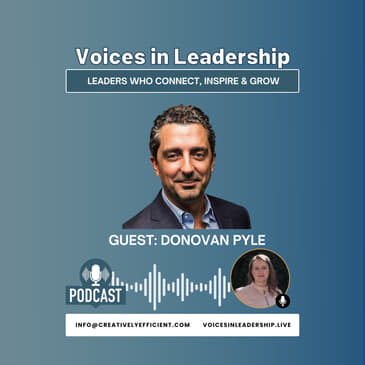


Join us on a revealing journey with Donovan Pyle, a celebrated whistleblower in the healthcare industry and the visionary CEO of Health Compass Consulting. Donovan unfolds his impactful story, starting from his experiences on the carrier side of the business, where he saw firsthand the frustrations executives and employees faced with healthcare benefits. His brave attempts to introduce innovative strategies based on successful models like Rosen Hotels met significant resistance, exposing the profound influence insurers held over brokers. This eye-opening experience led Donovan to forge his own path, establishing Health Compass Consulting to deliver unbiased advice that truly aligns with employers' interests.
We'll unpack the complexities of healthcare payment systems and discuss why the financial burden often falls on businesses rather than insurers. Donovan sheds light on the intricate web of insurer partnerships that can lead companies to overspend, all while highlighting the strategic importance of developing a solid framework before making significant changes. With insights from figures like Mark Cuban, we explore how larger companies can benefit by bringing benefits expertise in-house, maximizing returns on healthcare investments. This episode navigates the evolving brokerage landscape, emphasizing the shift to fiduciary models that prioritize advisory services and better customer service.
Beyond business, Donovan shares personal reflections on the values and mentorship that have shaped his leadership style. From the entrepreneurial spirit of his Uncle Vince to the importance of embracing transparency and integrity, Donovan's journey is a testament to the transformative power of mentorship and values. This episode is a must-listen for mid-sized businesses seeking to optimize their healthcare strategies and for anyone inspired by the fusion of personal growth and professional success. Join us for a conversation steeped in gratitude, risk-taking, and the endless possibilities that arise when visionary leadership meets innovative thinking.
00:03 - Dr. Angela J. Buckley (Host)
Welcome to Voices in Leadership, where leaders who connect, inspire and grow come to share their stories. Live. I'm your host, dr Angela J Buckley. Join us as we explore authentic leadership, gratitude and the power of connection through powerful conversations with inspiring voices. Let's inspire, uplift and elevate leadership that truly makes a difference together.
00:32 - Dr. Angela J. Buckley (Host)
Hello, good morning and welcome back to another episode of Voices in Leadership. I am here today in the studio with Donovan Pyle. He is known as the whistleblower in the healthcare industry. So, Donovan, welcome, I am so glad that you are here to join us. Donovan is the CEO of the Health Compass Consulting and he is the author of Fixing Healthcare. He was named 2025 Benefits Advisor of the Year by the Validation Institute and he's a thought leader helping mid-sized businesses save an average of $1,800 per employee annually. Donovan's insights are featured in Employee Benefit News, Benefit Pro and SHRM, and he's here to share actionable strategies for your organization.
01:23 - Donovan Pyle (Guest)
Great to be here, angela. Angela, thanks for having me.
01:26 - Dr. Angela J. Buckley (Host)
So, Donovan, where are you tuning in from today?
01:29 - Donovan Pyle (Guest)
I am tuning in from what's normally sunny Orlando, Florida, but today it's a little overcast and, funny enough, we actually welcome that down here. Just it's nice to get a little change from the sun.
01:39 - Dr. Angela J. Buckley (Host)
But we all need a little spice right.
01:42 - Donovan Pyle (Guest)
Yes, absolutely Great Well.
01:43 - Dr. Angela J. Buckley (Host)
I'm yes absolutely.
01:44 - Dr. Angela J. Buckley (Host)
Great. Well, I'm so glad to have you and I feel like this is a great time to have that people start thinking about health care, health care benefits, and maybe some of these strategies aren't the immediately applicable to what they're thinking about, but it's definitely top of mind as we head into kind of open enrollment season, right, top of mind as we head into kind of open enrollment season, right. So can you share with me how you got started and where'd your journey start?
02:14 - Donovan Pyle (Guest)
Yeah, so my journey started actually on the carrier side of the business, where benefits brokers were my customers and so I would sell my company's products through benefits brokers and they would sell them to employers.
02:27
Right, that's the role that the brokerage industry was developed to serve was to sell products at the retail level.
02:36
And you know, when I was going to these open enrollment meetings, I, you know, healthcare was always such an aggravating thing for so many executives and so many employees and I always felt like brokers were just kind of apathetic about the recommendations that they were making to employers.
02:54
You know, being that I live here in Orlando, florida, you know we actually have an organization by the name of Rosen Hotels, have an organization by the name of Rosen Hotels and the founder, harris Rosen, really started pioneering alternative ways to finance and procure health care for his employees in 1991. Since then he saved his company over a half a billion dollars on health care, and not only that, he provides a superior product for his employees that has really helped increase helped dramatically increase his retention for his organization. So I was just always really confused about why brokers weren't at least recommending some of those strategies and solutions that he had pioneered and I very naively thought geez, if I just move to the brokerage side of the business, I can probably scale those know, scale those strategies and solutions, help a lot of people and maybe even make some money doing it Turns out I was completely wrong.
03:54 - Dr. Angela J. Buckley (Host)
Okay, so you were completely wrong, but you were trying, you identified a problem and your first solution didn't work for you, so what was your next step?
04:06 - Donovan Pyle (Guest)
Yeah. So I, you know, investigated transitioning to the brokerage side of the business, and I did, and I built a book of business, was able to help some customers. But when I was there, there was always this resistance about, you know, innovative approaches to healthcare financing and procurements. People didn't really know what I was talking about, even though they were based right here in Orlando too. They just weren't even really aware of the success of Rosen and others right in our own backyard.
04:41
And I was ultimately term um for advocating too hard on behalf of our clients. And during my termination I was told you know, listen, you're being too hard on this health insurer and you know they pay us our largest bonus each year and and we don't like that. So that's when the light bulb really went off for me that, wow, like these carriers really have a lot of influence over what solutions brokers are recommending to employers. And that's when I said you know what? We have to develop a different business model so that we can actually align ourselves with employers to give them unbiased advice about how to really maximize the return on their second largest investment slash expense, which is healthcare.
05:36 - Dr. Angela J. Buckley (Host)
So are you operating as like a 501c3, a net or a org?
05:44 - Donovan Pyle (Guest)
No, no, Health Compass is a for-profit organization. It's a management consulting firm that specializes in helping mid-sized businesses maximize the return on their benefits investments. So what you can think of us as is. You know, in the retirement industry there was a real shift, you know, about 20 years ago, when the fiduciary standards started being applied and enforced to retirement plans, A lot of retirement advisors, financial advisors, switched from selling products for commissions to selling services, advisory services, for a fee, and they did that so that they could actually serve their employers in a fiduciary capacity.
06:35
So if you're working with an RIA or a registered investment advisor, they serve as a fiduciary to you. It's a different legal standard as far as that relationship goes with the employer. And that's all that we've done at Health Compass is flip the revenue model and flip it from selling products and pushing products to selling services. And at Health Compass we categorize our services into four buckets they're consulting, procurement, implementation and management. And that's really. It seems almost trivial, but in reality it totally flips the dynamic because now we're not being pressured by this carrier to push their products to meet their sales targets for the year.
07:22
We don't have any outside influence, and that is truly liberating.
07:27 - Dr. Angela J. Buckley (Host)
Well, that's really interesting. I'm thinking of people who are working more remotely these days, like there's a greater distribution of employees. And I was speaking to a friend recently and she's like our health care provider. And I was speaking to a friend recently and she's like our health care provider basically has no service providers in our area and so they struggle because of what is offered by the company doesn't actually have boots on the ground in the area where she's living.
08:10 - Donovan Pyle (Guest)
Yeah, that's, that's a real failure of prescribing what's going on, what the needs of the employer are, and this really speaks to the central problem is that and this is one of the things I detail in my book is the history of the industry. The brokerage industry was developed in the 1940s not to help you, as an employer, maximize the return on your benefits investment. The brokerage industry was designed to sell insurance products for insurers at the retail level, and so brokers make more money when costs go up, not down. And I just say that because you know they're not designed. Brokerage firms are not designed to provide services, meaning, do they have a formal discovery process for really quantifiably understanding who you are, what your needs are, what opportunities there are and developing roadmaps to help you achieve your goals? Most of them don't have that service methodology in place to properly diagnose and prescribe the right solutions, and that's probably why your colleague is frankly on a plan that doesn't meet their needs.
09:25 - Dr. Angela J. Buckley (Host)
Yes, there's probably some of that. It's also probably just the way. It's interesting how it all seems to be local markets and some of these bigger organizations don't have the understanding of what is and what isn't working in their areas.
09:42 - Donovan Pyle (Guest)
Yeah, it's really just a lack of diligence working in their areas.
09:45 - Dr. Angela J. Buckley (Host)
Yeah, it's really just a lack of diligence.
09:48 - Donovan Pyle (Guest)
Maybe we should just take a step back and level set for your audience here, because sometimes we can get into the weeds without context.
09:55
Sorry, yeah, no no, no, it's totally fine. So just to level set, because one of the things that I find when talking to executives is that oftentimes they don't no one's ever told them really laid out the landscape of the industry. So just to level set for your audience. Employers cover 164 million Americans with healthcare benefits it's about half the country and in 2024, they spent about $1.3 trillion to cover those 164 million Americans. Here's the opportunity, though.
10:33
25% of what the average employer is spending on health care is complete waste. It's, it's being wasted, and if you break it down to the employee level, that equals an average of four thousand dollars per employee per year in waste, and so to me, that's three hundred twenty five billion dollars annually. To me, that represents an incredible opportunity to really improve the financial and physical health of organizations, and that's really the mission that organizations like mine and others in our corner of the industry are aimed at solving for is helping businesses reclaim that lost profit, which, by the way, helps all stakeholders. It helps the employees too. It helps all stakeholders. It helps the employees too. It's the best thing for the employees.
11:29
Not only that, it's actually the legal thing to do, right under federal law orissa, uh, you know, executives, the fiduciaries on the plan which, by the way, is probably some of the people on the call here. It's not the company, the insurance company is not the fiduciary, it's the executives. In many cases, at the employer level, they are obligated to make sure that they understand where the money's going, how vendors get paid, what their financial conflicts of interest may be. And all of that is in an effort to make sure that you're using plan assets wisely, not wasting these huge amounts of money that we currently see today.
12:12 - Dr. Angela J. Buckley (Host)
So, as a Lean Six Sigma person, my ears always perk up when you say waste. Where is it being wasted? How is this money being wasted?
12:23 - Donovan Pyle (Guest)
Okay. So if you look at the journal of the American Medical Association's study from 2019, which outlines which is actually the most conservative estimate, saying that 25% of what we're spending is wasted they highlight things like what they call pricing failure, meaning the inability, because lots of employers aren't in a position to see how much they're actually paying for hospitalizations, surgeries, labs, imaging and drugs. They can't see their supply chain, they're not able to manage their supply chain, and so if you can't, obviously you can't manage. What you can't measure or see and so that's where a lot of this waste is coming from is just the inability to see what you're actually paying for, what the prices are. So, so, and of course, there's other categories of waste, like fraud, waste abuse, et cetera, et cetera.
13:22
But here's the thing you know 81% of businesses rely on brokers to help them. They expect their broker to help them maximize the return on their benefits investment. However, the way that brokers get paid because they get paid from insurance companies and pharmacy benefit managers they make more money when your costs go up, not down. So the analogy that I like to use to describe how ludicrous this situation is is like imagine if your company worked with a CPA who got paid by the IRS. Like you know, you would be destined to pay more in taxes than you should in that scenario. But when we're talking about your second or third largest expense, which is healthcare, that's exactly the situation that most of these employers are in, and that's really the tip of the spear in the supply chain of why so much of this waste just persists. No one's helping you actually eliminate it. They're actually financially benefiting from it, so that's a problem.
14:28 - Dr. Angela J. Buckley (Host)
So question, because I just I have friends who are also. They're working in the health care and they often are struggling to get paid by the insurance companies. So where's all the?
14:50 - Donovan Pyle (Guest)
money going? Great question, and I want to answer it. But I want to preface it with one thing Lots of employers are under the impression that health insurers take on risk and that health hey, health insurers just they're the ones that pay for the hospitalizations, the surgeries, the labs, imaging, the drugs. And if you look at, if you understand the regulatory environment on how, in which, in which these companies operate, it's actually not true. It's you, the business, in most cases, that is actually paying for these things. You pay for hospitalizations, surgeries, labs and Michigan drugs, not the insurance companies.
15:26
And in the commercial arena, insurance companies, because they are distribution partners for hospitals and drug makers, they make more money when the underlying cost basis goes up, not down. And so I just say that because you know maybe you've done this Anyone who pays cash for services outside of their health plan usually gets a better deal than you know, a Fortune 50 health insurer with millions of lives of leverage. They just don't use it because they're not financially incentivized to use it it. So so you know. Getting back to your your question um, you know this waste persists because no one is helping them identify it and solve for it okay, and so how are you helping them identify it?
16:24
Yeah, yeah. So you know there are lots. There are other ways to do this, but you know we have, being that we're a management consulting firm, we have frameworks and a diagnostic approach for identifying you know what's going on, what's you know. So one of the first things we do is is quantify the state of their current programs. Right, so we score employers in the seven categories of benefits value, and so this way they can see how they're performing against hundreds of other companies. From there, you can identify opportunities for improvement, set goals and and then develop roadmaps to achieve them.
17:08
Without that clarity, we see businesses of all sizes simply just throwing tactical things against the wall. You know different point solutions, wellness programs, all these different things, different things and just hoping that these things actually work without having a clear roadmap or even a future state of what the goal is right. So imagine, you know, if you're building a house, angela, the first thing you would do is hire an architect. Right? What are we trying to build? If you've ever tried to build something without a blueprint, it's you're going to. You're going to build something that's probably not very effective for you, it's probably going to be kind of ugly and it's probably going to cost a lot more to build than it should.
17:54 - Dr. Angela J. Buckley (Host)
Yes, this is right, Especially when you don't have any of those skills and then you have to undo what you do Right. Those DIY projects don't always get you where. They cost more than they could.
18:07 - Donovan Pyle (Guest)
Yes, and I've learned this the hard way. You know, my wife and I did a major renovation on our house and, you know, did most of it, attempted to do most of it ourselves, until we kind of got stuck in some places. So I can, I can speak from firsthand experience on that and I'm sure many of your listeners can too.
18:24 - Dr. Angela J. Buckley (Host)
Absolutely so. But where? Where do people start then? So you're helping them, I'm sure with you've got frameworks, you have comparisons, you've been in this industry doing this for some time. Where do they start once they realize, okay, I have I. I have questions I need to address.
18:45 - Donovan Pyle (Guest)
I have. I have questions I need to address. Yeah, so the health care transformation roadmap. You know we break it down into six individual steps and the first step is really getting unbiased advice. And I really emphasize that because they're most employers don't realize this. Because most employers don't realize this, but many of the strategies and solutions that they need to solve a lot of their healthcare challenges are actually in the market and the problem is that they've never seen them, they're not being exposed to them because the people that they rely on, the entities that they rely on to help them in this area, don't have the financial incentive to show them those products. So the first step is getting unbiased advice.
19:34
And you know, I mean, frankly, looking back, it's funny, sometimes you're so close to your own experience you don't even realize it for what it is. You know, when I was on the carrier side of the business and I was working my way up through, through, through the company, towards the tail end of my career there, I was actually the one designing bonus programs for our, our top distribution partners, our top selling brokers. So I would actually, you know, create these incentive programs and literally fly our top distribution partners around the world taking them on all inclusive paid vacations, and that was just part of the business. It was like, yes, we want them to recommend our products over our competitors. Yes, right, it's just, it's just, and we need to, you know, really influence our distribution partners to sell more of our products, and so that's what we did. So, you know, what I outline in the book is two ways to get unbiased advice ways to get unbiased advice.
20:52
Okay, are we going to wait for the book to come out to get those two ways? No, I'm happy to give it away right here. So you know, the first way is what Mark Cuban has been promoting across the country to CEOs, and that is, you know, if you're a midsize across the country to CEOs and that is, if you're a midsize, if you've got more than a thousand employees, you really wanna start considering bringing more benefits expertise in-house. The return on investment from bringing that technical expertise in-house can be tremendous. It can go anywhere from three to one to 40 to one in some cases, and so bringing this expertise in-house is so important because it really guarantees that you're getting unbiased advice right. They work for you, they directly work for you, and so that's a powerful way to do it, assuming that you can actually find and recruit the people that really know this technical area well, which, I'll say frankly, there's not a ton of people that do Um. So that's one way to do it.
21:53
The other way to do it and this is probably going to be more applicable to your audience for midsize businesses is to replace your broker with this growing number of management consulting firms who actually serve as a fiduciary to you. In their contract they serve as a fiduciary to you, and so that completely changes the dynamic from what most companies are dealing with working with brokers, where they're kind of operating in the dark and with all these conflicted financial interests. So those are the two ways to do it. And if you go to the Validation Institute's websites, an organization up in Boston full disclosure I'm a senior advisor there they have a list of these fiduciary-based management consulting firms who are aligning themselves with employers to solve these problems. So I would consider especially I don't know if you saw the Wall Street Journal article that came out a couple weeks ago, but healthcare, the unit prices, health care are expected to rise at record levels in 2026. And so you want to get ahead of that.
23:06
Most businesses don't realize there's an army of people on the supply side of the equation that are working diligently every day to try to extract as much money out of your organization and your employees as possible. There's a whole industry for it. It's called revenue cycle management and they have conferences every year. I think they've got one in Niagara Falls coming up here and it's $ billion dollar organization or industry. They hire the biggest consulting firms in the world, like McKinsey and Deloitte, to help them figure out how to extract more money out of employers and patients, and so this is what you're up against. So my question is always well, who's who's representing you Right? Is anyone sitting on your side of the table to help you navigate these dynamics and and reclaim this lost profit?
24:03 - Dr. Angela J. Buckley (Host)
It is so, thank you. My next question was going to be how do people find these fiduciary partners? So Validation Institute is scrolling across the bottom of the screen right now If you're looking for that Web site to go find some of those partners. But also, how do they reach out to you if they have more questions on these topics? Donovan.
24:25 - Donovan Pyle (Guest)
Sure, you can connect with me on LinkedIn. Or you can certainly go to fixinghealthcarecom and that's the name of my book, which is Fixing Healthcare, so fixinghealthcarecom, and we're building out a bunch of resources there in preparation for the launch of the book, which is happening in November. And, yeah, yeah, happy to have a conversation. Or, you know, as an alternative, you could sign up for an executive summary of the book and get some insights there as well.
24:54 - Dr. Angela J. Buckley (Host)
And you can get that at the website Fixing Healthcare also.
24:57 - Donovan Pyle (Guest)
That's correct, yep.
24:59 - Dr. Angela J. Buckley (Host)
Okay. So, donovan, just tell me how has it felt being like the lone warrior, in kind of starting some of these solutions?
25:15 - Donovan Pyle (Guest)
Well, yeah, it's a, it's a. It's a shift in business model. Right, and it's, and it's. It's not even a shift in business model that requires some amazing technological advancement. It's really about trust and alignment and transparency. And so you know, and that's really the secret sauce to Mark Cuban's Cost Plus Drugs Company they're not doing anything revolutionary, it's just that they're transparent about how they actually what they actually do and where their interests are, and so it's.
25:46
You know, at times it does feel like a little like, you know, a lone wolf out in the woods, but I would say there is a growing number of people in my corner of the industry who are moving in this direction, and that's super exciting. In fact, I'm running a workshop at a conference in Savannah next year actually designed to help traditional brokers, and this is really designed for smaller brokerage firms, and this is really designed for smaller pardon me, smaller brokerage firms, help them transition from the legacy revenue model to the fiduciary model, where they're selling advisory services, not selling products, and so that's exciting to see. So it's not just me. There's a bunch of us in the market that have moved in this direction over the last 10 years, and that's really exciting.
26:38 - Dr. Angela J. Buckley (Host)
You know, it's an interesting demonstration really of servant leadership, where you're looking at your customer. How are you serving your customer instead of selling out?
26:53 - Donovan Pyle (Guest)
Yeah, I mean, if I was able to stomach doing business in the traditional way, I frankly it would probably be much more lucrative at this point, but you know I couldn't do that and it wasn't a good fit, obviously, for them either either. So so it really was a calling. It's become a vocation to you because it's it's. You know, once you see it, it's like the matrix. Once you see this, you can't unsee it. And as a fiduciary at your company, once you see it, you're, you're, you're legally obligated to act and solve these problems. And so I think that's true of just about everybody in our corner of the industry. They've seen how it works and they've just said this is ridiculous, it's not sustainable. And so here's a better way to do this to actually align incentives and solve these problems.
27:54 - Dr. Angela J. Buckley (Host)
Okay, and so where do you move from there? Then what's your next big? You have a book coming out, and then what's the next project beyond that?
28:10 - Donovan Pyle (Guest)
Wow, yeah, what's the roadmap look like? Great question. Right know right now where we are as an organization. You know everything as a professional services organization. Everything is very manual and, of course, that makes it very challenging to scale right. So we have to be pretty selective about who we take on as a client. We can only take on, you know, on about 10 new clients a year, and that's okay for building a lifestyle business, so to speak. But if we really want to solve these problems at scale, obviously we need to start adopting technology and I think, like most professional services firms right now, I think we're going to see, you know, the adoption of more AI solutions, really helping our back office be faster and, you know, improve the quality of the services that we deliver. So that's really probably what's next in our company's roadmap is really leveraging more technology to solve these problems at scale.
29:25 - Dr. Angela J. Buckley (Host)
Okay, I mean we all have to look at our own waste and opportunities for improving, right. So now, we talk about the industries, and now it's our opportunity to also look at quality and quantity inside our own businesses.
29:42 - Donovan Pyle (Guest)
One hundred percent. I mean, I think we're all a little bit on borrowed time right now and and we have to start thinking about this and you know it's it's amazing how many touch points, when we look at our service delivery model right now, there are so many touch points that are all manual with our clients and that's listen. I mean that can create a really good customer experience and that's important. But the reality is that 30% of people in the benefits industry are retiring right now. Of people in the benefits industry are retiring right now, and over the past five years and into the next five years, 30% of people in this industry are retiring. That's a huge skills gap and so if we're going to really meet the demands and needs of employers, we have to find different ways to deliver these services and results. So that's, you know, that's something that's it's an industry wide problem. I don't think it's, you know, it's certainly anything unique in the broader market, but it's something we have to really think about seriously.
30:54 - Dr. Angela J. Buckley (Host)
And where do you start? Who do you talk to? Finding all of those, all those solutions right, like just getting getting your head around framing the problem?
31:04 - Donovan Pyle (Guest)
Yeah, and this is, you know, this is where the shoe is now on the other foot, right. So, like you know, when I talk to business executives, you know they don't know anything about health care, financing and procurement shoes. They don't know anything about healthcare, financing and procurement. They don't have any technical training on it. They rely on subject matter experts to fill their knowledge gaps and protect their blind spots. Well, now, when we're talking about modernizing and building a modern consulting firm, the shoe's on the other foot. Because I'm not a technologist and so I don't even know what questions to ask, I have to go hire people, probably like you, to help protect my blind spots, because I don't even know where to begin. So that's, and you know, we kind of went down that rabbit hole about five years ago and it was a bit premature in a number of ways. But you know, as I'm sure, as, as you know, you can waste a lot of time, energy and resources, um, chasing the wrong things.
32:01 - Dr. Angela J. Buckley (Host)
So, yes, it it's something that, um, you know we it's a challenge absolutely well, I can tell you the technology has changed significantly in the last five years and years, and things that I wanted to do five years ago, that were so hard, are so simple now. Like so simple um, just tracking, tracking workflow, work, products moving through. There were so many interruptions, systems, sensors weren't working or easily damaged, and now you couple some of these sensors. They've really made a lot of progress. Couple that with AI and it's just it's so much clearer and it's so much faster and the accuracy is impressive.
32:52 - Donovan Pyle (Guest)
It's such an exciting time to be alive. You know, I I I threw up a post today about this. It was like, you know, you can you can think the world is amazing or you can think everything is terrible, and either way, you were absolutely right. You know, like there are so many opportunities right now. It I mean, I'm I'm super excited about these technological advancements and you know, legacy stakeholders are inherently going to be resistant to these things, right.
33:23 - Dr. Angela J. Buckley (Host)
I mean they're comfortable and comfort.
33:28 - Donovan Pyle (Guest)
You know you're just, you're just, you're comfortable doing what you do and that's just inherent. But for for, you know, younger companies that are looking to gain market share, younger companies that are looking to gain market share. I think it presents an amazing opportunity and future. Excited to see what happens here.
33:42 - Dr. Angela J. Buckley (Host)
Well, one of the conversations we have here and Voices in Leadership is about the different generational values of employees, and I think it sounds to me, based on the feedback that I'm getting from some of these generations that are entering the marketplace right now, they're more interested in something that is a fiduciary responsibility, that is a service, as opposed to the big bonuses, and they want to feel good at the end of the day. Yes, of course, they want money in their bank account, but not all of them are chasing the big numbers that you would have seen 20 and 30 years ago.
34:26 - Donovan Pyle (Guest)
I agree, and I think that's probably a result of you know seeing. You know the baby boomers kind of go through that process and maybe some of them selling out a little bit, so to speak, and experiencing, you know, having having more, you know assets, but not really having a mission. And I think a lot of people, to live a more fulfilling life, do need a purpose. They do need a mission, they need to feel like they're doing good in the world and and I think a lot of that yes to your point it is about not not always having to legally serve as a fiduciary, but really aligning with your customer to help them solve their problems.
35:10
It's about alignment Right. And so I, you know, in a, in the long view of of things, in a market based economy, it's that those, you know, those, those solutions and strategies and models that should really win, because they are, they it's, you know, it's win, win or no deal, right, and that's that's really at the heart of what what capitalism should be about is win, win or no deal, of what capitalism should be about is win-win or no deal. And so, yes, I think to your point. Yeah, the younger generations are absolutely looking for that mission and it's a huge opportunity for businesses to recruit through that frame.
35:51
And so they should be recruiting through that frame because it works and that's what people are looking for.
35:57 - Dr. Angela J. Buckley (Host)
It absolutely does work. And it is what for all the feedback, all the interviews that I've been conducting? That is what they're looking for. So one last question before we move on to the next part of this program what is the sweet spot for your customer size, the people that you are able to best serve, how big are they?
36:16 - Donovan Pyle (Guest)
Yeah. So really, you know, we've slowly moved up markets over the past few years and right now our target clients is has 200 to 10,000 employees. They're mid margin businesses 20 to 30 percent margins. They're either privately owned or even an ESOP. So they really, they really are good stewards of these dollars.
36:44
You know these, these health care dollars, are a big deal for them and they care about this stuff. And you know we only want to work with professionals who are serious about improving the financial and physical health of their organization. Uh, organizations that have a longer view, you know, um, if they, if they're, you know, preparing for an exit and they reach us the year before they want to, they want to sell, that's that's a little bit too late, right, um? So you know, we, we build out road maps that that are, you know, a three to five year roadmap, and because you know that's really what it takes to move an organization through what we call the health plan maturity model, so that they're continuously increasing EBITDA and value for their employees through that process. So you know, those are the characteristics of what we're looking for, um, for our small company okay.
37:40 - Dr. Angela J. Buckley (Host)
No, thank you for sharing that.
37:41 - Donovan Pyle (Guest)
So if if you are one of those people that fits that, then reach out to donovan, okay yeah, I mean again, like you know, I don't always assume that we can help help everyone um right, I don't know. But but that's why, you know, the diagnostic process definitely helps clarify if there's an opportunity or not.
38:03 - Dr. Angela J. Buckley (Host)
Right, you have to, you have to. Everything starts with a question, right.
38:07 - Donovan Pyle (Guest)
Yep, yep, absolutely.
38:10 - Dr. Angela J. Buckley (Host)
So, donovan, thank you very much for sharing all of your insights and also a little bit of your journey associated with Health Compass, consulting and fixing some of the things that have been broken within the healthcare system for employers. I wanted to move on to the spirit of acknowledgement part at this point, and I asked you when we first interviewed if you would bring a name of a person, have someone in mind that you would like to publicly thank, who helped you along your journey to where you are today.
38:47 - Donovan Pyle (Guest)
Yeah, so you know my, my uncle Vince, passed a few years ago, but you know he was. I'm so blessed to have a really strong family. You know he was, I'm so blessed to have a really strong family. So you know, I could say this about a number of my family members, but my uncle Vince was a serial entrepreneur. He had an unshakable confidence and belief in America and in me. And so you know when you're, when you're, you know you're, you're developing as a human being and we're all developing, but it doesn't end. But you know, especially in your, in your younger years, it's so critical to have those people that really believe in you. And so he did that and that really helped instill some confidence in me which, let's face it, we all need that going through life. So so, yeah, he was a big influence.
39:33 - Dr. Angela J. Buckley (Host)
Okay. So I'm going to ask you specifically what did he do other than just believe in you?
39:40 - Donovan Pyle (Guest)
Well, I mean, well, geez, where to start? He was a very unique character. Being a serial entrepreneur, he had his hands in a lot of different things and he, you know he was one of those. You know I grew up in upstate New York, within a town of 3000 people. I was only three hours from New York City, but I never went to New York City until I was 20. Right, it's like, oh, I don't know anyone down there, you know I don't even have enough gas money to get down there, etc.
40:12
But but you know, uncle Vince was someone who lived on boats, you know, traveled the world and, and so he really helped show my brother and I and my parents frankly, to lots of parts of the world and different things, especially anything to do with water, that we would have just never experienced, and so it was just like really eye-opening to spend time with him and say, wow, this is just look at what's possible. You know, there's so many things that are possible and different ways to exist and live that I never even thought was, you know, realistic and look what you can do, look at how you can do this. He was kind of like, you know, being someone that that lived in Fort Lauderdale. He was kind of like Jimmy Buffett, you know, like always on the water, always on the boat. So that was just really, really eye-opening and and inspiring.
41:09 - Dr. Angela J. Buckley (Host)
Okay, so specifically kind of eye-opening to the world and inspiring in and really his kind of his curiosity even sounds like.
41:22 - Donovan Pyle (Guest)
Yeah, yeah, I mean it's just there's so many things to experience in the world and just saying, like, you know, you don't have to do what everybody does, you don't go to college. He was running a chain of seafood restaurants when he was like 20 years old, throughout Florida, and so, you know, starting off as a dishwasher and then becoming a partner in the organization and then moving into long line fishing and, you know, at his heights in the 90s, having 26 long line fishing boats working for him, you know it was just like wow, this is so different than you know most of what my parents pursued. My dad, you know, taught college, taught veterinary science and primatology for 40 years at SUNY in upstate New York, and so that's an amazing experience too, and there was a lot of good things that came from that, but it was just a very different mentality.
42:16 - Dr. Angela J. Buckley (Host)
Those are two very different mentalities, but also both very valid, right yeah?
42:23 - Donovan Pyle (Guest)
Oh yeah, Amazing. I mean my dad was able to spend most of the summer with us and take us camping all over the place, and that was just tremendous.
42:30 - Dr. Angela J. Buckley (Host)
State New York has some nice camping.
42:33 - Donovan Pyle (Guest)
It sure does, especially the St Lawrence region.
42:35 - Dr. Angela J. Buckley (Host)
Yes, yes, okay, so we're, we're looking at the spirit of acknowledgement process, right, the framework. So we start with specific and then the next question is personal. What did this cost your uncle, vince, for you know, engaging with you? How did it reflect his personal values?
43:00 - Donovan Pyle (Guest)
You know I don't know if it really I mean well, I mean taking us around to a bunch of places you know, throughout, throughout. You know Florida and, just you know, all over the place, the Bahamas. I'm sure he could yes, it costs money, but I think he was. He wanted to do those things. You know he wanted to show his nephews. You know we would go on a boys trip after the day after Christmas each year and leave from Fort Lauderdale and go on a four-day boys trip every year and that was an amazing experience. So, yeah, I think he wanted to invest that time and energy and resources in us. And I'm sorry, what was the second part of your question?
43:49 - Dr. Angela J. Buckley (Host)
So it's really these are just triggers, but what would be? Either the emotional cost or does it reflect on, like his personal values?
44:00 - Donovan Pyle (Guest)
Yeah, I think I I don't know what it is you know he was, my dad was the oldest of seven, he was a middle child in that pack, or in that litter, if you will, and so maybe he was just he was trying to stick out and find his own way. I don't know, I just have one older brother, so we don't have a middle sibling, but I hear that's that's a common trait of middle siblings. So so, yeah, I think he he wanted to inspire people to pursue their dreams and not be afraid of risk, right? I mean, he took, he took a lot of risks in a number of areas of his life, his life, and it didn't always work out, and but, but sometimes it does, and, and so I think that was a personal core value for him was was to not be risk adverse, like to go for it, to try things.
45:01
Well, you know, you have some confidence in yourself, and I really believe this.
45:05
Like you know, and it doesn't matter what you're really, if you're religious or whatever, it doesn't matter but everything's going to be fine, everything works out the way it should and the way it's supposed to, and believe in yourself that everything will be fine, you're going to be OK, you'll be fine, you're going to be OK. It's not the end of the world. And so I think you know, just just having that, that inner confidence, wherever you get that from, is so critical because, as you know, life, life is hard and if you don't have that, that inner confidence, you're going to be really swayed by the winds of what goes on right, very easily swayed and emotionally destroyed. Every time there's a slight setback and it's really like you know, and maybe just you know all the business owners on the call know this, because you live and die by this every day but you know, you just grow a thick skin and it's like, okay, you know, that didn't work, that didn't work out, fine, let's go to plan B.
46:15 - Dr. Angela J. Buckley (Host)
Okay, so I hear you're saying a lot of inner confidence was really his reflection of what that was bringing forward.
46:25 - Donovan Pyle (Guest)
Oh yeah, and I'll just share a funny story. So, um, I had a bunch of friends he, he was very generous and and so, um, this was years and years ago. But, uh, I had a bunch of friends down to the Lauderdale for I don't know, it was like Christmas or spring break or something and he said, listen, go ahead, Stay up, Stay on my boat. Right, All your buddies stay on the boat. No big deal. And and so we were staying on his boat and he took one of one of my friends for a liquor run that you know, like two o'clock in the afternoon, as one does. And and so he's driving down, driving down A1A in Fort Lauderdale in his Aston Martin with my buddy, who's, like you know, 24 at the time, and and just blasting Sarah.
47:22
McLaughlin of depressing yeah, girl rock, which is fine, it's great, but it's not really what you would expect um someone blasting on a1a in the middle of the afternoon right in their ass and martin, but he just didn't care you know, he just, he just did not care. It was like this is who I am, this is what I like to do and that's what I.
47:39 - Dr. Angela J. Buckley (Host)
That's how I do it it's, it's nice, it's refreshing to see people living authentically and out loud. Yeah absolutely Unapologetically. That's what it sounds like to me.
47:51 - Donovan Pyle (Guest)
Yep, yep, absolutely.
47:54 - Dr. Angela J. Buckley (Host)
And how did his influence impact your career?
48:00 - Donovan Pyle (Guest)
Well, you know, I think, going back to having a risk tolerance, you know a high risk tolerance and that you know, yes, it's OK. Yes, yeah, Go ahead. This didn't work. Go ahead and start, start a new business, Try it. You know, I've had several ventures throughout my life and you know, in one frame they were very successful. In other frames they were kind of disasters. Right, it didn't work. So it's all about perspective. But yes, I would say just, you know, instilling a high risk tolerance to just go for things and try things.
48:39 - Dr. Angela J. Buckley (Host)
Okay, and also I need to ask one other question, question because the impact should have a number, like was there a specific time where that risk assessment really had a financial impact on the decisions that you made? Like if you had a lower, based on what you were saying. If you had had a lower risk tolerance, would you have skipped something and then missed an opportunity to make money?
49:10 - Donovan Pyle (Guest)
Yeah, I mean I wouldn't say money has always been my. Actually money has never really been my primary motive. Fair, I would say, missed an opportunity to experience things and try things and pursue what I wanted to do. So, yes, you know, I went to music school. I went to music school in the late 90s and you know that was a time where technology was really revolutionizing the business. You know, I started playing professionally in 1995 when I was 15. And I still play professionally today. But I wouldn't have had the stones to pursue that in the face of what was going on in the industry. It's like this is going to be hard.
50:03 - Dr. Angela J. Buckley (Host)
What instrument? Hard what instrument?
50:06 - Donovan Pyle (Guest)
Yeah, so I've been playing drums professionally for 30 years. You know, if you were watching TV in the mid 2000s, you heard me play on commercials for Nike and HBO and Chevy and other companies like that. But it's just. You know, that's my therapy, right? Like I don't have a therapist, I go bang on on trees I will send you some links when we're done here okay you'll see, my music is also part of my therapy and breathing exercises as well.
50:36
So oh, it's so funny like just so many people have a connection to music, whether they're huge fans or they actually played or they played. There are so many people that have that connection. I think it's wonderful. In fact, some friends of mine, we started a team building band a few years ago and we started playing at conferences and inviting the audience to come sit in because there's so many people like you, it sounds you, it sounds like out there that, oh yeah, it's like you know who knew Bob from accounting shreds on guitar and you just see the look on their faces when they're on stage with this band and it's just like it's, it's just an out of body experience for them. It's, it's, it's amazing.
51:20 - Dr. Angela J. Buckley (Host)
I've had colleagues come back from vacation and they're like they, they'll bring their flyer and then be like, hey, you need to meet these people. And I'm like the person in the middle that's me, I am on the flyer, I am the flyer. So, yes, thank you, so it's very fun. Yep, okay, so we are talking spirit. We did specific P, personal, I impact R for relevance. And so this goes back to how did the things that he showed you and kind of guided you along those years? How does that reflect today in your personal values and the values of the company that you're running right now? Health Compass.
52:08 - Donovan Pyle (Guest)
Yeah, well, you know, I would say you know some of our core values are transparency, integrity and accountability. And I think you know, for the most part, he really with a couple of exceptions really embodied a lot of that. A couple of digressions here and there, but he really embodied a lot of that. And I think, you know, as a business, you really have to if you're going to run a successful organization, you have to embody those kinds. You have to do the right thing, because it's the right thing to do in the long term, right, I mean, if you don't, it's going to come out sooner or later and you know, probably one of the greatest assets we all have is our reputation, and so you got to protect that and I think, yeah, I mean I think those are some values he definitely helped instill.
53:02 - Dr. Angela J. Buckley (Host)
Okay, remind me, you said three.
53:05 - Donovan Pyle (Guest)
Yeah, Integrity, accountability and transparency.
53:08 - Dr. Angela J. Buckley (Host)
Transparency. Okay, so the second I and T talk about inclusive, which is kind of like making it public, and the T is timely. This is a retrospective, so not as appropriate for this, but the spirit of framework, the spirit of acknowledgement framework, helps us quickly summarize all of these big impact things into two or three sentences and can be used really on a day-to-day basis when you get kind of get practice with it. But if you'd like, I can try to summarize the things that you shared about your Uncle Vince and how he's had an impact on where you are today with Health Compass.
53:54 - Donovan Pyle (Guest)
Wow, that would be an amazing tribute.
53:57 - Dr. Angela J. Buckley (Host)
Okay, so let's try and tell me if I need to correct anything. So we want to thank Uncle Vince for his openness, his entrepreneurial spirit and living his life out loud and with complete authenticity and integrity, because this had a huge impact on Donovan as he was growing up, seeing and being able to compare and contrast the entrepreneurial lifestyle with a traditional academic lifestyle that his parents led. Having this openness and also the looking at opportunities really the openness and the opportunities that present themselves in the day-to-day allowed Donovan to see opportunities when they were presenting themselves in the workplace, which brought him to a point now, with Health Compass, that he is able to solve problems with accountability, with integrity, integrity and with openness for the business partners that he is bringing on and serving each year. So thank you for the impact, uncle Vince, of authenticity, integrity, living out loud and supporting those types of dreams for Donovan as he went through his formative years.
55:28 - Donovan Pyle (Guest)
Wow, incredible. Thank you for that.
55:32 - Dr. Angela J. Buckley (Host)
So those are all your words. I think I probably missed one, but yes. So thank you for sharing his journey and sharing your journey and telling us a lot more about what is happening in the marketplace relative to healthcare, healthcare providing, and how middle-sized businesses can really double down on providing better services for their employees while also saving money.
56:03 - Donovan Pyle (Guest)
Yeah, and really I think you know, for these mid-sized businesses that are competing with larger organizations, I got to tell you a lot of these larger organizations are a little kind of asleep at the wheel. So you can really gain a strategic advantage by putting a little bit of energy into this area of your business.
56:22 - Dr. Angela J. Buckley (Host)
I mean, if you're looking at, you know two to four thousand dollars of wasted money per employee. There's a lot of money to be saved and a lot of money to be made.
56:32 - Donovan Pyle (Guest)
A hundred percent Reinvest in R&D, sales marketing people I mean, the list goes on and on. You know, I think, what is Walmart's profit per employee per year. I think it was around six or $7,000 a few years ago. And you think about if you can increase your profitability by adding, adding another 2000 to that. 25% increase, 30% increase.
56:57 - Dr. Angela J. Buckley (Host)
Yeah.
56:58 - Dr. Angela J. Buckley (Host)
Yeah, it's a big deal. So, donovan, everybody is able to find you at donovanpylecom, they're able to learn more about your book at fixinghealthcarecom, and all of those links will be in the show notes and on the blog that supports this episode when it comes out in the traditional podcast method. So thank you so much for your time today. Thank you for sharing your insights. I've really enjoyed listening, learning and getting to know a little bit about you.
57:29 - Donovan Pyle (Guest)
Likewise, Angela. Thanks so much for having me.
57:31 - Dr. Angela J. Buckley (Host)
Thank you have a great day.
57:37 - Dr. Angela J. Buckley (Host)
Thank you for joining us on Voices in Leadership, where leaders who connect, inspire and grow share their stories. I look forward to welcoming you back to our next conversation. In the meantime, visit wwwvoicesinleadershiplive to access show notes, links and to subscribe and stay connected. And, in the spirit of gratitude, let's remember to thank one person near you Until next time. This is Dr Angela J Buckley, signing off.