
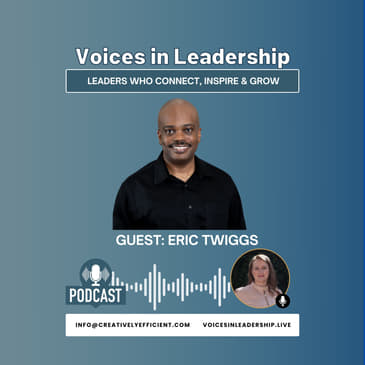


Can discipline truly transform the way we tackle procrastination? Explore this intriguing question with us as we welcome Eric Twiggs, a distinguished coach for executives and entrepreneurs, who shares his remarkable journey from military high school to successful coaching. Eric's story is a testament to the power of curiosity and time management in achieving greatness. He reveals actionable insights into cultivating discipline, highlighting the use of accountability partners and self-awareness as key strategies to overcome procrastination and align our actions with our goals.
We delve into the complex dance between fear and excitement in risk-taking. Fear isn’t just an obstacle; it’s a signpost pointing towards growth. By persistently questioning our motives, we uncover deeper motivations, turning vague ambitions into clear, actionable plans. Learn how fear and nerves can be reframed as positive indicators of significance, guiding us toward excellence. The SCARF model also comes into play, shedding light on how status, certainty, autonomy, relatedness, and fairness influence our resistance to change and tendency to procrastinate.
Our conversation takes a heartfelt turn as we discuss empowerment through acknowledgment and open dialogue. Eric and I reflect on our personal journeys, emphasizing the crucial role of mentors like Dr. Willie Jolly, whose guidance has been pivotal. We explore how sharing fears and vulnerabilities can lead to personal growth and leadership clarity. Visual practices are underscored as powerful learning tools, enriching our discussions. As we close this engaging episode, we encourage you to embrace gratitude and continue this journey with us by exploring additional resources and subscribing for more insightful conversations.
00:02 - Dr. Angela J. Buckley (Host)
Welcome to Voices in Leadership, where leaders who connect, inspire and grow come to share their stories live. I'm your host, Dr Angela J Buckley. Join us as we explore authentic leadership, gratitude and the power of connection through powerful conversations with inspiring voices. Let's inspire, uplift and elevate leadership that truly makes a difference together. Well, hello and welcome back to another episode of Voices in Leadership. I'm your host, Dr Angela Buckley, and my guest joining me today is Eric Twiggs. As a matter of housekeeping, those of you who are listening in on LinkedIn, Facebook or YouTube, please drop a comment, say hi. We love to know that you're here and tell me where you are tuning in from. So, eric, welcome Today. We are here to talk about getting over your procrastination hump right, like what is holding you back from moving forward, and I'm so excited to hear some of your methods, some of your episodes that you've seen stories that you've encouraged and helped along the way throughout your career. So, welcome, thank you, Dr Angela.
01:21 - Eric Twiggs (Guest)
It's an honor to be on your show.
01:22 - Dr. Angela J. Buckley (Host)
Thank you, Dr Angela, it's an honor to be on your show. I am glad to have you here. So you have been a leader in military correct.
01:31 - Eric Twiggs (Guest)
Not the military. I went to a military high school right.
01:36 - Dr. Angela J. Buckley (Host)
And everybody.
01:42 - Eric Twiggs (Guest)
those habits stayed with me, so that's why everybody thinks I'm from the military.
01:44 - Dr. Angela J. Buckley (Host)
but no, Got it. And so tell us how you got from military high school to where you are now.
01:50 - Eric Twiggs (Guest)
So I graduated from Hampton University. I graduated from high school, went to college, and I would say, if there was one word to kind of summarize how I got to this point, how I got to this point, it would be curiosity. Right, that would literally be the one word, because as I graduated from college, I worked my way up through the ranks in the automotive service industry. I got to a point where I had 500 employees working for me at 17 locations. From there I ended up going on to becoming a coach, where I've coached executive leaders and entrepreneurs. I've done over 40,000 coaching sessions.
02:33
So here's where the curiosity comes in. I often wonder what is it that separates the? You can have one executive who gets good results right, and then you can have another executive that gets great results, and I always just wondered what is it that really separates those two individuals? And I found it as two things Number one, it's the ability to effectively manage time and be productive time and be productive. And number two, it's the ability to do the things that you need to do, whether you feel like it or not. So it's really it's curiosity, and that's really what got me on this road to overcoming procrastination and becoming more productive.
03:19 - Dr. Angela J. Buckley (Host)
So a little bit of discipline talking about and a little bit of, just like the momentum, the speed at which you complete.
03:30 - Eric Twiggs (Guest)
Absolutely, and a lot of people think, when they think of discipline, they think of it as being a thing that either you have it or not, right you? Know I'm just not the person that's going to wake up at 4am. I just don't have discipline. But I think discipline is something that you can develop and cultivate as long as you have the right mindset.
03:47 - Dr. Angela J. Buckley (Host)
Oh, talk to me about that. So how do we develop discipline if we feel like we're one of those people that doesn't have it?
03:54 - Eric Twiggs (Guest)
Well, I think you and I talk about this in my book, right, the Discipline of Now, you have to know yourself. Now I will say that some people, depending on your personality type, you come by it more naturally. So, like you have these different personality types of some people. Like, if you're your typical type A personality, like I am you tend to be more naturally disciplined. You tend to be more internally focused Right, and you can get yourself to do certain things. Or internally focused right, and you can get yourself to do certain things. But then there's some personality types where you're more externally motivated. So the key is, it's all about awareness, right? So if you know that discipline doesn't come natural to you, let's say, for example, you want to work out consistently, you want to be disciplined.
04:43
So, instead of, like myself, I'll just go to the gym. But for some people, hey, meet someone, have an accountability partner, meet someone at the gym who can hold you accountable. But but really becoming aware of your natural tendencies is really the key and you can, over time, you can develop discipline.
05:04 - Dr. Angela J. Buckley (Host)
So awareness. I love to talk about the awareness of the problem before we even can solve problems. Can you talk to me how people are noticing? Where is that first step? What are they noticing in order to become aware?
05:20 - Eric Twiggs (Guest)
Well, if you notice that, first off, if you notice that you're not getting a result that you aspire to maybe it's a sales result, maybe it's a profit result and that just you should be asking yourself why, right, and with the awareness and I've been saying this is going to sound bad, right, I've been saying this lately, like literally, I think you have to pretend like you've been living under a rock for the past year, like you don't know anything about the economy, you don't know anything about government shutdowns, you don't know anything about what's going on in the world. So you have to assume that if your business isn't performing, there's something different that you need to do. It has nothing to do with external forces, it's all an internal game. So I think you really have to make data-driven decisions. Yet you have to look at the results.
06:13
And if you don't like the results and you also want to make sure you're clear on what your goals are and what it is that you're trying to accomplish, both personally and professionally, and if you're not hitting the goals, that's when you need to look at OK, what do I need to do differently? My goal is to lose 30 pounds, but I haven't been to the gym this year, right? So what is it that I need to do differently? Oh, I'm not disciplined. Maybe having an accountability partner meet me at the gym could help me to get there faster having an accountability partner meet me at the gym could help me to get there faster.
06:54 - Dr. Angela J. Buckley (Host)
So do we start with awareness or do we start with goals, or how does that? I feel like there's maybe a circle that some people go through where they realize they're dissatisfied but they're not sure why and how that ties to goals, and then they set the goals and then they become the more disciplined. Is that the path, or what paths have you seen?
07:09 - Eric Twiggs (Guest)
well, I think you have to begin with the end in mind, right? I think you should start with. I always say that clarity is the starting point of success. So you, you have to be clear on what is it that you want. Not only what is it that you want, but you need to be clear on why you want it. Sure, and I always say you have to ask yourself why, until you want to cry. And I say that because so you say I want a $5 million business, well, why? So that I have more money to pay bills, okay, well, why.
07:46
And usually when you get to the fifth or sixth, why you start to really hit an emotional nerve. You know like, hey, you know, poverty is something we've always struggled with in my family and I really want so that's. The clearer you are to what you really value and your goals, that's going to motivate you to take action. So in that instance, even if you aren't the most naturally disciplined person, but if you're moving towards something that you are emotional about, that you're emotionally attached to, you're more likely to develop that discipline and take the next step. So I think you have to start with where exactly is it that you're trying to go, and then that's where the awareness can come in.
08:28 - Dr. Angela J. Buckley (Host)
The 5Y that you're talking about is very interesting. So clarity for my background I'm an engineer in a Lean Six Sigma black belt originally and we use the 5Y for problem solving whenever an incident has occurred. In marketing. People talk about the seven, seven wise, for why are you marketing, why are you selling, et cetera, in order to understand, but I've never heard a five, why sequence applied quite the way you just said. For gaining clarity, can you speak a little bit more about that?
09:02 - Eric Twiggs (Guest)
So I'll give you another example. I had a business owner I was coaching and same exact scenario. She said she wanted a $1.5 million business and I just kept asking her why. And when we got to the fifth why she literally was. It's like she paused and she said because I'm getting older and I want to be a mom, and if I don't get the business to a point she literally was getting, I was getting emotional If I don't get the business to a certain point, I'm not going to have the time to build my family. So now it goes from hey, I want 1.5 million, what have you?
09:42 - Dr. Angela J. Buckley (Host)
or to I want a family.
09:43 - Eric Twiggs (Guest)
She got a lot more disciplined once you got clearer on that. So that's why you really because sometimes you can get to the real thing that you want without, because everything it sounds great, right, it sounds like you're having more volume, and but there's complications that come with that, right, and so it's possible that you can get to what you really want a different way. That's why you really need it helps to be clear and just keep asking yourself why it is you want, what you really want.
10:14 - Dr. Angela J. Buckley (Host)
OK, and how do you have why? Answers that you disqualify, that you disqualify? What I'm asking about is are there easy? Why s they're almost like cheaters? Are there things that you look for that someone gives you an easy answer? For example, I worked for an organization and we were working on mission, vision, values and they literally said our mission is to make money. I'm like every business is in place to make money, but why did you choose this method to make money? Right, like the? There was no real impact. Like legally, you don't exist. There's a fiduciary responsibility. You don't exist to not make money Right. So it's kind of a cheater answer, right. So I'm asking that, as an example, are there answers that are like red flags, where you feel like somebody is taking a sidestep instead of truly digging deep?
11:19 - Eric Twiggs (Guest)
Yeah, I think when someone is being vague, that that's usually a red flag for me. So usually that's around the first why. When they say, yeah, I want to make money, I'm starting this business, I want to make money, well, why don't you just sell pretzels? You can make money selling pretzels, right, there's a lot of ways you can make money. Or if I'm goal setting with somebody and they say, yeah, I want happy customers, okay, but let's get more specific here. So I think the key thing is so the red flag for me is when people are just being very vague and very general. But I think the more you really get specific, that's when we start to make progress.
11:58 - Dr. Angela J. Buckley (Host)
And how do you help them when they get to the? I don't know.
12:03 - Eric Twiggs (Guest)
I don't accept that right Because it's you know.
12:07 - Dr. Angela J. Buckley (Host)
I mean, that's our job as coaches. How do you help them when they get to that point where they're like I really don't know how? How do you help them walk through that answer to well.
12:16 - Eric Twiggs (Guest)
So so for me in 2025, like if someone's been working, working with me for a while, they know, never to say I don't know, because with all the technology, you can find out anything you want to find out instantly. So what I get, I'll ask the person. Ok, so if you did know, what would the answer be? I have a specific thing right. I was talking to somebody, we were talking about marketing, and so what's your plan? What can you do to grow your customers? I don't know. And I said, oh, that's interesting. So if you did know, what would you do? And he went into this long, elaborate thing. That was a really good plan and was farther along than what I was thinking.
12:58 - Dr. Angela J. Buckley (Host)
So what are you afraid of?
12:59 - Eric Twiggs (Guest)
is the next question right, right, so a lot of times it's avoidance, when they say I don't know, and a lot of times they feel like that lets them off the hook. It keeps them from being accountable to really take an action, to move forward.
13:13 - Dr. Angela J. Buckley (Host)
I want to say that I've had a very similar conversation of that nature this week. Yeah, I could almost echo all those exact words. So I think that if you're out there in the listening audience and you feel like you want to say, I don't know, you might actually know, but you might be in the fear zone.
13:31 - Eric Twiggs (Guest)
Exactly.
13:32 - Dr. Angela J. Buckley (Host)
Which is probably where you need to say I don't know. You might actually know, but you might be in the fear zone Exactly, which is probably where you need to be. That's where the growth happens.
13:38 - Eric Twiggs (Guest)
Sure. Yeah, I mean it's about awareness right. So, fear on the surface is a bad thing, but, like you said, if you're aware of what it is that you're afraid of, can you make the necessary adjustments, because just because you feel fear doesn't mean that you're not supposed to do it. As a matter of fact, here's my thing. I think fear for me, that fear and that feeling of nerves, that's a sign that what I'm about to do is significant and that I need to press through it what I'm about to do is significant and that I need to press through it.
14:16 - Dr. Angela J. Buckley (Host)
You know when we I feel like I'm an accomplished speaker and I enjoy speaking, but there was a conversation that we were having kind of backstage getting ready for things, and if you don't have a little bit of those on edge feelings before you go on stage, you're not there to give it your all Right. So, being right on edge, delivering that that high quality of excellence that people are expecting, you need a little bit of that to edge it in and really deliver Right.
14:44 - Eric Twiggs (Guest)
But it's all in what you call it right. Do you call it anxiety or do you call it excitement? Yes, I think that's really the key. So for me it's I always just have a respect for the moment. I always have a response of Dr Angela. If you invite me to speak to your audience, I don't want to make you look bad. So that's why I say I have a respect for the opportunity in the moment, in the moment. But so when I first started speaking, it was more anxiety. Where it's now, I feel the same energy, but it's more excitement for the opportunity and respect for the moment, and I think that that's a key distinction that people need to understand.
15:23 - Dr. Angela J. Buckley (Host)
That is a key, very key. It can feel the same in your gut and how you respond to it. Very key it can feel the same in your gut and how you respond to it. Right, we talk about the difference between reaction and response. Reaction would be letting the fear take over and the response would be owning that excitement and building on it to go out and deliver an excellent talk.
15:46 - Eric Twiggs (Guest)
And the other thing is that fear is always in the future. It's never in your present reality. Think about it. If there's something that you're afraid of, you're usually asking yourself questions like what if?
15:57 - Dr. Angela J. Buckley (Host)
Yes.
15:58 - Eric Twiggs (Guest)
That means it hasn't happened yet, so something to just keep in mind.
16:03 - Dr. Angela J. Buckley (Host)
So excitement is in the present and fear is in the future.
16:08 - Eric Twiggs (Guest)
Yeah, right, so you can be presently excited. You can be excited about what's about to come, but fear usually it's. You know it's something that you're dreading and if you look back, most of the things that you dreaded it didn't work out to be that bad right it was. In most cases it was a lot better than you thought it was going to be. It's kind of like, you know, they did the study of the people jumping out of the airplane and they did put a heart rate monitoring. You probably heard this before. Right, they put a heart rate monitor on them and they track their heart rate. Their heart rate peaked right before they were about to jump out of the plane, but then when they got in the air, their heart rate actually went down.
16:48 - Dr. Angela J. Buckley (Host)
Right.
16:55
So it was just anticipating what could happen, and that's what makes people nervous, that's what makes people afraid. Oh, I have a very different analytical experience associated with that. That is very interesting. I think what's interesting about jumping out of a plane, having done that, that is the change in acceleration. Right Once you actually jump out, you meet, you are no longer accelerating and so your body is actually exhibiting and experiencing a completely different phenomenon. But the reason roller coasters are so exciting is because it's up down, you're literally changing your acceleration, whereas once you're out of the plane, it's actually really peaceful.
17:38 - Eric Twiggs (Guest)
Wow. So, Dr Angela, I'm gonna take your word for that, so I'll be on the ground like wow. She looks very peaceful up there.
17:47 - Dr. Angela J. Buckley (Host)
Once you're out, like there's a bunch of things you have to get right to get out of the plane. And once you're out of the plane you're committed. And once they especially once the parachute is open it is peaceful and gorgeous. And I don't know, maybe other people don't talk about it like that, but anyways, so very, very interesting. So we were talking about fear, and really we were. The original conversation was going to be about procrastination, yes, so how does fear play into procrastination?
18:18 - Eric Twiggs (Guest)
Fear is a leading cause of procrastination. So when I do these workshops and we start talking about what are some of the things that cause you to procrastinate, what are some of the things that cause you to procrastinate, I never bring up fear. But someone always brings that up Like I've never done a workshop with a group and fear didn't come up. Fear is one of the leading causes. You know it's. You have fear of success, believe it or not, where people they're afraid of hey, what is this going to mean? Am I really up to it If I go to this next level, if I make all this money, am I going to be a bad person? You have fear of failure, which is very common, and then you have fear of the unknown. Right People just fear, you know, uncertainty. So I think you just have to be aware of the things that are triggering you. But fear is huge when it comes to a cause of procrastination.
19:17 - Dr. Angela J. Buckley (Host)
And what does that feel like? So you say you don't bring it up. They bring it up. What, where like what and where. And how are they articulating that for you? Where Like what and where? And how are they articulating that for you, whether that's in a workshop or in a one-to-one coaching?
19:35 - Eric Twiggs (Guest)
So in a workshop I'll just I'll ask them you know, what are some of the things that cause you to procrastinate? And you know they're going to breakouts. We come back and then fear is usually on everybody's list. You know, there's something that, something that they're afraid of. And then if you talk about on a one-to-one session, if I'm coaching someone, and let's say, three weeks in a row they said they were going to do something and they didn't. Let's say they agree that they're going to hire their replacement in the business. Their goal is to work on the business and not in the business. So they want to hire their replacement, but three weeks in a row they haven't taken any action.
20:15
So there've been times I've asked okay, let's stop, what is it that you're afraid of? So on the surface they'll say, oh, I didn't get around to it. You know, we got really busy. I had to do this, I had to do that and I'm like stop, okay, what is it that you're afraid of? And then they'll pause for a while. Then they'll say I don't want to make the wrong hire, you know. Or they'll say I don't know that, can I really afford to bring this person on? So it's so yeah, definitely so. Those are different ways that fear. So. So that here's the thing, right. If, if you're really feeling fearful and especially you don't have anybody to call you out on it, the easiest thing to do is nothing right, so um are you familiar with the scarf model?
21:08
the scarf model. It's a change model.
21:10 - Dr. Angela J. Buckley (Host)
It's a change management. Okay, it's a change management approach. And for those of us who are in change management to talk about why people are resistant to change, resistant to change and it stands for status, certainty, autonomy, relatedness and fairness. And I just I'm hearing you talk about fear and the things that hold people back and procrastination, and although we use that in change management sort of a little more industrial org type work I feel from the things that you're saying that it might actually be helpful even in our coaching for procrastination, like truly understanding the underlying cause that a person would be that would be causing them to be fearful.
22:03 - Eric Twiggs (Guest)
Oh, I totally agree. Everything you mentioned in the scarf model is a contributing factor, because it's really about change, right? What's the quote from Marshall Goldsmith? What got you here won't get you there. Correct, it's impossible to really get to that next level doing the exact same thing that you've always done. But people resist the change. It's because it shakes up the comfort zone. So, yeah, absolutely, we need to be figuring out. You know, what is it really that's keeping you from moving.
22:34 - Dr. Angela J. Buckley (Host)
So what's a great example of a time when you've been able to successfully coach someone through their change, so that their productivity levels were increasing?
22:45 - Eric Twiggs (Guest)
Good, I mean several, several I mean I can go back to. I mean several, I mean I can go back to the lady I mentioned before who, once she really got clear on you know her, why, you know her business started picking up sales, started moving forward. But but what I saw? I had a business owner who he told me right from the beginning that he was a chronic procrastinator, he told me right from the beginning that he was a chronic procrastinator, right, he just.
23:13
I just procrastinate on everything, I just so the challenge is he wasn't really setting priorities, right? He was just kind of all over the place.
23:20 - Dr. Angela J. Buckley (Host)
Like for him.
23:21 - Eric Twiggs (Guest)
It really wasn't like a real fear thing, it was more he just wasn't establishing priorities, that he would say you know, I'm going to build this operating procedure this week and then it's Friday at five o'clock and yeah, he hasn't gotten around to it. So in his case I just I got him in the habit of making appointments with himself.
23:42
So I said instead of saying you're going to build a standard operating procedure this week, say that you're going to build a standard operating procedure from 2 o'clock to 2.30 on Tuesday. You're going to put it on your Google calendar, you're going to have the alarm notification going off and it's an unbreakable appointment. So you have to say the day, the time and the place that you're actually going to do this, because if you do the day, the time and the place, you're 40% more likely to follow through. So you're going to do it at your home office, not at your business office where everybody's saying, hey, you got a minute. You're going to be at your home office at this time, from 2 to 2.30. And he started getting a lot done and he ended up. His profits doubled, sales picked up.
24:31 - Dr. Angela J. Buckley (Host)
He ended up hiring his replacement and a lot of that was due to how he started to get more effective in prioritizing his time, so putting an appointment as opposed to letting other things fill his day, prioritizing the activity that he may not cherish but knows that needs to get done, was a technique for him that worked.
24:57 - Eric Twiggs (Guest)
Yeah, and here's the other thing too is like I told him this has to be a non-breakable appointment, because sometimes you know you can set the appointment but then someone says, hey, you got a minute and you just don't keep your appointment, but you almost have to treat it like it's your child's doctor appointment. Right, if your child has a doctor appointment on Tuesday at two o'clock, you're moving everything on your schedule to make sure your child gets to that appointment and you just have to treat yourself that way as well I do working blocks, but I don't always create my working blocks to be unbreakable.
25:32 - Dr. Angela J. Buckley (Host)
Yeah, that's the key. Yeah, so I think it depends on the priority.
25:41 - Eric Twiggs (Guest)
I have some that are breakable and some that are not, but I mean priority. So, again, that's why it goes back to being clear on what your goals are and what is it that you really want, and if this is something that's going to move you closer to what you want, then it probably should be a non-breakable appointment, right.
25:59 - Dr. Angela J. Buckley (Host)
Yeah, we talk about what are the three most important things for the day. Right, those are the unbreakables, and the other things can be flexible. But if you create those three unbreakables for the day, basically my personal rule is, if it's unbreakable, it has to get done before 8 am. Right, like I'm an early, early morning riser and what I find is that I enjoy serving and responding to others, and so my unbreakables have to be done before 8 am, and then I'm not burning. I'm not burning the day, I'm not wasting the day, but that's how I prioritize. If you know it's important, it gets done before 8 o'clock.
26:45 - Eric Twiggs (Guest)
No, I think that's great and you want to be doing the things that move the needle.
26:50 - Dr. Angela J. Buckley (Host)
Yes. Because I've worked with a lot of people who they work very hard, right, you can't question their work ethic, but you can question are they really working on the right things and so absolutely, and I think it just gives you that feeling of confidence and momentum when you know that, hey, it's eight o'clock and I've gotten my most important things done for the day, so now I think that's great. So are you familiar with the eggs, I'm sorry, the walnuts and the grains of grains of rice?
27:22 - Eric Twiggs (Guest)
Oh man, Tell me about the wall. That sounds good.
27:26 - Dr. Angela J. Buckley (Host)
You know it's it's a kid's conversation, but we're talking about prioritization. And if you put a cup of rice into the jar, you can't fit the walnuts in on top, right right. If you put your walnuts in first, the grains of rice will fill in around it and everything fits in the jar. And everything fits in the jar.
27:58 - Eric Twiggs (Guest)
But the order.
27:58 - Dr. Angela J. Buckley (Host)
It's the same day, but the order in which you put those things together make all the difference. No, I totally agree, it's a simple visual for the same thing that we were just discussing, so sometimes you might be afraid of it, but just go do it.
28:09 - Eric Twiggs (Guest)
See, we've got takeaways already. We got scarves, we've got the walnuts. Somebody needs to be right. If you're watching this, you really need to be taking some good notes and putting a little star by those two points.
28:22 - Dr. Angela J. Buckley (Host)
Well, I like the ask why, until you cry, I had never heard that so good ones, good ones today. Thank you very much for your insight. So you said that you have a book. Do you have any books coming out? What are your next steps right now?
28:41 - Eric Twiggs (Guest)
So I do have a book. The book is the Discipline of Now, 12 Practical Principles to Overcome Procrastination. So it's just, it's a useful tool I wanted to put in people's hands so that you can and it doesn't.
28:54
You don't have to be the person who wakes up at 4 am every morning seven days a week. You don't have to be that type of person. You know you can be a night owl, right, and you'll find practical tips in that too, even if you're a night owl. Personality, things you can do to overcome procrastination, and the book you talked about awareness earlier. So the real overarching theme of the book is awareness. So that's the biggest thing you'll take away is when am I procrastinating? And you know what do I need to do to accomplish that? And as far as next, my goal is just to continue to get the message out. So I'm looking to do more speaking engagements. I kind of after the pandemic. I was doing a certain number of speaking engagements before the pandemic, but after the pandemic my rhythm started to change. I started focusing more on kind of the group coaching and one-on-one coaching and things of that nature. But I'm going to start getting back out there again doing speaking engagements. It's kind of my next.
29:55 - Dr. Angela J. Buckley (Host)
Where can people find your book?
29:58 - Eric Twiggs (Guest)
So you can go to ericmtwiggs.com and you can access a copy of the book.
30:05 - Dr. Angela J. Buckley (Host)
It's at the bottom of the screen.
30:07 - Eric Twiggs (Guest)
Right, there you go. Fantastic, and it's in paperback and it's in audio version as well. So if you like to listen while you exercise and do household tasks, things of that nature, we've got all the bases covered.
30:22 - Dr. Angela J. Buckley (Host)
Okay, awesome, fantastic. So, eric, when we chatted earlier and prepped for this, I asked you to consider a person that you would like to publicly recognize, and so I'd like to move over to the spirit of acknowledgement part of this, of acknowledgement part of this. And who would you like to recognize for helping you along your journey or being supportive of your work?
30:52 - Eric Twiggs (Guest)
So I'd like to recognize Dr Willie Jolly.
30:57 - Dr. Angela J. Buckley (Host)
Okay.
30:58 - Eric Twiggs (Guest)
He's a mentor of mine and you know it's interesting. So you know he's this big famous speaker, right.
31:08
And he's written books, been on TV and I met him at an event, gave me his business card, I sent him an email with a question and within 10 minutes he had this long thought-out email that he was like, you know, somebody really had to take time and care to have that, uh, have that level of response. And I'm like man with everything he's got going on. He took the time, he didn't know me from a can of paint and I definitely want to acknowledge dr willie jolly and I've tried to model that just for myself, going forward and really just give people, no matter what level they are in business or life, my undivided attention. But I understand why he's successful because he's focused on helping other people to be successful and really cares and I try to model that myself. So I definitely want to acknowledge Dr Willie Jolly for that.
32:05 - Dr. Angela J. Buckley (Host)
Okay. So we're going to walk through the spirit of acknowledgement method. I'm going to ask you some pointed questions on how he helped you, what that recognizes for him, what that recognizes for you, and you're okay with that. Great, okay. So, specifically, if I heard you correctly, he responded back to a request. Can you give a little more examples or a little more enlightenment on specifically what he did that helped you?
32:40 - Eric Twiggs (Guest)
Well, so he? I was asking him the question of hey, I'm looking, I'm trying to get into the speaking industry and obviously you've had a lot of success. And so the funny thing is my dad said hey, you know what, if you want to be a motivational speaker, this is the guy you need to follow. So I started watching him, seeing him on TV and all of that. But so I emailed him and asked him what's your recommendations? I'm looking to become a professional speaker. And that's when he just sent me all these details. He says, hey, align with Toastmasters International. I did that. He says, hey, you need to join the National Speakers Association. So I did that. He said hey, you know, you just need as much practice as you can. So initially you may not be speaking for free. I mean just all those detailed types of things. And as it turns out, you know, when I joined the National Speakers Association, I was sitting beside him because we were in the same chapter.
33:36 - Dr. Angela J. Buckley (Host)
Wow.
33:37 - Eric Twiggs (Guest)
Ended up writing the foreword to the book.
33:40 - Dr. Angela J. Buckley (Host)
Did you know that he was in your same chapter?
33:42 - Eric Twiggs (Guest)
I didn't know that, no.
33:53 - Dr. Angela J. Buckley (Host)
I'll be attending an event this evening, so that's funny with NSA yes, okay. So he responded specifically and quickly yes, okay, and personal. So when we talk about the p, it refers to personal and the question is like how did that support reflect his character or how does it? What did it cost him?
34:18 - Eric Twiggs (Guest)
well. I mean, I'm sure it cost him time, but I think he probably saw it as an investment, because really, if you're helping someone, that's really what it is You're investing the time. But he didn't.
34:31 - Dr. Angela J. Buckley (Host)
That's a reflection of his character. Yeah, I think it was a function of his character.
34:35 - Eric Twiggs (Guest)
I don't think he was trying to. I know he wasn't trying to sell me something. That's the thing. He has all kinds of programs Sure know how to become a speaker, programs and this and that he never mentioned any of those, like it was just hey, you know. Here's what you need to do, here's what you need to think about, where I I know of other people who in that same situation oh, you need to sign up for my program, hey, it's ten thousand dollars.
35:00 - Dr. Angela J. Buckley (Host)
Here you go yes, I hear that often, so okay, so S-P-I. The next one is impactful, and so the question about impactful is truly a metrics driven question. How did that impact your career or your business in a measurable way?
35:26 - Eric Twiggs (Guest)
Tremendously, tremendously, because it got me on the right path to professional speaking and the way that I've attracted clients over the years is someone saw me speak and then towards the end they say hey, how do I work with you? Hey, can you coach me? Are you taking on clients? So it's been pivotal. I mean I could tie that conversation back to revenue. Okay, absolutely Revenue, okay.
36:02 - Dr. Angela J. Buckley (Host)
Absolutely so. In a business setting we would ask to share some of those numbers Sometimes here we may not want to share that right, but okay, so we'll go with direct revenue and stream Absolutely. Values is what we talk about with relevance. So how does that, how does his support now reflect what your values are within your organization?
36:33 - Eric Twiggs (Guest)
Well, again, I think really taking the time to help people is about being of service, kind of having that, that servant leadership, um, looking to help, and and I just always, I just live by and I've had the opportunity to be around a lot of, uh, celebrities, speakers, the ones that really do. Well, I they, I don't care if you are the person taking the trash out, they're talking to you like you're the most important person in the room, you know, and I try, I try to, and the thing I've learned and what that teaches me is that you just never know who you're talking to and you just never know. And life is a big circle. So even if that person you're talking to now isn't somebody who can help you, you just never know Years later, that person could be in a position to help you, but you're not doing it because you're thinking, hey, this person can help me in the future. You're doing it because it's really the right thing to do and so I try to from a value standpoint. I just try to keep that in mind.
37:46 - Dr. Angela J. Buckley (Host)
Okay. So a valuing of people. It reflects an element of humility as well, okay, and of course, the servant leadership yes Example. So the final two I and T final two letters stand for inclusiveness and timeliness, similar to SMART goals. So ideally, when we deploy the spirit method, you do, you would be doing that on a smaller level, closer to the time when the event took place, right? We don't do that as much here because this is a retrospective and we're looking backwards, but it's inclusive in that it is public and acknowledged. Yes, yes, so that is the spirit of acknowledgement.
38:35
Do you mind if I give a stab at summarizing all of that into two or three sentences? Sure, okay, Dr Willie Jolly. Yes, I'll make sure I get the name right. Okay, Dr Willie Jolly, thank you so much on behalf of Eric Twiggs for your quick responsiveness. When he sent out an email asking for help on how to get his public speaking career started, you responded with a detailed message that was a no pitch, that simply demonstrated servant leadership, an element of humility, and provided a clear path for him to follow. He soon met you and that those actions led to a relationship that has directly impacted the revenue stream of his entire business and it reflects back on his personal values of servant leadership and seeing others and practicing and walking in humility. So thank you not only for demonstrating that, but also being a critical and pivotal part of the turn in his leadership journey.
39:58 - Eric Twiggs (Guest)
Dr Angela, that is outstanding.
40:02 - Dr. Angela J. Buckley (Host)
Dr Angela. That is outstanding so well. Thank you for sharing how he helped you and how he has had such a powerful impact in your career. We all get to know a new great person right? We stand on other people's shoulders. Yes we do. So, Eric, what else would you like to add for today?
40:25 - Eric Twiggs (Guest)
Well, something we talk about overcoming procrastination, something I always say, advice I'm always sharing with people is to not allow don't allow perfect to become the enemy of progress. Oh, yes, I think that's a critical thing because a lot of times we want to have everything figured out before we move right. I talk to people that are doing research for their book for years and years and years, but at some point you have to take the next step, and the next step can be a small step, as long as it's in the direction of what you want. So that would be my contribution Don't allow perfect to become the enemy of progress.
41:10 - Dr. Angela J. Buckley (Host)
I'll add to that. Last night I was speaking with my publisher and he said you can't edit a blank page. That's good. I feel like I need to encourage my son to hear that on every single high school essay and basically every email as well. Right, Can't edit the blank page.
41:32 - Eric Twiggs (Guest)
I'm going to have to borrow that one.
41:35 - Dr. Angela J. Buckley (Host)
It is not mine and he said it is not his, so I don't know who the original one was, but clearly very important. That's great. So well, eric, I really enjoyed this conversation today. I enjoyed that we had so many different visuals that we're able to practice and share with each other, and that vulnerable conversation of fear is so important in gaining clarity. So thank you very much for your time, thank you for your expertise, and I look forward to talking to you again soon.
42:08 - Eric Twiggs (Guest)
Thank you for having me. This has truly been a pleasure.
42:11 - Dr. Angela J. Buckley (Host)
Thank you very much and until next time. Stay tuned and we will see you next week. Thank you for joining us on Voices in Leadership, where leaders who connect, inspire and grow share their stories. I look forward to welcoming you back to our next conversation. In the meantime, visit http://www.voicesinleadership.live to access show notes, links and to subscribe and stay connected. And in the spirit of gratitude, let's remember to thank one person near you Until next time. This is Dr Angela J Buckley signing off.