
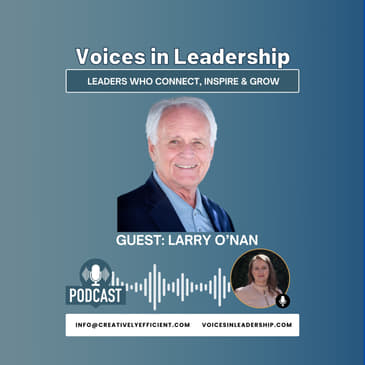
Unlock the secrets to thriving leadership and intentional living with our special guest, Larry Onan, an acclaimed author and development consultant with over five decades of experience in fundraising. Larry shares not only the essential groundwork for effective fundraising but also how adopting an intentional attitude can significantly transform both personal growth and leadership. From a forgotten $2 million pledge to the nuances of donor motivation, this episode promises to inspire you with stories of resilience, collaboration, and the power of choosing to thrive.
Reflecting on the initial stages of fund development, I recount the unexpected challenges and valuable lessons learned. Imagine being tasked with resurrecting a long-forgotten pledge with the help of a friend who knows more about submarines than fundraising! Together, we navigated the terrain of pure fundraising versus development, embracing risk-taking and innovation as guiding principles. This journey not only forged meaningful partnerships but also demonstrated the true essence of fundraising as a collaborative partnership rather than a mere transaction.
Life’s twists and turns mirror the realities of fundraising, and this episode explores how staying intentional and focused can lead to meaningful change. Hear how aligning charitable contributions with personal values can transform lives, from initiatives in the Philippines to your own backyard. Larry and I emphasize the importance of partnership, complementary skills, and mutual support, sharing a narrative where collaboration leads to greater achievements than any individual effort could. Join us for this engaging discussion, packed with insights and personal anecdotes, and discover how you can make a lasting impact through intentional leadership and giving.
00:03 - Dr. Angela J. Buckley (Host)
Welcome to Voices in Leadership, where leaders who connect, inspire and grow come to share their stories. Live. I'm your host, dr Angela J Buckley. Join us as we explore authentic leadership, gratitude and the power of connection through powerful conversations with inspiring voices. Let's inspire, uplift and elevate leadership that truly makes a difference together. Hi Larry, welcome to this episode of Voices in Leadership. I am so glad to have you here.
00:40
And I am turning down the sound while I look at our live feed on LinkedIn right now, so I apologize for one second. So glad to have you join us and talk about intentional living and intentional giving. It's a fantastic topic that I'm excited to hear more about.
01:04 - Larry O'Nan (Guest)
Well, I'm sure glad to be with you, dr Buckley, this morning. It's fun to discuss this with people and help people thrive rather than survive, so I'm just thrilled to be a part of it today.
01:13 - Dr. Angela J. Buckley (Host)
That is one of my favorite phrases and maybe it was 10 years ago. I decided that was going to be my phrase of the year. I was really kind of in a lot of struggle, had a lot of work and the workload wasn't balanced and I just decided that January right, like I was going to be thrive, not survive. And do you know that I was in such a circle that I actually even wrote it down wrong in my notebook, as I was, and I was like surely this is a sign that this is the right phrase for this year.
01:47 - Larry O'Nan (Guest)
Well, I use it a lot because I think too many people are just surviving. They really don't know what their North is and so they survive like the bumper cars in a carnival. And you get in and you just try to plow into somebody else and you think that's the end of life by getting somebody else around. And to me, a bumper car routine is not the way to live life. So you have to make a decision that this morning I'm choosing to thrive today, because the world itself is not going to help you thrive. The world is going to end up taking you down by attitude, by all kinds of things, and so I wake up every day thinking I'm going to thrive today and I'm not surviving. There's a number of other things I think about as well, but that's my point is it's a choice, it's an attitude, and I think we've got to put on the right attitude if we're going to be good leaders or good people just serving in the world.
02:41 - Dr. Angela J. Buckley (Host)
Larry, we are going to have such a great conversation but before we go too far in, I want to make sure that our guests know who you are. So I have to read your bio. So this is a part where you get to smile for the camera and I get to talk good things about you. So Larry is an author and he has been a development consultant, specifically fundraising for organizations, for over 50 years. He's a church governance coach and he specializes in lifestyle stewardship. Mentoring is called the Intentional Living and Giving, and it's available at your favorite book supplier or, of course, at his website, larryonancom and the spelling of that is larryonancom.
03:36
He graduated from the University of Colorado and he was a full-time staff member there for Campus Crusade for Christ, which is where he got his start in fundraising development. Since then, he's raised over $150 million for evangelism and development programs worldwide. This led him to the Management Development Association team as vice president of Stewardship Strategies in 1984, a role that he held for over 30 years as he counseled Christian ministries, instilling confidence in them, as he helped implement stewardship-focused programs that raised tens of millions of dollars for various ministry purposes. Today, larry continues his activity in the field, speaking about lifestyle stewardship and fund development in the United States and abroad. He is an active volunteer and he's recognized as a specialist in the nonprofit board governance, nonprofit board management and project management. He contributes significantly to fund development and stewardship strategies. As an author, he contributes significantly to fund development and stewardship strategies. As an author, giving Yourself Away came out in 1984 and Intentional Living and Giving came out in 2024. They are widely recognized as insights and practical advice. Please join me in welcoming Larry Onan to Voices in Leadership today.
05:04 - Larry O'Nan (Guest)
Oh, I'm glad to be here, Angela. Thank you very much.
05:16 - Dr. Angela J. Buckley (Host)
So I'm very excited. So partly because I am also coaching a not-for-profit board and they have never done significant fundraising and we're just in those early stages of talking about how do you do it, why do you do it, what is the intent, and helping them before they even get started laying that foundational groundwork of mission, vision, values, right, like no one's just giving you money for the fun of it.
05:40 - Larry O'Nan (Guest)
That's exactly right. Yeah, yeah, you're into a very interesting world. I started off. My history goes way back. I was asked to help the vice president of the organization that I was with with a problem that he had met 15 minutes before, which became my partner in crime, so to speak, as we didn't either one know what we're doing. He was a. His background was nuclear submarines. He'd spent six years in the Navy, he had not graduated from college, but it was like having a master's in nuclear submarines and he had come on to be a part of the organization. We met 15 minutes before I walked into the vice president's office and that was the beginning of a lifelong friendship that we still have today.
06:33
But the challenge that this guy had was Larry, I've got a problem. Come to my bathroom. And he took me to his bathroom. It happened to be in a converted hotel so that every room had a private bathroom, and he opened up the shower curtain we all have those old-fashioned sour curtains. He pulled it back and there were 28 boxes of boxes sitting there in the shower curtain behind it and he said larry, this is the pledge of what we did back in june, 90 days earlier, and they've never moved out of my bathtub since I put them here in June. Is there any way we might be able to follow up this pledge and turn it into some level of reality? And it was worth about a $2 million commitment back in those days and he said I don't know what we can do. He says if you can do it, figure it out, let's do it. We took the boxes and for the next four or five hours as we looked through this pile of confusion, it was what in the world did we get ourselves into? And I began my fund development career looking at 28 boxes and pledge cards that were 90 days old. Now, fortunately, my partner had the background in technology and I had the partner because I graduated from the University of Colorado. I was an English major speech, theater, drama all of that kind of stuff was my background. So I became the writer and the creator and he became the technical guy and we partnered together and between the two of us we started creating something from nothing and fortunately at that time, angela, we were doing what I really call pure fundraising and there's a real difference between fundraising and fund development. Now people think, well, you're just using semantics and words, but there really is a serious difference.
08:21
Fundraising almost always has an exchange going on. So the fundraising is if you do this for me, I'm going to give you a blanket. If you do this for me and healthy animals, I'll give you a T-shirt with the dog on it. If you do this for me and play golf for me, I'll come and play for you. It's ironic that many times people that participate have no idea what organization they're with, what the cause is, what the mission is. They're just playing golf because they like to play golf. And, yeah, they put $300 down and they get a tax write off for their contribution.
08:56
But really, fundraising is always an exchange and if you listen to it on either in the commercial side, if you listen in the political side or listen in the non-profit side, there is something being given away. Uh, you know it's. You rarely hear a person that says I'm not committed to my quote donors because they're paying my way to say what they want me to say and if I don't say what they want me to say, they won't do it. So the exchange there is I'm buying you and your time and your voice. It's over and over again that way.
09:30
But I got into classical fundraising, I was learning how to make the exchange work. It was positive. There's nothing sinful about doing fundraising, but it's a lot of hard work because you're always trying to find the next thing that a person wants so that you can exchange it back and forth, and that's fundraising, and it it is happening all the time. It's nothing bad for it. You're not going to get significant gifts that way. You're going to you. The person's are giving significant gifts. They've got a different motivation.
10:01
So, anyway, we started doing the fundraising and it was about three or four years later and we had absolutely in that time, no guidebooks, no counsel, no coaching, nothing. It was the season of life was. There was no such thing in existence. So we were winging it from our own hip pocket trying to figure out how to do this, and we started collaborating with other guys like myself. Around the country.
10:27
I reported to a guy that was a visionary. He wasn't the top man of the vision, but he was the one that always pushed me on and kept telling me one of the things that I learned early on that I had the freedom to fail. And I woke up every day as I would start these projects because I started off being fearful. What if it doesn't work? What if we spend too much money? And he just said, larry, you got the freedom to fail. Nobody else knows the right way to do this either. You've got the freedom to fail. So I took that very seriously and I started diving into what it was going to take to make this work, and we became successful.
11:05
Diving into what it was going to take to make this work, and we became successful. We raised in excess of $2 million off of those old pledge cards that we got in that day 28 boxes and we started seeing other things work. And that freedom to fail created the environment for me to say I can do something else, and all I do if I don't get to the goal is readjust and make new changes and go again. So the goal was not that I had to win it or I lose. The goal was how close can I get to the goal? And that really started to stimulate me.
11:38
Well, what ended up happening is I ended up in a meeting one day. I was the little man on the totem pole Because I had a success record. They said, well, let's invite Larry in to hear a presentation from consultants, because the organization was looking to raise significant dollars. They didn't look at me as the director of anything, they just knew that, whatever Larry was doing with his money, they were starting to seek success and they weren't expecting the success we were seeing. But they were confused about how we were making it and there was a presentation made on how we were going to raise significant dollars. The only people that raised that kind of much money in the past was probably Harvard and Stanford a few places like that and they were always working on endowments. So endowmentsments were very different animal than just cash income.
12:29
And the argument was if you don't teach lifestyle stewardship, you're going to create competition rather than be inclusive and help everybody raise more money. But if you teach lifestyle stewardship and people start to give generously because they want to, not because they have to, and they're focused on the mission rather than on the game, well then you had the possibility of raising your money. But the organization was not ready to start something new, to start teaching something new, and somebody in the room off the cuff said well, let's just assign that to Larry and let him figure out what we mean by lifestyle stewardship, because that was a problem. What in the world was lifestyle stewardship and I wrote down on a yellow pad of paper. I can see it in my mind today figure out what lifestyle stewardship is and how does it impact what you do. I wrote that down and at the bottom of the page I wrote again and you've got the freedom to fail.
13:29
And that was really the trigger that said, okay, what's going to happen next? Ironically, nobody in that room ever followed me up to ask me what I was learning, but I'm a responsible person. So about eight weeks later into it I said I've got to get a team of guys. I had four or five guys working for me by then and I said we've got to sit down and figure this out together because it could make a big difference in how we view what our job is. And that's when I started a study, a biblical study, on what stewardship was. And stewardship often is associated with a thing in the common church today called tithing.
14:07 - Dr. Angela J. Buckley (Host)
Yes, and they have stewardship.
14:08 - Larry O'Nan (Guest)
Sundays the pastor will preach for three or four weeks on money, put guilt on the people, contrive to figure out how to get them to give what's called the tithe. Now, the tithing is an Old Testament thing. It's a very biblical thing. Now, the tithing is an Old Testament thing. It's a very biblical thing. But tithing is a principle of how God instituted what would be called the Internal Revenue Service in the Old Testament. There was three things the tithe did for the Old Testament Jewish people theocracy it was the religious system. And then, secondly, it took care of willows and orphans. And thirdly, it paid for the funding of a group called the Leviticus, the Levites. The Levites had no land to make their own money, so their process was to collect money from the people to help this entire tribe of people manage the other three things, and so they were managing the affairs on behalf of the Israelite people.
15:10
Well, I had always heard about the tithe and I didn't. You know, I was a preacher's kid growing up and so, yeah, my dad did what everything else was at that time. But I thought what in the world is tithing? And I realized tithing wasn't the issue. The word stewardship didn't mean money, and that's what I equated it to mean. If you use the word stewardship, people think you're after money.
15:34
Stewardship is managing somebody else's affairs, and so when I'm a steward, I'm managing something that doesn't belong to me on behalf of the owner. That's a very simple way, and every one of us are stewards of our life. Either we're going to do a good job at our life or we're going to do a lousy job at our life. But we are stewards of life that's been given to us and it's not our life. We walk around acting like it is. Even in California, where I live, I have a house and they tax me every year to live in this house. But I know every morning when I wake up I'm not living in my house. I'm entrusted to live in this place, but it really belongs to my heavenly father. And so my attitude of everything I do, whether it's my car, my clothes, everything I don't own, but I'm trusted to use things. So lifestyle stewardship is somebody that's been assigned to manage somebody else's affairs, and the more successful you are in doing good management, the more God can bless and reward you and ask you to do more. In the book I refer to the. If you learn these principles. You become an authorized wealth distributor, and that's really what I encourage people to consider is becoming the authorized wealth distributor because you're authorized to manage the affairs that's been entrusted to you for somebody else and in that process you're supposed to manage it carefully and bless other people in the process and help them be successful.
17:14
So lifestyle stewardship is a assignment that in the Old Testament. The first five books of the Old Testament are the Jewish core, the law, and in Genesis 2, there's an illustration of where God was entrusting Adam and Eve to take care of his stuff and he told them go take care of it. Name the animals, do what you want to do, but you're taking care of my stuff. He never really assigned it off and left them that way. Now they blew it in Chapter 2 of the book. So blowing it in Chapter 2 is the story of the Old Testament, of how you recover this mess that they created in chapter two. The entire book is that way. The entire New Testament is also addressing how that's going to really be solved.
17:52
So I got into that pretty seriously, but I got into that by the team of people. I did author the books, I did teach the subjects, but if it wasn't for the team of people I put around me and the ownership that I gave them. And in leadership you've got to distribute your ownership of something. You've got to let somebody else have the freedom to fail. And I learned years ago that in my role as a leader I had the best way to manage was management by wandering around, and so I often would not stay in my office, I would go wander from desk to desk, and I tried to do this two or three hours every week where I just wandered around. They saw me as being friendly, they saw me as being encouraging and I was all those things, but I was trying to learn what they were doing in their real life, encourage them to do better in their life, learn from their experience that I might take someplace else, because everybody's got something to contribute. And so my management by wandering around was not only was I keeping things focused, but I was also learning from the very peers that had been entrusted to me to manage to see fund development occur, when I realized that fundraising was the exchange and fund development is getting people on mission.
19:14
And you mentioned you're working with a group right now. I think many times when a group starts up, their goal is to raise money. I had a guy one time I was trying to coach and I said here's how you got to go about doing it. And we were talking about the theory and the process and the principles behind it. And he interrupted me about 15 minutes later and he says I think what you're talking about is really good, larry, but I don't need your teaching, I need money. And you know that just hit me is he was not focusing on the generosity of other people, he was trying to get something to accomplish his goal and his objective. And when you're focusing on what I need to survive, that's not the goal. It's what you're trying to help other people do to join you in your mission, and how can you engage them and bring them along. And so I changed everything about fundraising to fund development.
20:11
Development is steps and stages in growth. I have a 48 year old daughter, but a long time ago, when she was about five years of age, she wanted to ride her bicycle and she was having trouble riding it without training wheels. Now some kids pick up really fast. Jessica was just concentrating on the back wheel too much, and you can't ride a bike and be interested in the back wheels. It doesn't work that way. So I learned that in that process of working with her she had to go through steps and stages and growth before she became a really good bike rider. Now she loves to ride the bikes today, but at that time she was having struggles and it was about a year of pain watching her fail while everybody else could do it, because her steps and stages and growth were not there yet. But when she got there she took off and when you take off in that direction now you're able to be sustainable long term because you built the right foundation under you and that steps and stages and growth.
21:15
So I'm always encouraging leaders to not look at fundraising as getting money. That's just an exchange, that's just putting money in your pocket from their pocket and it's, quite frankly, a lot of manipulation that goes into play. I've watched the commercials on uh, on uh animal care and they always show you the saddest pictures on television or on the commercials these poor dogs in the cold winter freezing to death. That's emotional manipulation to get you to do something that you may not want to do, but you feel badly for the dog. So you send some money and you're going to get a T-shirt. So they got you emotionally connected and now they got you a T-shirt that you may not want, but you got a T-shirt. Fund development has sometimes thank you gifts, but most of it is around the vision and the mission and what do you want to accomplish and how can we help you accomplish your goal and your purpose? So we are now partnering and that's what this is. This partnership is holding hands. My partners financially are equally involved in the organization's mission just as much as I am or anybody else is. It's not that they're less than or it's not that we don't need them. They're equals in the organization's mission. So I'm really big about how do we get people to think that way?
22:42
Years ago, angela, I was teaching this in a seminar and we were teaching executives this concept because we were trying to help them thrive as well in their business, and these principles behind lifestyle stewardship definitely would put that on the map. This guy had just retired. He had sold his business for a very significant sum of money, he was wanting to retire and now work with the organization and help executives and their spiritual needs, and he was anxious to retire and he came to my five-hour session on stewardship. That day, at the end of it, he said, larry, I came here to this weekend to figure out how I'm going to take my next chapter, but I'm leaving here to go back and start a new business. And I said, oh, you just sold a business. He said, yes, it was very successful and with that money I'm going to start a new business because I know I'm good at making money. I've done it all my life. I know the secrets, the formulas, the processes that made me successful. But, based on what you said, I am a steward of what God gifted to me, and he gifted me with the ability to make money. So I'm not going to go do what I thought I was going to do. I'm going to go back and start a new business. And he went back and started a.
24:05
He did not compete with himself in his past business. He started a brand new business concept and was extremely successful for the next five or six years and then sold the business later. And all the time his whole view was I don't need this money, I'm making money for what I believe in, I'm making money for the mission. And so he continued to give money off of the proceeds of that business all while he owned it and it was doing very well. He sold it and gave more money. And then he said to me about eight or nine years later okay, I'm selling the second business. This time I really want to go do what I thought I was going to do earlier. I want to work with executives and doing this other thing.
24:48
So he retired and took his but no, he was.
24:52
He had money capacity. He gave a lot of it away, but he also lived in that retirement and then he became a freelance to help other executives use the principles that he used. But the change he made is he realized that he was a steward of the gifts that God had given to him. That wasn't money, it was knowledge and skill packages that made him successful. And he said that's what I should be doing, that's my mission, so that I can accomplish something else. The minute a group says we need money more than we need to engage people in our mission and we need relationships and we need partnerships, we need people to join hands with us and we walk together and we do this thing together Now, in the organization that you work with. That means accountability, yes, and if you walk that closely, they're going to ask you hard questions. They're going to sometimes withdraw money from things that they don't like what you're doing. They're going to be irritating the dickens out of leadership because they own it like you own it.
25:57 - Dr. Angela J. Buckley (Host)
Right.
25:57 - Larry O'Nan (Guest)
And that's very uncomfortable because most nonprofits just want to. They call them donors. Donors are a person that gets stuck in the arm with a needle to give blood and then they get a sugar cube or a cookie at the end of the painful experience of giving blood. So donors are really just extractors. But partners are those who join hands and equally work together. So I'm really big on helping people just do that, and anybody that's in the nonprofit sector. If you're leaders at all, if you don't build partnerships, that's in the nonprofit sector. If you're leaders at all. If you don't build partnerships.
26:35
I think of the people that helped me create the content and, yes, I got the book on it. I think about the people that helped me make those concepts reality. They own it just as much as I do today, even though some of them I've not contacted in years. So I'm really big on doing it right in the first place. The other thing I also think is very important in this and if people are thinking, how do I go about doing it, I say get out a pen and a paper. Now you can do it on computers as well. But here's my very core principle If it's not in writing, angela, it does not exist.
27:06 - Dr. Angela J. Buckley (Host)
Wait, can you say that a little louder, so my son can hear that? We're working on that right now.
27:13 - Larry O'Nan (Guest)
Well, you know, I think I'm thinking of another situation where probably I should say I want you to write down what your mission is for the next two years, because he's a little bit of a floater right now. He's 23 years of age, he's working on a master's. You know, he's got all these things going but I can't figure out for sure where he's going. But I think it's very important if you, if you don't write it down, it does not exist. When you write it down, it allows you to start to edit what you wrote, so what you write can be edited forever. I have in my computer a thing I look at every year. It's called my Wills and another page is called my Commitments.
27:58
I've got 10 wills in life. Ten years ago my wife died of a glial blastoma brain tumor. Now, all that happened through that. You know it was a pretty painful experience, but at the end of that I realized that all she'd done is changed addresses on me and I had a responsibility to stay on course with life while she was in eternity. Okay, that was the decision I made and I chose in that process process soon after her death to write down the I wills as I continue to live life and I got 10 I wills and I periodically revisit those wills. I've edited them periodically. I've even challenged myself to take one or two out because I'm not working on them.
28:43
But the very fact that I have the my wills keeps me on course of what I want to do with life.
28:50
So one of my I wills is an example of that is I will wake up every morning and joyfully embrace the day with a thriving spirit. Okay, that's a will that I wake up every day. Now I've learned as my age gets tougher. They say move your ankles before you step out of bed so you don't fall over. Okay, that's a good thing to do. So I sit up in bed and I twist my ankles around. I sit there for maybe 30 seconds, but I'm saying to the, to the lord, and I I'm a prayer person, very faith-based, and I say lord, today, what am I supposed to do to encourage somebody else and how am I going to thrive and how can I pass on what I know to somebody else that needs it? Now that's a choice that I'm making, but because my life is continuing and I've got 10 of those I wills written down, but what it's allowed me to do is edit and work on those and come back and revisit. If you don't write it down, it's an idea like a dream.
29:49
Oh yeah, the other day I had a dream and it was the stupidest thing in the world. I had a guy. I could visualize him at the church. He decided we have a gymnasium at our church and he took off the entire roof in my dream of the gymnasium. And I came into him and I said why did you remove the whole roof? And here was this huge gymnasium with no. I came into him and I said why did you remove the whole roof? And here was this huge gymnasium with no roof. And he said well, we need to have some sunshine signing in here. Well, it was a crazy dream. It was just a crazy dream. It was nothing real.
30:20
But most of the time we live in the ideas of our brain and if we don't write it down, we don't accomplish it. I'm a big list keeper because I want to accomplish things today. So I write down what I want to accomplish Now. I don't get them all done because, remember, I got the freedom to fail. I don't have to finish 10 things on my list. If I only get the five of them, it's better than the 10. I get the right five done. At least I made decisions on where the priorities were. I get the right five done. At least I made decisions on where the priorities were. But I think leaders need to also encourage their people to write down what they're doing, because if you don't, people are going to go crazy. They don't know where true north is and I want people to understand that. The other thing I also in life I've also realized that life is not living in Disneyland.
31:11
When Walt Disney created Disneyland, he wanted the perfect place where you could come and escape the world for a few hours. It was a place of perfection. One of the guys that trimmed trees in my yard used to work for Walt Disney back in the earlier days. He always worked the night shift and he was always taking care of trees and shrubs and plants. And when they close Disneyland, they come in and in a 24 hour period they are redoing everything, because there's never anything false, there's never anything dying at Disneyland Right, because it's a perfect world. We don't live in that world. It's fun to go there for a few minutes, it's fun to go visit for a day. I understand that.
31:55
But life is not lived at Disneyland. Life is lived and life is full of curves. You know, I think it's ironic that if I'm in my home in Southern California and I decide to go to Dallas, texas, I'm going to get on Interstate 10 and go east Okay. But if I'm going to go to Seattle, washington, I'm going to get Interstate 5 and go north Sure, I cannot get to Dallas by going to Seattle. I'm making a decision where I'm going.
32:28
Sometimes it's about writing it down, but sometimes it's recognizing and we all draw a line. We say, well, we're here and you just go straight down this line. No, there is no straight line in this world. Every day I am facing curves and interruptions and distortions and failures. It comes with life because those are the curves. That's where we grow the most is when we learn how to navigate the curves. So I really am anticipating the curves and learning how to navigate around those curves. That's very important because if you don't navigate it, you're going to go off the edge. And many people have said I'm going to ignore the curve.
33:08
In fact, most accidents on the highways are found when people are distracted by something else. They're doing their phone, their conversation, their mind, their radio, whatever it is and you'll find out that they had an absolute gap in their mind for a moment. They lost track of their focus and they ended up in an accident. I've got a dear kid. He's older than I am but he thinks about like a 12-year-old and I see him quite often and he has about two or three accidents a year. He really should not be driving anymore because he cannot focus his attention on the real goal, he cannot figure out why he's having accidents. I don't know how he's getting insurance at this particular juncture. He really it's time for him to hang up the driver's license. Why? Because he does not have the capacity to do what it takes to drive. He doesn't have the capacity to anticipate getting around that curve without going over the edge. Anticipate getting around that curve without going over the edge. So I'm very big on helping people get around those curves. But an authorized wealth distributor is alert to that and they know that it's a curved road to Dallas, texas, and it's a curved road to Seattle Washington, even though we're aiming in a certain direction. And if your person is going to go to Dallas, he is not going to take off in Interstate 5 and head north because he's going to get further and further away from his goal and objective. So I'm big on helping that thinking and I think even with nonprofit organizations, if you don't know what your real intention is and your clarity is on that real intention is and your clarity is on that.
34:52
I'm working with a group right now, one of the Ivy League schools, and we've been working on this project for over a year Now. In this case they're wanting to establish an endowment and the goal has not been the endowment. The goal is to articulate what they do at the Ivy League school and the tremendous game changer they are in a culture that is highly academic and highly world thinking and they are bringing spiritual dynamics into play at all levels at this particular school. That has been a process of helping them articulate what their mission is. It does not come easy because you can have a mission statement but if you don't believe it and you're just coming up with words, you've got to articulate that into reality and my whole purpose is not about how much they do on their Ivy League school. My goal is to get people to understand what they do so they can join hands and do it with them right and if we get it to the place that people say I get it and I want to join you because I like your mission and it's taken us a year to take high academic language down to the average executive that does not go to an Ivy League school, and we're still struggling with some of that Now. The other day they sent me a bunch of quotes of the last 30 years of their organization's mission, and they're phenomenal quotes. It makes the life of their organization come alive by the outcomes of people saying this is what I experienced by working with X. Saying this is what I experienced by working with X. And so what is ended up happening is the life stories of people are a better way to translate what they do than the academic process that they go through. Now they've got the process down. There's no question that there's. They're doing a good job. But to get somebody else to say I'll help you with an endowment or I'll help you a significant funding means I've got to understand your mission. I'll understand it probably through the lives of other people.
36:57
Another thing I do as an authorized wealth distributor is I really have an attitude of gratitude all the way through this, because I think God's giftedness to us is you've allowed me to participate in what you're doing in this world, and my father some years ago. He's passed away now, but at 92 years of age I would take him shopping. I was doing this every single week. He could no longer drive, he was in those latter years and he would go up to a cash register at a grocery store and he'd said what's your attitude today? And the gal would be kind of taken back as she was working on her thing. He says you need to have the attitude of gratitude.
37:41
We survive in life is the attitude of gratitude and I kept thinking, dad, you're embarrassing me out here having all these conversations. But even though his life, you know he had inferiority, complex at times, he had other issues in his life, he had what you'd call failures in life, but his attitude of gratitude for what he had lived in life oversaw and was higher. It got a higher ranking than the disappointments and the frustrations and the downside of life. We all have downsides, it all comes with territory. But if we don't have the attitude of gratitude and we are that's an attitude. That's something I choose to do. You know, the book Angela is called Intentional Living and Giving. The word intentional is probably more important than living and giving the word intentional is probably more important than living and giving. We are going to live and we are probably going to give, or maybe we'll withhold it.
38:34 - Dr. Angela J. Buckley (Host)
I will say it was interesting looking at your font choices because the living and giving jump out, but the intention is where the power is.
38:45 - Larry O'Nan (Guest)
The power is in that. But that's how you design covers, I guess, of books. But the intentional part of that is I'm making decisions every day. Somebody told me a while back I think this word intentional is overused today and I thought, no, it's underused because so many people are not intentional in what they're doing. If I take on a leadership role and I don't commit to that role, I'm going to frustrate the person that I agreed to do it for. I'm going to frustrate myself because I've got to be intentional in what I do, and so intentionality is a very key part of that. But it's intentionality to thrive. It's intentionality to write it down. It's intentionality to realize I don't live in Disneyland. It's intentionality that I want to take the curves better. I just am choosing to be intentional Because I think that is the core to this particular thing. Now I've got a strong biblical commitment.
39:45
I believe that the relationship of God is very important to this whole picture. I believe a person that does not have a connection with a personal God is going to probably not make it. I mean, you can try hard and try to make it, but it's going to be a floundering mess. The book of Ecclesiastes, written by the great King Solomon was full of disaster, all the bad things that go book of Ecclesiastes, written by the great King Solomon, was full of disaster, all the bad things that go on. In Ecclesiastes there's a time for everything is what he's basically saying and it was one liner thoughts that he was writing down. And we have Ecclesiastes today because Solomon decided to write down his thoughts and it was good thoughts and bad thoughts. He put them all down for us there.
40:30
But the whole goal in this thing is to help a person succeed. Help a person, somebody else succeed. You know, I feel successful. I don't mean that is successful because I'm extremely prosperous. I think we've confused the word prosperity with success and if you look at the in the last year, look at the number of people that have died of suicide or slow death, and they were extremely wealthy and yet they died in a very disoriented state because they were enjoying prosperity in the world's view greatly, but their life was in shambles. And I would much prefer a person to have a life of success with 24 hours a day, seven days a week and have moderate income than a person to have all the money they need and be living in misery.
41:24
I was watching the telecast last night of. She called herself the black sheep of the family and she went through three marriages before she was 30, 35. It was chaos, it was confusion, it was depression and then she realized that there was one person that really loved her and it transformed her life. And she said my life as a black sheep became a clear. You know, I became a white sheep Because for a long time she was trying to find fulfillment in what the world offers. And world's not going to offer you fulfillment, world's going to offer you challenges. So every day is going to be a challenge for everybody. I mean, there's, you know that's. That's part of growing up, I guess you might say, is learning how to handle that. But no, I I'm just very big on the whole concept of how can we be intentional, how can we thrive, how can we uh, live life? That is recognizing the ups but also recognizing that we've got to learn to live through the downs and that's the root I always say.
42:30 - Dr. Angela J. Buckley (Host)
it's acknowledging the challenges right, but celebrating the successes.
42:37 - Larry O'Nan (Guest)
That's exactly right, and that's you're hitting it on the head. I think if the nonprofits of this world I think first of all of individuals, everybody can become an authorized wealth distributor. It's a matter of committing yourself to a few core principles. When I wrote the book Intentional Living and Giving, I did it in two sections. One of them is to cover the foundational principles of what it means to be a lifestyle stewardship, because there's five principles to that, not just one. And after I've talked about eight or nine chapters there I go into. The second part of the book is how do you live this life now that you choose to be an authorized wealth distributor, for instance, people think they have to give all the time they have to be giving no.
43:25
Sometimes a giver says no because it doesn't match does not match their mission. And how do you say no to worthy causes? Uh, I had a few months ago. A gal said well, I always carry ten dollars with me, so when I see a guy on the off ramp I can put a dollar or two in his plate. And I said to her I never put a dollar in anybody's plate on the off ramp. I said I found better ways to help people in their need there than giving them money. Where they go buy drugs and they go buy booze, they do other things. They're basically wrecking their life.
44:02
In Southern California there are people that actually hire people to work on the off ramps Homeless and needy people. They work for an hour or two, collect money and then they give 20 or 30 percent to the person that put them on the off ramp and the off ramp is exchanged for the new person to come in and do the same thing and then they make choices. Well, this person's really good at collecting better than this person. We'll give him more time because they're making more money. Ironically, the off-ramp is a place for somebody else to make money off of the downside of the people. I'm just not for that, because I believe that we have a higher value. We can say no to to things, but you've got to know what the no process is and the evaluation. Um, I had a guy that gave significant dollars and he said I'm. He says I'm not a conditional giver, but there's condition.
44:57 - Dr. Angela J. Buckley (Host)
I want you to spend it in this way and if you're not committed to doing this as we've outlined together, I'm not giving you the money I mean that is why we have vision statements, mission statements, and I give my dollars with organizations that align to my values right so it is as you, as you said, the authorized, as you said the authorized. That's very important, that authorized part, because you're giving to support the mission.
45:33 - Larry O'Nan (Guest)
You're not giving to a person. Yeah, angela, you are an individual that's been vested to do something to help other people. You've also got to evaluate how you're doing that and if you're doing it correctly. Yes, now you can give. I think many people give token giving to release guilt. Oh, yes, if I give you $25, now I feel better about myself.
45:59
You're not thinking about the value of what it did for the person. You're thinking about how it made you feel Right, okay, that's that, that's back. That's backward thinking. How am I going to impact your life so that you don't have to stand on the off ramp? How am I going to impact your life so that we can do more?
46:18
You know, I I chair a board of a group in the Philippines, a little preschools, for the lowest government structure of the Philippines is called the barangay, and these barangays in many cases probably 80% of them, are very, very poor cultures. You know, just very, very basic subsistence, maybe rice farming, maybe enough to live for the day, that kind of thing. The kids do not have any capacity and these poor barangays to ever get a jumpstart in education. So we created these preschools to help jumpstart them so by the time they get into kindergarten. They can compete with the kindergartners that did not have that downside. And we've seen lawyers, we're seeing doctors, I mean this has been going on for 10 or 15 years now, and these schools create people that compete all the way through public school in the Philippines. Well, what ends up happening is that we've got to see those people, as my mission is to help jumpstart their life. To be effective, now it's got spiritual dynamics to it, but most of it's all centered around helping the parents be good parents, helping the kids get into the basics, helping them integrate in how they learn and collaborate with other people. That's what they're learning in preschool, and it's nine months of preschool and it's collaboration with the parents. We're teaching the parents to become parents because they're accountable to us as well.
47:46
We use a covenant system that your child's going to be in our school. You're going to sign a covenant, the kid's going to sign a covenant. It doesn't quite read like the parents. The educators do the same thing and we're all committed to the same goal and objective, and so those signed documents are signing, that's putting it in writing, so to speak and then we say okay, now that you've made that commitment, we're going to work together to achieve our objective.
48:13
Well, that is a process that's going to lead kids to thrive. It's a jumpstart in their new direction. Are we successful? Probably 80% of the kids that come through our program are excelling eight to 12 years later in their higher education, because we meet them all the time and they remember their preschool days and how they learn. That is just a process, but I make good, intelligent decisions to help kids and that means I may not do something else in the Philippines. I don't have to help everybody in the Philippines. I want to help those kids in the Philippines. I want to help that happen and your mission that you feel is what God leads you to do is going to be different than what he may lead me to do, and that's accurate and appropriate.
49:03 - Dr. Angela J. Buckley (Host)
Hey, larry, it is 10 to 1. And so it's time for us to move on to the spirit of acknowledgement section of our program. So one question I like to ask people always is did you bring a name of a person that you would like to acknowledge who helped you along your leadership journey?
49:29 - Larry O'Nan (Guest)
Absolutely. There's three people that come to my mind right off the top. One of them was the guy that gave me hope when I was in high school. I call him Mr C. He died some years ago, but Mr C said there was value in me and he really stimulated that to happen. I'll jump to the third one. It's a guy that, when I first started in fund development and my task with the ministry that I was with, we became a team and didn't even know it. He was extremely high on his vision and he encouraged me. He's the one that kept telling me I've always got the freedom to fail.
50:12 - Dr. Angela J. Buckley (Host)
Okay, and he's still alive today, right?
50:16 - Larry O'Nan (Guest)
He died two years ago, but if it wasn't for him, I wouldn't be chairing a board in the Philippines. He's Filipino. He's the one that pushed me. We did not know at the time how we were doing that together. I was always the second man with him, but he was the one that made the noise and I was the one that made it work yeah, do you have one of the three who are still living that you would like to thank?
50:45
uh, the one that's probably still living is a guy in, probably, north Carolina. Yes, okay, and he and I are the ones that work together, would you?
50:57 - Dr. Angela J. Buckley (Host)
like to walk through the spirit of acknowledgement process.
51:03 - Larry O'Nan (Guest)
Well, the acknowledgement to me is that if it wasn't for his uh partnership with me, using his skills that were different than mine, neither one of us would have been as successful in doing what we did over the years. Because he realized he had giftings different than me. I ended up working with him for 30 years in our business arrangement. He continues and we're continuing to be friends even today. We're a little bit older than we were back in those younger days, but his name is Elvin, and Elvin and I were partners and we were as different as day and night. In fact, we sometimes said it was good for us to be apart for a while Because our personalities if we were just together forever, we would drive each other crazy. And we still think that way Because we're both gifted in different ways. Now we probably both softened over the years and we probably could spend more time together now than we did back then. But it was partnership that made it work and I would acknowledge that partnership. That was the real difference, because we believed in each other.
52:08 - Dr. Angela J. Buckley (Host)
So let's let's walk through the process of crafting the spirit statement. Okay, so, specifically, what did Elvin do for you?
52:21 - Larry O'Nan (Guest)
He gave me the spirit of hope that we could actually do something, because he had the ability to do what I didn't do and together we could do it. Together, the spirit of hope.
52:32 - Dr. Angela J. Buckley (Host)
Okay, so he also complimented your skills, complimented E right.
52:39 - Larry O'Nan (Guest)
Yeah, he complimented, we were complimenting each other all the way. He was doing what I he could do and I was doing what I could do.
52:45 - Dr. Angela J. Buckley (Host)
Got it, and iron sharpens iron, so it probably made you both better in what you were doing.
52:51 - Larry O'Nan (Guest)
Yeah, and even our arguing helped us get better at it, because that's when you really put the metal to the machinery.
53:00 - Dr. Angela J. Buckley (Host)
Yes, yes. And what do you think it cost him? What or how does that? How did his friendship and partnership with you reflect his personal values?
53:16 - Larry O'Nan (Guest)
How did it reflect his personal values? Well, we were both committed to the same concept of mission, so that was helpful. Even though we were very different personalities, it really we complemented each other in many other ways because of each bringing our strengths to the table. So we leaned on each other, but we also worked independently. So it wasn't that we were codependent, but we needed each other. We needed I needed to correct him, he needed to correct me, and we had a spirit of of correction all the way through. Or I mean, even if I called him today, he would probably say Larry, you're doing that wrong. Well, yeah, once you rethink that, and this is what I would do, or do you know about this? And this might help you do this? Because that's still what he's done. He still does. That challenges you.
54:11 - Dr. Angela J. Buckley (Host)
Yeah, it challenges me and then what was the overall impact of your friendship and partnership?
54:19 - Larry O'Nan (Guest)
from a monetary side, between the two of of us, what we did we probably between there was about $150 million that we raised early on. Probably, with our combined impact we could say we've exceeded a billion dollars in income generated by what we taught, what we've done. We're continuing to do that. So even when I talked about a a uh ivy league school needing to raise an endowment, we're talking about raising another 12 million million dollars in the next, you know, two to three years. That would do that well, that would be more money raised for the business of the kingdom, right? So, yes, and so the impact is big. I don't count that. You know I'm not sitting back calculating, but I'm saying because you start to think right, you start to act right. That's right. And a lot of people, because they're thinking right, they've acted right, and they would come back and say I never would have made that commitment of $40 million unless you had created the environment for me to even think right.
55:26 - Dr. Angela J. Buckley (Host)
That's correct. Yep, yeah, and then the R in the spirit. So we talked about specific, we talked about personal impact, and then the R. We talk about, like, the relevance, and we talk about how that relates to the values of the organization, which is really what we've been talking about almost this entire hour. Right? So what were his actions? How were they demonstrating the values that you both were looking to espouse?
56:00 - Larry O'Nan (Guest)
If anybody on one of the personality tests he is a strong D dominant personality black and white. I'm a gray. That was probably. The grayness was probably what got me. It helps me move with people, but the strong personality sometimes alienate people and I think what we did together is we blended it into a charcoal environment. It wasn't gray, it wasn't black, but we learned how to combine our thoughts together and it's amazing how we think alike even though we're very different today.
56:40
So we have the same concerns for the missions that we've been on. We, we, we immediately pick up the phone and are right back into the old conversations. You know, you got 35 years of history there and that makes a big difference so yeah, a lot of these things he would.
56:56
uh, he's one of the endorsers of the book. He you know those kind of because he knows what that did to him and to me both. He's not the writer, that's not his mission in life, but he would say you know that articulates what our convictions were.
57:19 - Dr. Angela J. Buckley (Host)
Can I summarize what you just said using the spirit method? So, thank you, alvin, for your friendship, your support, your ongoing challenges to Larry. That made you both better in your mission and helped you both go further than you would have gone alone. Further than you would have gone alone and because of this you have been able to generate, easily calculated, over $150 million in fundraising and probably something that's closer to a billion over all of the years, when you start calculating in impact. And this has translated into demonstrating your focus on when you act right, you do right and the others follow right, and that's where the money follows action. So thank you for your ongoing support and your ongoing demonstration of living these values intentionally to continue in doing good work.
58:30 - Larry O'Nan (Guest)
Excellent, good summary of that. I like that.
58:36 - Dr. Angela J. Buckley (Host)
Trying to help people calculate not calculate, but craft spirit of acknowledgements. So many leaders have an opportunity to learn how to tie action to measurable outcomes. As you were saying, are you judging your impact? And I believe in moving from reactive to proactive leadership, and that includes your acknowledgement. As you were saying earlier, it includes how you steward your money and steward the resources not just money, but that are around you.
59:13 - Larry O'Nan (Guest)
That's correct, excellent.
59:15 - Dr. Angela J. Buckley (Host)
And that builds our attitude of gratitude. Larry, you are welcome to join us in the Gratitude Leadership Collective on LinkedIn if you would like to.
59:25 - Larry O'Nan (Guest)
I might just end up doing that.
59:27 - Dr. Angela J. Buckley (Host)
Well, thank you very much for your discussion today. I definitely enjoyed hearing the history of your career development, but not only that the successes and the impact that you have had on so many lives as a result of the work that you have done, and the impact that you have had on so many lives as a result of the work that you've done.
59:46 - Larry O'Nan (Guest)
And, Angela, if people are wanting to get into the handbook, just get a hold of Intentional Living and Giving. It's a handbook of life, okay, and they don't need to get it from me. They can contact me at LarryOnan.com, but any book outlet any place in the world will get them a copy of Intentional Living and Giving. I find a lot of older people. I resonate with it, but they have younger adults around them that are living in chaos and the book is sometimes a good way to say here's something that might help you, it's helped me and it helps that young generation anywhere between 20 and 40, 50 say OK, there is. Maybe I should start thriving instead of just surviving.
01:00:32
So thank you for the opportunity and I'm just glad that the books out there where people can have a guidebook to get where they want to be.
01:00:45 - Dr. Angela J. Buckley (Host)
And if you want to know more, you can find all the connections to Larry's information in the blog post that goes up, and I will make sure that they are connected in the show notes as well when it comes out in the podcast format. Thank you again, Larry. Have a great day. I have definitely enjoyed this conversation.
01:00:59 - Larry O'Nan (Guest)
Thank you very much, Angela. It's been a real privilege today. Blessings on you.
01:01:06 - Dr. Angela J. Buckley (Host)
Thank you. Thank you for joining us on Voices in Leadership, where leaders who connect, inspire and grow share their stories. I look forward to welcoming you back to our next conversation. In the meantime, visit www.voicesinleadership.live to access show notes, links and to subscribe and stay connected, and in the spirit of gratitude, let's remember to thank one person near you Until next time. This is Dr Angela J Buckley. Signing off.