
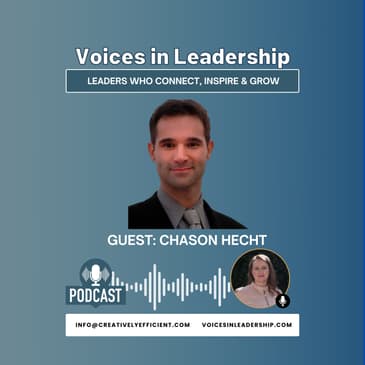


Uncover the secrets to mastering employee retention and enhancing your leadership skills with Jason Hecht, CEO of Retensa and a leading authority on workforce development. Gain valuable insights into the evolution of microcultures and how understanding factors like gender, generation, and organizational hierarchy can dramatically improve retention strategies. Discover how Jason champions the use of predictive analytics to address employee turnover and create a more harmonious organizational culture.
Imagine a workplace immune to the "company cancer" of apathy. This episode reveals how symptoms like ghosting and absenteeism are manifestations of a deeper disengagement issue, and highlights the critical role leaders play in reversing this trend. Learn about the concept of manufactured apathy and the delicate balance between craftsmanship and industrialization, as well as the importance of aligning talent acquisition with candidates who are truly passionate about their roles. Just as importantly, find out how respectful offboarding can preserve organizational morale, even during challenging transitions.
Step into the 90s with a story from a family-owned textile business that illuminates the enduring power of gratitude and collaboration. Jason shares how recognizing and valuing contributions can reduce turnover rates by an incredible 68%. We emphasize the transformative potential of impactful conversations and the inspirational power of shared stories, urging listeners to embrace gratitude and humility in their leadership journeys. Whether you're leading a large enterprise or a small team, this episode promises to leave you with fresh strategies for fostering growth, appreciation, and a collective sense of purpose.
00:03 - Dr. Angela J. Buckley (Host)
Welcome to Voices in Leadership, where leaders who connect, inspire and grow come to share their stories. Live. I'm your host, dr Angela J Buckley. Join us as we explore authentic leadership, gratitude and the power of connection through powerful conversations with inspiring voices. Let's inspire, uplift and elevate leadership that truly makes a difference together. Hello, welcome to another episode of Voices in Leadership. Today I have with me Jason Hesht, and I am so glad to introduce you all to a world-renowned leader in retention, retention policies and helping us work through all of our workforce development issues. So, jason, thank you for joining us today. Where are you located right now?
01:03 - Chason Hecht (Guest)
At the moment, I'm in north of Philly, philadelphia. Philadelphia is a city on the East Coast. It was once the capital for those who are outside the country and typically located somewhere between New York City and Puerto Vallarta. Actually, last week literally, I was in Montana, idaho and Utah. It was a good week, but I'd like to stay put for a few minutes to have this conversation with you, angela.
01:33 - Dr. Angela J. Buckley (Host)
Well, you know, that's all right. We can move and we can talk, and actually walk and talk is probably one of my favorite things, so let me just introduce the world to you for a hot second here Jason. Jason is an advocate and innovator of employee retention strategies and he is the founder and CEO of Retenza. With predictive and analytics software used by organizations in 59 countries and 22 languages, ritenza unlocks the insights hidden in workforce data to address the social and financial impact of employee turnover.
02:15
Jason is one of the most recognized employee retention experts in the world, noted by global media, including NBC News, abc News, forbes, businessweek and the Associated Press and a few more. He is a popular keynote speaker from Adobe to the United Nations, delivering insights from Kentucky to Kuala Lumpur. Previously, chasen served as the vice president of operations at the American Manufacturer, where he led employee motivation and reward programs. As the manager of technology at a global consulting firm, he oversaw multi-million dollar technologies across the United States and Europe. So, jason, welcome. Thank you so much for bringing your expertise and sharing your insights with us today, particularly with all of the things that we are facing in the workforce at this moment.
03:06 - Chason Hecht (Guest)
Yes, happy to be here. You know, when people read the bio I only feel older, not smarter. I'm further and further from those things that I did. You know when that bio was originally written? They were just yesterday. But we're 25 years. This is Ritenza. We'll be celebrating our 25th year. We've grown. Just about every year added a country, added a language plus or minus since we started, which doesn't necessarily speak to anything that I'm doing. But I think too your point about sort of the state of the workforce on the planet, certainly in North America, and how the struggles continue even though players change and economics change. No one I don't think a single one of your viewers would say it's easier to find and keep great people to find and keep great people.
04:10 - Dr. Angela J. Buckley (Host)
I certainly will not make that statement. It is difficult. Definitely, people are asking for different things. They're asking for smaller. We have smaller needs, like smaller demographics, and so it's no longer one size fits all.
04:23 - Chason Hecht (Guest)
Yeah, this was one of the early insights, I think that we offered and provided a lens on the realities of microcultures emerging inside of organizations. I mean, this was a concept that didn't have a label, yet it now does. The microculture that sort of cuts across most of your viewers' organizations by the time you get to 50, most of your viewers' organizations if you're, by the time you get to 50, 100 employees, you've got three different companies that have formed. At the very least, you have women versus men and their experiences. Right, it is every single organization that we've ever worked with whose experience among females is distinct and different from their experience among males. We now have generational different experiences.
05:14
So your you know, gen D, gen X, millennial, you know, up to the boomer population, are experiencing leadership, your product, the culture, totally different. So to your point and an absolute reality, the idea that there's a broad brush, one size fits all, and at the point, if you're 4,000 employees, 10,000 employees, I mean you're talking about locational differences. The idea that you could create or measure or manage one culture at that point is a fantasy. And if you don't have tools in place, if you don't have teams and mechanisms to adjust to the realities on the ground, then you're fixing things, problems that you don't have, which is very expensive.
06:00 - Dr. Angela J. Buckley (Host)
So can you tell me? You said three, at minimum three cultures. Yeah, what would be the three cultures that you're thinking of?
06:07 - Chason Hecht (Guest)
So generational, gender and typically strata hierarchy in the organization. You're a front line. I mean, you know, angela, you know you talk to somebody on the front line of a plant, their experience is totally different than who's in the air conditioned office, right, you know who is watching and monitoring. So at the very least, again by the time you hit really as early as 40 employees, but certainly by 50 to 100, those three microcultures emerge. As you expand. You just add layers, the location. So Mumbai is very, very different than Melbourne. That, whatever that experience that they're having and et cetera, et cetera. 10 year, so your five, eight, 12 year plus population perceives and understands you as an employer totally different than the three week hire.
07:02 - Dr. Angela J. Buckley (Host)
Am I making sense? Oh, absolutely so. I think you say three cultures, but I think it's three type, like it's three layers. Even within that, there's cultures within those layers that you mentioned.
07:16 - Chason Hecht (Guest)
Yes, I would say that at a minimum, you have these dimensions that influence that experience and then as you get bigger, as you scale, you have to recognize that we have to now look at a fourth dimension, a fifth dimension, a sixth, yes, and then the strata form in and underneath individuals. So everyone who works for Gary, I've seen it, angela. I mean it just happens right. You've seen it, gary. I've seen it, angela. I mean it just happens right, you've seen it.
07:45 - Dr. Angela J. Buckley (Host)
It's why I measure turnover rate by by supervisor right, of course, of course, and sometimes it's a job Like if you see it's the same job every time, it doesn't matter, but the job is a problem. But we also see the problem is the. Is the problem is the supervisor or the manager or the right, like when you see that huge turnover right right, right now, let's talk about managers, because this is probably this so.
08:11 - Chason Hecht (Guest)
So we did this myth busting um last year. So, uh, do you want to talk about managers and manager influence? Right, if this is, if your audience, you think you know would be would be keen. If you've been in business for more than about 20 minutes, you've heard somebody say people don't leave companies, they leave managers. I'm certain that your guests are nodding right now. Yeah, of course we've heard that. It's never been less true. It is never, since, as long as we've been measuring it, 25 years have been less true.
08:47
Now, unquestionably, the manager is the single most influential element on an individual. Of course it is. But what's happened in the last 25 years is that all the people who heard that, all the people who grew up under bad managers they didn't want to be that manager, they didn't want to be that person who didn't get it. We have the best management level in the history of it's ever been recorded. There's more tools and capabilities and trainings and more self-awareness. So the other factors, the other influencers, now have really an outsized impact. Now, certainly, bad managers still a have really an outsized impact. Now, certainly, bad managers still a problem. Find those bad managers. They will undermine and infect the organization, but the idea that somehow like that's the solution. That's the problem. It's the least influential as it's ever been since we've ever measured it. Hopefully that's helpful.
09:43 - Dr. Angela J. Buckley (Host)
Well, that is actually. That's an interesting statistic. Can I ask how you're measuring that?
09:50 - Chason Hecht (Guest)
Yeah, so employee feedback tools across the employee lifecycle. So back up, maybe we, just, to start right, make sure everyone's on the same page. So let's just recognize that there is an employee lifecycle right.
10:02
That's constant and everlasting. It's just going through your organization from pre-recruitment to post-separation. And this life cycle diagrams you could find on pret've not even applied to your organization, but maybe some of your viewers are household names your product, your service. People know that airline, they know that credit card, they know that shoe right. So they're in your employee lifecycle because they use your product or service all the way through till they work at the company they've promoted, they're gone, they've exited.
10:44
Throughout that life cycle there's a finite number of points of contact that they will have with their employer and every one of those points of contact they're either it's strengthening the psychological contract, it's deepening my respect, my regard, my trust, the levels of appreciation and concern I have for the people, the product, the service. People call this engagement sometimes right, or connectedness right. There's good labels, very helpful labels we can maybe talk about later. Throughout that life cycle we're constantly measuring what's your experience of the people, the team, the culture, the processes, and you're either engaging and inspiring or you're not at every one of those points of contact. So that's what we do at Retenza we pulse, we capture, we survey, we interview. So that there's no guessing. Sap called us the corporate Fitbit right. We're the pulse of an organization. Is that helpful?
11:44 - Dr. Angela J. Buckley (Host)
Yeah, it is helpful, Thank you. So, Jason, how do people or when, let's just say when. When do people or when do organizations choose to reach out to you?
12:00 - Chason Hecht (Guest)
So we get maybe two different profiles. Okay, there's a lot in between, but certainly it's common that it's the company that's some of the best places to work. There are clients and they want to stay that way.
12:17 - Dr. Angela J. Buckley (Host)
Okay.
12:18 - Chason Hecht (Guest)
Yeah, they get it, they understand they have to be ahead of the curve. They have to have the models, the tools, the technologies to make sure they're motivating, attracting, retaining the top talent. And so those are great, right, those are good conversations, absolutely.
12:31 - Dr. Angela J. Buckley (Host)
Those would be fun ones, right?
12:33 - Chason Hecht (Guest)
Yes, those are fun. It is, it is. It's exciting. These are people who have seen it, done it, they get it, they understand. It's about application. It's not about does this work or not. It's like no, we need to use this. This is the goods, this is the stuff machine learning, ai technologies that clearly are predicting with 92% accuracy. So we want that. I wouldn't say that's the majority, but it's a great population. The majority are those who have no idea how to be that. They're not there yet and they recognize this is costing us too much. The idea of another frontline. You know safety manager or quality control inspector is leaving and it's like the third one this month. You know this is this is. We can't do this, something's wrong here and maybe it doesn't have to be this way and like who's the best at this. And then they find us.
13:28 - Dr. Angela J. Buckley (Host)
So are you usually targeting salary, or are you coming in when they're seeing salary turnover as an issue, or hourly or both?
13:39 - Chason Hecht (Guest)
I don't think there is a single position. Whether I like it or not, angela, after 25 years, you know, you've seen right, you've seen it, and they're all relevant and meaningful. Our smallest client is four employees, you know, every single one of them is worth a million dollars. So we're going to invest right, we're going to lean in right, that makes sense. I'm gonna largest, you know, a few hundred thousand for our largest employers and um, and so it's everything in between.
14:13
There's often, though, a target population, and we define it in two ways it's either the high value population or the high volume population, and at any size organization. So for, for example, that first that I mentioned high value population, if everyone, any size organization, so for, for example, that first that I mentioned high value population, if everyone's worth a million dollars, there's a high value. I can't write right. So we're sometimes we're asked to target sales people. Um, sometimes we're asked to target pharmaceutical, um, you know, uh, you know scientists, or, uh, veterinarians, just just, you know, scientists or veterinarians? Just just focus on the vets, right? Do you know what it costs to replace a vet in America?
14:53 - Dr. Angela J. Buckley (Host)
You want. I'm going to let me see if, if I were to guess that the vet down our street is probably earning well, I don't know that they're necessarily bringing home 200K, but the value of their business is clearly pushing a million in a year. So if you're looking to replace the leader of that, there's a couple of vets that they have on staff. It's probably a two or three year search because someone has to have enough money to replace all that and be available and be the right type of vet. It's not a huge market.
15:35 - Chason Hecht (Guest)
You're looking at a $300 or $400 search $304,000 K potentially, Exactly, Exactly so by our estimates you cannot replace a vet in America, at least for under $300,000. And it's probably closer to $500,000, $600,000.
15:58 - Dr. Angela J. Buckley (Host)
Hey, that was a pretty good swag right there. You're pretty good. You should do a podcast. I should write a dissertation on these topics.
16:07 - Chason Hecht (Guest)
I loved it. I loved it. For those who don't know, angela could give this podcast. No, she should be the guy like me. Now, what I hope I'm offering is nuance and evolution towards Hertzberg's theory. I love the 50s, I love the 50s and he was spot on for, like the time. You know, all of our instruments, all of the tools, are a product of our time. Yes, and so you know, we can geek out real fast on people, right. But you know the motivational theories, let's say, of the 50s, 60s, 70s, were doing the best that they could. We now have better instruments.
16:44 - Dr. Angela J. Buckley (Host)
We do. They're just not academically approved, fyi. So there is a time and a place and the reason we use what we use. But our current tools are impressive and not all of them are academically approved tools at this point, Right, right.
17:05 - Chason Hecht (Guest)
So what we know, for instance, is that there's more influencers than just, let's say, motivation and hygiene factors which are critically important and are still relevant.
17:16
I just want your audience to know OK, like what should we be looking at? To retain vets or frontline employees, or, you know, maintenance, you know, and everything in between. Right, there are actually things we know that predict tenure, that predict promotion, absenteeism. Will they even show up to the job interview? Ghosting is rampant, rampant. Right, it ebbed just a little bit in the last, like three to six months, because of economic conditions, but the reality is that there still aren't enough people to do, not enough good people to do the jobs that actually need to be done. Now, some sectors will be influenced by AI and robotics, et cetera, and let's have that conversation. Angela, I want to. I can go anywhere you want. I love the dialogue, but important to know, just to close the loop yeah, replacing these people really, really expensive and not getting any cheaper, and the business interruption is as great as it has ever been, and so having the tools at your disposal means that I am not derailed from my intentions, my outcomes, my mission and objectives.
18:29 - Dr. Angela J. Buckley (Host)
So, jason, you brought up a very interesting concept All of the different things that are influencing the projected tenure of an individual. I think that job searchers would like to know more about that within an organization and the organizations where they're searching. I host a CEO job search group just to keep things going and keep you know, keep them on track Right. Usually a CEO is busy doing, doing, doing, doing, and so when they're out looking for a new position it's not as energizing as the day-to-day of running an org. But I don't know that these people are aware of all the tenure things and I think that or the influences that an HR person looks at or the executive search firms are looking at, and I wonder if it wouldn't benefit job searchers in general to have a clearer understanding. Because I'll tell you, there are many people that have conversations about the recruiters or the companies ghosting them, like we all hear that job applicants are ghosting, but I can tell you from running these groups, the shoe fits on both feet.
19:49 - Chason Hecht (Guest)
Yeah, yeah, yeah, I hear you. I mean, I think that actually strikes a little bit to the core of what is at the root. It's the pee under all the mattresses of all of the things that manifest. Let's keep in mind ghosting is a symptom, absenteeism is a symptom, turnover is a symptom. No company has a turnover problem, right, that's what manifests. It looks like Kevin didn't show up.
20:22 - Dr. Angela J. Buckley (Host)
It looks like Kevin is lazy, but Kevin may not be lazy. Kevin is probably recovering from some sort of energy drain that happened the day before.
20:33 - Chason Hecht (Guest)
Yes, yes, some, some Kevin somewhere woke up, you know, and said this is the best company I've ever worked for. I love everything they've done. I can't wait to retire here. And some Kevin somewhere said they did it to me again. I can't believe it, I'm not going to take it anymore. It's some version of that and at the root of that is some form of apathy, and apathy is the most dangerous affliction to an organization and, frankly, society.
21:17 - Dr. Angela J. Buckley (Host)
Mm-hmm.
21:18 - Chason Hecht (Guest)
That we have seen in the modern era and I feel very strongly that apathy is company cancer.
21:28 - Dr. Angela J. Buckley (Host)
Define for our listening audience, please, what you mean by apathy.
21:33 - Chason Hecht (Guest)
I don't care enough to do the thing that I know needs to be done. Okay.
21:41 - Dr. Angela J. Buckley (Host)
Not that I didn't know.
21:44 - Chason Hecht (Guest)
Hey, ignorance happens. I'm uneducated about a lot of things. Angela, you're probably very good at many things I can't do. I'm ignorant. I can't do anything right. Well, I found the one thing I can do, so it's a good thing. I built a 25-year business. On it's a short list. I tell you that, In any case, that I don't know how to do something is a lack a gap in knowledge. It's a gap in skill. I can be trained, I can be advised and educated, but to know that that thing on the line is not going to look good when it's in the park and I make a decision, that is well, it's someone else's problem.
22:28
If I'm the recruiter and I say and I know that Kevin reached out, he followed up and I'm not going to. Then there's a degree of apathy that says, hey, I can accept the loss of our reputation, of our employer brand, because it's like not a big deal, yeah, but it's a big freaking deal to Kevin Right, one of the most important things happening to Kevin right now. And also what else can be at work. Yeah, people can be burnt out, they can be overworked, they can be overwhelmed, they can have, not have resources. So there's many things at work and I accept and try to uncover those other things that are influencing. I'm just saying, when it's not those things and it's apathy, as a leader, you cannot turn a sailboat with no wind. This is true. So you, when you have apathy, there is no end, there is no energy, they don't care.
23:35 - Dr. Angela J. Buckley (Host)
When this occurs, um, it's the beginning of the end okay, and for a culture for the individual, for the organization so for the individual, for the organization, so for the individual, it's the beginning of I'm looking for other work. I'm going to take the Hopefully. To be honest with you, I would rather have them look for other work than retire in place.
23:59 - Chason Hecht (Guest)
Oh, yeah, yeah, yeah. No, those people are dangerous. I mean, we've seen they're cancer. No, those people are dangerous.
24:03 - Dr. Angela J. Buckley (Host)
I mean, we've seen their cancer.
24:04 - Chason Hecht (Guest)
I'm sure your viewers are experienced with the people who quit and leave, but far worse are the people who quit and stay. Yes, I don't want those. Yeah, so, but maybe they do. Right, the great detachment. Right, the various iterations of employee disengagement that we're seeing today.
24:31 - Dr. Angela J. Buckley (Host)
Right, Presenteeism just showing up and I'm not here. I mean, I'm here.
24:35 - Chason Hecht (Guest)
Yeah, yeah, yeah, the whole quiet quitting phenomena that we've seen, you know, in the past several years. So it shows up at the individual that they either quit in place, as you say, or they quit and leave For middle managers. It's I'm not doing what the job requires, job needs. I'm not, or in some ways letting people know that this is what's needed. And again, I'm not talking about an hour, I'm not talking about a rough, a rough tuesday, what, what apathy seeps in, you know pattern, exactly exactly a pattern, and ultimately a belief system that what I do doesn't matter. And that's the problem is that it does matter. It matters to you. First of all, we're, we're often convincing ourselves yeah, it doesn't matter.
25:26 - Dr. Angela J. Buckley (Host)
It's not a big deal.
25:27 - Chason Hecht (Guest)
Right For those. Again, in those positions, in those organizations, we begin to convince ourselves that, yeah, yeah, it's not a big deal, Kevin's fine, he doesn't care, we don't need that position, we don't really. It's okay, Begin to make these sort of you know, micro dispersions about you know, our thoughts and actions, and that's what the employer will begin to do or leadership gets distracted, or chooses.
25:53 - Dr. Angela J. Buckley (Host)
So you said micro dispersions and I heard lack of accountability. Oh, yeah. Oh, that's one of the best. That's right. Micro dispersion means that you don't trust the person. You know you don't trust the person, but you're not going to address the problem. So now you've accepted the problem and you're just going to work around it correct and what's the cost of that?
26:19 - Chason Hecht (Guest)
what, what?
26:20 - Dr. Angela J. Buckley (Host)
it's the pothole that they keep filling wrong and then, it gets worse every time someone hits it and pops back out, until a cyclist falls over and blows a tire. And all of a sudden the government was like oh well, no one ever reported the pothole.
26:38 - Chason Hecht (Guest)
One of the best analogies ever the pothole, we could fix this. We could literally fix this. By the way and I don't advertise for many organizations, but there's a pizza company in I want to say Chicago Angela someone one of your viewers will reference started filling in potholes and then their logo.
27:00 - Dr. Angela J. Buckley (Host)
Yep, oh, I didn't know about the stamping logo, but I knew they were filling in so they could have like the perfect pizza delivery Right.
27:08 - Chason Hecht (Guest)
Right.
27:08
Right and it's like the pothole is in the way and it's pissing you off. The drivers, the bikers are getting to. They started filling in like props to them. Again, I support like it was a brilliant marketing campaign. Everybody wins. Yeah, that is the opposite. It's a great campaign props. You stepped up and you did more than was needed and everybody wins.
27:44
And right now is that happening in organizations and workplaces, Some more than others. But when it isn't happening, other things manifest as a problem and it looks like ghosting and turnover and lack of innovation. And I'm just wanting to share with your audience that if we're not keen and dialed into the state of apathy in the organization, then it's going to show up in lots of different ways that can distract us from the core problem and dealing with the reality that we have either disengaged our workforce through disenfranchisement, set them up to fail right, or we just hired the wrong people. We hired the people who didn't want to work here to begin with, or we just hired the wrong people. We hired the people who didn't want to work here to begin with and that's not helping them and it's not helping us.
28:29 - Dr. Angela J. Buckley (Host)
I often feel that if you've hired three or four people in the same position, the problem is not the people. Yeah, either you have a hiring issue and you need to have HR conversation conversation with HR or, frankly, there's probably a problem with the job. Yeah, yeah Right, and the job has got many components to that.
28:50 - Chason Hecht (Guest)
Yeah, yeah, yeah, exactly.
28:56 - Dr. Angela J. Buckley (Host)
Exactly so. Are we retooling? Are we calibrating to the culture?
28:58 - Chason Hecht (Guest)
as we often say. I mean, I measure that Right. So yeah, yeah, yeah, how do you?
29:00 - Dr. Angela J. Buckley (Host)
measure that. So I used to track how many requests. So I ran the training facility and so whenever people on the line needed a new hire, I was tracking where my new hires were going and I could see if it was continually going to a person or if it was continually going to a certain job, like when I say person, like supervisor or somebody right, a particular team leader. And in fairness, we also did a little bit of analysis to understand okay, these are the easier jobs, so people come in here and then move into more advanced jobs. So there there's layers to the analysis. But there was one job that was a constant rotating door. It should not have been a new, higher position, because people weren't physically prepared for what that job was and so it wasn't a supervisor issue, it was a physical development issue, because once people got into that job and were successful, they stayed there for 30 years.
30:08
They loved the job but you couldn't it took them three to six months to get there and our ramp up was too aggressive and people were like forget this. So learning what that is, to learn what that ramp up needs to look like. So we're not losing people because that 30 year employee is amazing, right, I need those people. I just read an article, similar but unrelated. There is a gentleman in Bavaria who only works on Mondays and he seals beer bottles. He's been doing this for 30 years, only on Mondays.
30:50 - Chason Hecht (Guest)
Only in Bavaria.
30:52 - Dr. Angela J. Buckley (Host)
Only in Bavaria, of course. Right, and he can do it faster than the machines.
30:57 - Chason Hecht (Guest)
Wow.
30:58 - Dr. Angela J. Buckley (Host)
So I mean. So I was reading this article and I'm like thank you, beer friends who share me, to your articles like this. But like on the one hand. And I'm like thank you, beer friends who share articles like this, but on the one hand I'm like go worker. On the other hand, the engineer in me says yes, but I can have two machines, whereas I can only have one person who works at that level.
31:17 - Chason Hecht (Guest)
Right, right right.
31:18 - Dr. Angela J. Buckley (Host)
The org development person in me says but I don't have anybody that can fill that guy's shoes because nobody's filling and flipping like he does. And he's like I love this job. It's peaceful for me Cause he's got such a rhythm down for it. He's like I reflect on my life and my wife and my shed. He said he reflects on his shed. He was so excited and he only works Mondays and he is responsible for millions of tons of beer in these flip top bottles from that one brewery.
31:51 - Chason Hecht (Guest)
I got to tell you. I want to know if I have ever drank from a Klaus von Biergarten.
31:59 - Dr. Angela J. Buckley (Host)
Now I'm going to. Y'all are going to make this guy it's a fantastic story, right, yeah?
32:04 - Chason Hecht (Guest)
love it. I, I appreciate very much, very much. Everywhere in the world, um, and the week before by the montana, idaho utah, I was in um, greece, malta and italy, and there's artisans, there's craft makers, right, and I just appreciate tremendously when, uh, someone is a master of their craft, right, they do this thing and, whatever it is, I can watch them do it for hours. I want to see this guy, I want to know how does he do it better than any other machine? And I would love to be stamped with Give me a little code that this was Klaus's.
32:43 - Dr. Angela J. Buckley (Host)
Right, well, I will come back to the comments afterwards and put the link to the story. The story was on Facebook, so I'll find that link and share it in the comments for the rerun of this, so it'll be able to be found.
32:58 - Chason Hecht (Guest)
Oh, that's great, that's wonderful. I'll read it. That is awesome.
33:03 - Dr. Angela J. Buckley (Host)
Klaus von Biergarten. So, yes, but it matters Like these things matter, right Understanding the difference between what's happening in the complexity of our world, the craftsmen who can do so many bottles in one day that they don't need the a bottling line, like it's incredible. To understand the complexity of our world from skill to I need systems that can run 24 7 with machines and backup. And how do we make that work for people and people are not robots right, like I feel like he can do his monday job because he also has six days to recover.
33:46 - Chason Hecht (Guest)
Right right.
33:48 - Dr. Angela J. Buckley (Host)
It would be a lot of damaging injury on your wrists, for your thumbs.
33:52 - Chason Hecht (Guest)
But, again.
33:53 - Dr. Angela J. Buckley (Host)
He probably built up over time. There was probably not a time where they were doing that volume Right, and that was the same conversation with my guys on this other line. Once they got in, they were there for 30 years, but I couldn't get someone there in three to six months. Yeah, back in the day when those guys started, we weren't running so fast.
34:14 - Chason Hecht (Guest)
Right, right, so you're speaking to what is at the starting point was one of the great innovations and curses of the modern workplace. Absolutely, and we, for the most part, can thank and blame Henry Ford.
34:33 - Dr. Angela J. Buckley (Host)
Yep.
34:33 - Chason Hecht (Guest)
Right and.
34:34 - Dr. Angela J. Buckley (Host)
Taylor and Taylor Frederick Taylor, Our industrial engineering friends Right right and the two. Gilbraiths right, Lillian and her husband. But yes, between those four, blame them all or thank them all?
34:46 - Chason Hecht (Guest)
Or thank them all, because we wouldn't have, you know, Maseratis or you know, potentially burritos good burritos if we didn't have this sense of assembly line. You know moving through, but moving people, moving work through sort of you know some person who can then execute on it. But the problem is that isn't at all human nature. It's not how we operate or function, and so we've been grappling with this model ever since, and that is also a component of why people join, stay and leave. Am I going to be doing the work that I want to do, that matters to me, or am I going to be doing that a few minutes a day? Doing that a few minutes a day and the other you know seven and a half hours of my day is paperwork and drudgery and frustration, or customers who are angry at me for something I didn't do right, or some variation of this isn't what I signed up for, so manufactured apathy is very real. I didn't not care on my first day. It's the job that I got that then forced me to like I don't want to have anything to do with this.
35:54
So, yes, these are all at work, Every one of your viewers, organizations. There's some kind of assembly line, there's some version of people working through the product or the service. Can we calibrate that to what those people want to be doing? Because there is someone who wants to do that job, I promise you found them right and then we had a formula to get them to proficiency we call ramped productivity. Can I accelerate that? But not so high that they pass out right? That the G-forces of training are so intense that they black out and don't show up tomorrow, right? So that elevation, that ramp to productivity, has to be that right angle that it's stimulating, engaging, challenging and onboarding, but not too much, not too boring, right, and they're out there. I just want your audience to know, among many things, if they got anything. I don't know if they got anything out of this conversation, but among the things I would hope they got is no, someone wants to do that job.
36:53 - Dr. Angela J. Buckley (Host)
Someone wants to do that job and we often need to question ourselves why did the people leave?
36:59 - Chason Hecht (Guest)
Absolutely, absolutely. And so can we set up talent acquisition to create a funnel, a sieve that is targeting the people who want to do this job, because, my goodness, you've targeted a lot of people who don't. You got pretty good at finding people who don't want to do this job. Let's make those adjustments, let's shift those presenting factors, or the realistic job preview, or the onboarding and orientation. But first, again, I got to get back to where's the breakdown. Where did that problem occur? When did they actually check out? And sometimes that's in the interview, like literally halfway through.
37:40 - Dr. Angela J. Buckley (Host)
They're going to take the job because they got to pay rent, but they know they're not going to be here for three weeks well, in the case of large manufacturing, they may have checked out even before then because they don't trust the manufacturing and because those are, those are generational community relationships right, and I think few manufacturers truly, especially in the united states, where we can hire at will, work at will whatever words you want to call those things Right. You can hire and fire very easily in the U? S and the fact of the matter is you can do that but also realize that you are creating the community relationship right then and there, and it will follow you for generations.
38:27
Oh, yeah, yeah and so they will come in because they need to pay rent and you may be the only option, but you will never get that loyalty that you want to exact out of them if their families in the past have not rebuilt the trust between the organization and the community.
38:48 - Chason Hecht (Guest)
Yes, yes. So something that we call this is is the organizational DNA that then leaks or gets spread into the community, yes, into the city, the town, the region, the county, um, and there are some places where, um, you can go and the employer is a hero. The employer is like this is the, the, they're the organization that's keeping you know and supporting the community and the Little League Park right with their advertising. They got that rebuilt, they got that repaved right, yes, and then you know there's plenty of others and, honestly, both come to us they really do. They say we can't find anyone anymore to work with Because they've broken trust with the community.
39:43 - Dr. Angela J. Buckley (Host)
Yeah, yeah yeah, so how does this impact? I'm going to pull up a slide that you sent me, if you don't mind, yeah yeah. How does this all impact your total cost of management?
39:59 - Chason Hecht (Guest)
Okay, love this, love this, All right. So this is one of the tools to understand for any viewer right here. What are we actually spending on Gary? All right, on Jill. And this is clickable on the website so you can do this live in real time. I mean, if you're watching right now, you can go to rotenzacom you don't have to type that out, you go and you go in resources it's one of the tabs and you can go to the total cost management calculator tab.
40:30
What the reality is is that you're not hiring a $50,000 a year employee. No, no, no, no, no, no. You absolutely are spending significantly more. So I'm going to walk through just real quick for the audience how to fill this out, because in truth, you are ghosting someone or you are haphazard. Talent acquisition, recruiting, interview process has a cost on the other end of it that's far greater. So let's walk through it. Salary let's just use an easy number. Let's just say 50,000 yen won, pounds, euros it doesn't matter dollars 50,000 plus benefits, right? So you've got some kind of benefits cost. The reality is, most companies they got to be spending at least 10%, probably 20, some as high as 26% in benefits.
41:19
So let's call it 50, let's make it 60,000, right, no-transcript. And if you've got someone in HR, they should be able to tell you within a few minutes.
41:50 - Dr. Angela J. Buckley (Host)
It's like 2.5 for our many of our industries right.
41:54 - Chason Hecht (Guest)
Two and a half years. Oh that's, that's great, fantastic. I'm going to give you know like benefit of the doubt, and I'm just going to say three years just to make it easy, because that's 2.5 is a little low. It's fantastic in restaurant, it's wonderful. If you can get it in hospitality, you can get two and a half years here. But in manufacturing, yes.
42:13
So let's say you know, let's talk about accounting, you know for others, but let's just call it three years. So average tenure is three years plus like any one-time costs that may be incurred. So maybe you throw in a starting bonus or relocation bonus, there's other fees or whatever. So now, all of a sudden, what we're talking about maybe is $70,000 times three years of average tenure, back of the envelope, that's $210,000. That's what my math says. Yep, you're about to spend for Gary Jen $210,000. That $50,000 job is $210,000. Let's just use that number for a few weeks. And are we going to change our interviewing, onboarding, orientation process to ensure that a 200. Equipment you're talking about you can buy a couple of beer bottle, caps, machines for $210,000, angela, so I'm not spending 50 grand on this employee. That changes the conversation. Is that helpful?
43:33 - Dr. Angela J. Buckley (Host)
Yep, yes it does, because I think I have often had the challenge with CFOs in particular to get them to really see the value of turnover in the employees. Well, they're only costing this much. They were here 90 days, they left and see no problem. Good thing they're gone now. So I didn't waste more time. But you've lost more than that You've lost morale, you've lost people working overtime, you've lost knowledge, et cetera, et cetera. Right, and so it is not in fact just those wages.
44:11 - Chason Hecht (Guest)
Yeah, what you described, that you know the many people start to calculate are direct costs sometimes hard costs, right? The direct costs are yes, the job posting or the background check? Right, the drug test, those are hard costs. Right, the direct costs are, yes, the job posting or the background check? Right, the drug test, those are hard costs. I actually had to write a check to that thing. Right, indirect costs. By our calculations again, 25 years I've been doing this indirect costs are two to three times the direct cost.
44:40 - Dr. Angela J. Buckley (Host)
And yet CFOs really struggle to see that number. We've seen that number as well. That is also again, 2.5 to 3 is what we roll with. But the CFOs, if they haven't be able to interpret and correlate elements back to these costs.
45:13 - Chason Hecht (Guest)
So insurance, well, that's actually a factor, because new people, well, they fall, they slip, they actually.
45:18 - Dr. Angela J. Buckley (Host)
They do, you have a higher injury rate at the beginning.
45:22 - Chason Hecht (Guest)
Injury rate is higher. Loss prevention People leaving steal stuff more often.
45:30 - Dr. Angela J. Buckley (Host)
That's true Also quality, Like I can measure your quality impact in my sleep right.
45:36 - Chason Hecht (Guest)
Right, right, so you know, quality of line metrics. These are all correlated to the people who are actually doing the work on the front line. So, yes, so it's a much greater cost. It's typically far outweighs the direct cost. And then there's a slightly harder to measure. You mentioned but they're very real the reputational damage, the knowledge capital, the intellectual capital that they left with, and the fact that are they going into the community, are they going to the church, to the synagogue, to the bar, to the restaurant, and saying, yeah, yeah, I used to work at, you know, buckley Con. Yeah, but I nobody should, nobody should ever work at Buckley Con anymore.
46:17 - Dr. Angela J. Buckley (Host)
Everyone wants to work at Buckley Con. Buckley widgets are the best. Buckley con Buckley widgets are the best.
46:23 - Chason Hecht (Guest)
Buckley's. I only use Buckley's yes, buckley widgets Cause they absolutely I turn it over, I say it's not Buckley, you know it's not for me. And are people working there? Are they coming back? What are they saying, to your point, about the community damage and the societal damage, this organizational DNA that leaks into the town through the channels of human interaction and connection, like we're somehow, like this kind of, we exist in a vacuum.
46:50 - Dr. Angela J. Buckley (Host)
We don't exist in a vacuum. We are not hiring from a vacuum. We are hiring from our community.
46:56 - Chason Hecht (Guest)
We are not hiring from a vacuum. We are hiring from our community. That's right. That's right. So if I can arm the viewers, the listeners, the people with, what do I do with that? Well, consider that every one of these intersections with the employee is an opportunity, even if they're quitting, even if they were a not great employee.
47:16 - Dr. Angela J. Buckley (Host)
Let me tell you.
47:16 - Chason Hecht (Guest)
by most accounts, I think I am the world's leading retention expert and I'm honored to be that. I am the first one to tell you you do not retain everyone. Absolutely Not everyone should work at your company.
47:29
There are people who aren't a fit, who don't want to work, who don't just want to collect the paycheck. You need to figure out how to weed them out and there's tools and technologies and processes to keep them. But for those who do want to work at your organization and maybe it wasn't a love connection, so to speak respectfully manage them out of the organization. Do the exit interview, because you're going to learn more and they're going to be able to get off their chest and they're not going to go to the restaurant, the bar, the church, the synagogue or the little league field and bad mouth, because they've expressed their concerns, their issues, their frustrations through that exit interview, a medium in which that information can be channeled for good use. So, anyone listening, there's really a path. Even for those who are good riddance and I accept there's some out there there's still a better way that gets you more of what you want and I would encourage them to take advantage of those paths.
48:26 - Dr. Angela J. Buckley (Host)
I mean, that was probably the hardest conversation I ever had as a manager, letting someone go that I liked but was no longer a fit for the organization because we were growing so quickly and he wasn't able to keep up yeah and we spent time managing him out and into a different situation yeah, you tell me more.
48:49 - Chason Hecht (Guest)
Right, people are facing that right now and so I think that's a helpful. So what, what? How did you off board?
48:58 - Dr. Angela J. Buckley (Host)
Yeah, I was young, so I was not. I did not have a lot of good mentorship as far, but I knew that we I this is what I knew he had worked very hard for the organization. The organization was quickly outpacing where he was now and he was not able to keep up.
49:17 - Chason Hecht (Guest)
yeah, um volume, or is it like uh, technical?
49:24 - Dr. Angela J. Buckley (Host)
requirements so first. First, we tried training and it frankly did not really stick. So then, and he was miserable, to be honest, where, like he was miserable in the training and so at a certain point, that's that's also an indicator that it's no longer a good fit.
49:45
And so we actually did a little bit of mindset, sort of like professional exploration with him, like what do you want to do? You have some time to look, because this contract ends at this point and this will be your offboarding point. We will help you. Like I am your manager, so I will work with you on this. And we actually got a phone call from a recruiter. They're like hey, you know, one of your employees is out looking. I just wanted you to know, like professional courtesy, and we said thank you, please help him. Right, that is with intent, so we know that he's also being honest on his side.
50:28
He's doing the work because we got the background feedback. Yeah, so we we worked with him with identifying his skill sets. We worked with him to try to help him find what he was passionate about and we gave him an off-boarding date in a courteous way. I will tell you, I've worked in other organizations where that would not have been possible because of the threat of sabotage and industrial espionage, but in this organization, for what we were doing and for who he was, we were able to manage at that level.
51:09 - Chason Hecht (Guest)
Yeah, yeah.
51:09 - Dr. Angela J. Buckley (Host)
And it was still. It was very hard on a young, developing organization that was going through growing pains because people were friends. So you also had to manage a little bit of the emotional fallout of the people who remained right. Like it does put people on guard, it puts them on notice. We're still here to deliver the product to our customer and we have to grow with the organization. So there was a little bit of fallout on that side as well. So you're managing in both directions, especially in a small org like we were under 20 people.
51:42 - Chason Hecht (Guest)
Yeah, yeah, yeah Right. So there's tentacles of this? There's no. When you're 20 people, everybody works with everybody.
51:50 - Dr. Angela J. Buckley (Host)
Everybody works with everybody. I was production manager but like kind of HR, cause there was kind of no HR there was no HR right, you have. You have the two co-founders, your CFO and accountant and all of the rest of us.
52:03 - Chason Hecht (Guest)
So there's plenty again. Someone listening here is that you know that 20, 40, 60 employee organization and they're dealing with this right now and they're faced with okay, how do I do this Right? And the way that you're describing the most respectful and the healthiest way means that there's few scars.
52:25 - Dr. Angela J. Buckley (Host)
Yes. Yeah, right, yeah we managed the emotions, but there wasn't scarring.
52:30 - Chason Hecht (Guest)
Right, right. And if you're like in it for like you're going to like be a real business, right, going to make it through and it's this isn't a, you know, a pop-up company to try to unicorn and, you know, and sell, if you're actually an organization who either has been around for 20 years or you're trying to be around for that, then those scars, yeah, they get remembered they run deep, they're deep scars, right right.
52:56
Yeah, that's right absolutely kudos to you that early in your career that you were able to recognize. Hey, there's probably a right way to do this and it was imperfect, because what did any of us know at that point? But everything you have said means that they were sequentially better off because they did that with the staff that remained survivor syndrome.
53:17 - Dr. Angela J. Buckley (Host)
Very real right, and everyone else that that person talked to, like you know how bad could they bad mouth you, right? I mean, yeah, I was considered hard but not disrespectful, so but okay, that's accountability right? Yes, yeah.
53:37 - Chason Hecht (Guest)
Yeah, yeah. So again, yeah, that's accountability, right. Yes, yeah, yeah, yeah. So again, hopefully that's useful for anyone else in those positions and certainly there are who are struggling with someone who's been in the organization but not capable of doing what we need.
53:50 - Dr. Angela J. Buckley (Host)
Yeah, yeah, there's a right way to manage through hey, jason, it is time for us to move to our gratitude session.
53:59 - Chason Hecht (Guest)
Are you ready? It's the point that I we're actually behind time.
54:03 - Dr. Angela J. Buckley (Host)
We just kept talking. Oh no, we're behind time.
54:08 - Chason Hecht (Guest)
Yes.
54:09 - Dr. Angela J. Buckley (Host)
Who would you like to recognize today?
54:14 - Chason Hecht (Guest)
So there's two sets of questions, two sets of ideas, thoughts, you know, that sort of emerged. And there's someone that I recognize that influenced my trajectory very early on, and he doesn't know that I'm going to mention him. And I use technology. I use, at the end of the day, computers have to do everything that we do. A human can't do the volume of crunching and machine learning and AI processing. It all has to be done.
54:50
And I was eight years old, six, seven, eight years old, and visiting friends, family, friends, and a Commodore 64 was on the desk. Now, for anyone who's watching this under the age of 200 and doesn't know what a Commodore 64, it's like the flip phone that your dad had of cell phones, like the old flip phone, right, that like didn't have and you had to like QWERTY text, right, yeah, minus about a thousand percent. And I was enamored and fascinated. And immediately a couple of things started to just fall into place, because I came from a family business and it was clear the struggles that my parents and my grandparents were going through to figure out how things you know to work.
55:49
So that Commodore 64 was owned by Glenn Weinstein and I was like the first time as he was demonstrating. Well, here's what a computer could do for your business. You know, as he's saying it to my father and I'm just sitting there, I probably you know I was wandering through but I stopped, enthralled seeing the possibility that technology could do, and this was as rudimentary it gets. We're talking about decades ago and I fast forward, having started my business 59 countries, 22 language, and Glenn Weinstein is still an avid supporter of what we do, of who we are, of my success. Just quietly, peacefully you know conversations where he gives his time.
56:36 - Dr. Angela J. Buckley (Host)
Okay, thank you you. I'm going to interrupt you just one second because I'm going to ask you a series of questions and we're going to put together the statement, sure, a succinct statement. So thank you for the context. So, question, where we talk about the spirit of acknowledgement, and so spirit stands for specific, personal, impactful, which means metrics, relevant, which refers to values, inclusive, which is, in this case, making it public and, ideally, timely. So, right, when you were doing this in a workplace, not sort of a life retrospective, you would like to give this as close to the event as possible when you use this method. Right, it's a great feedback method.
57:26 - Chason Hecht (Guest)
Yeah, we'd have to go back to 1984.
57:28 - Dr. Angela J. Buckley (Host)
Yeah, so we're not going to go back to 1984.
57:31 - Chason Hecht (Guest)
Interesting book, but maybe we're living it Is this Buckley Con make those the time time machines the time machines.
57:39 - Dr. Angela J. Buckley (Host)
The buckley widgets are excellent in all facets. Okay, so highly recommend you can find them at wwwvoicesinleadershiplive. Um, okay, so specifically, what did, did Glenn do for you? Opened my eyes to a possibility of what technology could do what technology could mean.
58:13 - Chason Hecht (Guest)
Could do Like what technology could do in solving a problem right. Oh all right, okay, how technology could solve a problem was like wow, that's new, that's different. I didn't do that, I didn't know that. So identifying a problem identifying a gap. That solved specifically, though, with this newfangled thing called Commodore 64, which fast forward to today it's AI but it started your technology journey 100% and then on the personal, what did that activity for Glenn cost him?
58:57 - Dr. Angela J. Buckley (Host)
or how did that reflect of his character, of who he is at the core?
59:04 - Chason Hecht (Guest)
Yeah, generous and helpful and kind and, you know, giving of his thoughts and ideas to my family and, you know, in a very un-unexpecting way it was like, yeah, no, just here's what you could do. I want you to know, I want you to have it.
59:27 - Dr. Angela J. Buckley (Host)
Generous sounds like a great word for what you're describing Exactly, and so then? And how did that impact your career? Ideally with some sort of metrics.
59:42 - Chason Hecht (Guest)
So it began a trajectory of integrating and bringing in technology to the family business. So I was the one who began automation and inventory control management. I grew up in manufacturing. By the way for the viewers who are here, it just happens to be I lived my whole life in textile manufacturing, started at six years old but then brought in technology and we hit the highest top line and bottom line sales in the history of the company 70, 80 year history of the company while I was there doing these things bringing in technology, and that was a tremendous pride and accomplishment you know to be to achieve that for my family.
01:00:24 - Dr. Angela J. Buckley (Host)
That's, that's fantastic. And and how does that relate back to your values and your company's, your family's company's values? How is it relevant?
01:00:44 - Chason Hecht (Guest)
The, I guess, achieving our potential. Okay, like very much from my family, you don't sit on the couch, if you can know, um, you know, fix the siding like, no, like.
01:01:04 - Dr. Angela J. Buckley (Host)
If you can, then you do, and we say gifts talent is gifts that have to be returned that's very nice that's our, that's our family kind of model thing.
01:01:17 - Chason Hecht (Guest)
Yeah, yeah.
01:01:18 - Dr. Angela J. Buckley (Host)
Right, so you have something legacy building your family business. Was there a concept of legacy or stability?
01:01:29 - Chason Hecht (Guest)
There could have been if I had embraced and adopted that beyond where I thought I got to, where I had made the contribution that I can make. There were lots of factors going on in the nature of textile manufacturing in America in the 90s that are far greater than the scope of this conversation, but that the legacy was that for the people who worked there very much that they could be proud of the product they made, of what they did, and they were doing it for an organization that cared about them.
01:02:06
That is very much in the ethos of who I am thanks certainly to my parents when they said things like we're having dinner because of the people on the factory floor, this chicken, like we didn't make this chicken, those people who made the ribbon all right, you know which is what we designed decorative, fancy ribbons. How did I get here? That's another story, angela, but that very much was a part of that ethos. Hopefully that's answered your question.
01:02:39 - Dr. Angela J. Buckley (Host)
Yes, so I mean it's a sense of humility, really Thankfulness, humility, a sense of service, if I'm hearing that correctly. I think I'm sorry.
01:02:51 - Chason Hecht (Guest)
Gratitude, gratitude, yes.
01:02:55 - Dr. Angela J. Buckley (Host)
Yep, Yep. And also maybe collaboration, right Like you don't get there just on your own even though they own the business.
01:03:05 - Chason Hecht (Guest)
Oh yeah.
01:03:06 - Dr. Angela J. Buckley (Host)
They were part of the business and the people were part of the community of the business.
01:03:11 - Chason Hecht (Guest)
One hundred percent. One hundred percent.
01:03:15 - Dr. Angela J. Buckley (Host)
Can I try to summarize in a few sentences what we just said?
01:03:20 - Chason Hecht (Guest)
I have my Retenza pen ready.
01:03:30 - Dr. Angela J. Buckley (Host)
I hope it's ready to flow quickly, glenn, on your behalf for the time that he opened your eyes to technology and the things that technology could do to serve you and your community and the organizations that you serve. By just being generous with his time, with his talents and with the resources that he had available to him, it had a huge impact, not just on your career, as you led the organization to its best ever top line and bottom line dollars, but it left a legacy of gratitude and humility and really thankfulness and servitude within your family's textile business. It reflected back on everyone that was helping them and created that stability for them as well.
01:04:41
So and it and it put you here into Retenza for your next, for your next step 1000%. So so thank you, glenn, for putting you on this path.
01:04:55 - Chason Hecht (Guest)
Absolutely yes, yes, and thank you for capturing that so eloquently.
01:05:00 - Dr. Angela J. Buckley (Host)
So we just tried to do this. It takes a second to put it all together, but the opportunity is to try to get all of it into a couple sentences.
01:05:10 - Chason Hecht (Guest)
Yeah, yes, well, thank you. That's wonderful and I will reach out and share it with him. So hopefully we've provided some value, some insights for your audience as well today.
01:05:23 - Dr. Angela J. Buckley (Host)
I believe that we did Before we go. I wanted to make sure that we put this up on the screen, that for all of the attendees here that they can grab this data for the 10 free exit interviews and there's a promo code there available. Am I correct, v-i-l 10.
01:05:42 - Chason Hecht (Guest)
That's the one Absolutely Voices in Leadership V-I-L 10. And take advantage of capturing insights, at the very least when people quit. You cannot predict why people quit unless you capture insights when they quit. Everything else is guessing, throwing stuff against the wall to see what sticks Very expensive, and so this is one of the really the starting points for retention strategy is, you know, a reliable, consistent exit interview program.
01:06:21 - Dr. Angela J. Buckley (Host)
Exit Interview Program. So, jason, you say 10 free exit interviews, but these aren't interviews after they decided to exit. These are interviews, potentially preventively, before you get to that point. Is that correct?
01:06:30 - Chason Hecht (Guest)
So that's what we would call a stay interview, okay, so yeah, yeah, there's tools across the life cycle for capturing feedback. The exit interview is at separation. They've determined they're going to quit. They're not saying once in a while you can talk them off the ledge and get them back. Tactically, there's pros and cons to that Again another conversation but the exit interview is when they separate from the company.
01:06:55 - Dr. Angela J. Buckley (Host)
Okay, so it just said the right data to predict. So you're going to use that data retroactively to predict in other individuals.
01:07:05 - Chason Hecht (Guest)
Absolutely. You identify patterns and themes across that life cycle and what can match those up and make the connections about what were precursors for why this person quit and that person quit. You can start to form interventions and then reduce turnover. We just actually broke a record last year 68% reduction in turnover. That's the highest. Our previous record was 67%, which is amazing.
01:07:31 - Dr. Angela J. Buckley (Host)
That's a number, that's a number, that is a number.
01:07:35 - Chason Hecht (Guest)
It's a good number.
01:07:36 - Dr. Angela J. Buckley (Host)
Wow.
01:07:37 - Chason Hecht (Guest)
Yeah, yeah, yeah, that's phenomenal. That's phenomenal, it works and I'm thrilled to be able to contribute Anyone who needs that support, guidance, help tools or technology. This is a good place to start, at the very least the X interview, or you can call an email.
01:07:51 - Dr. Angela J. Buckley (Host)
Happy to have a conversation. Great. Well, thank you to everybody who's been watching. We have had an audience this entire time on LinkedIn and there have been a couple comments back and forth over here and some our Voices in Leadership audience Today was live and we will have this posted out by next week for the podcast listening experience.
01:08:26 - Chason Hecht (Guest)
And thank you. You're a pleasure, a joy, great conversationalist, and what you're doing makes a difference and it matters as well, angela. People want to know this. They're hungry, they really want to apply your insights and what we know, so I'm happy to share with you anytime. Really enjoyed the conversation. Thank you so much.
01:08:45 - Dr. Angela J. Buckley (Host)
Thank you. Thank you for joining us on Voices in Leadership, where leaders who connect, inspire and grow share their stories. I look forward to welcoming you back to our next conversation. In the meantime, visit wwwvoicesinleadershiplive to access show notes, links and to subscribe and stay connected, and in the spirit of gratitude, let's remember to thank one person near you Until next time. This is Dr Angela J Buckley. Signing off.