
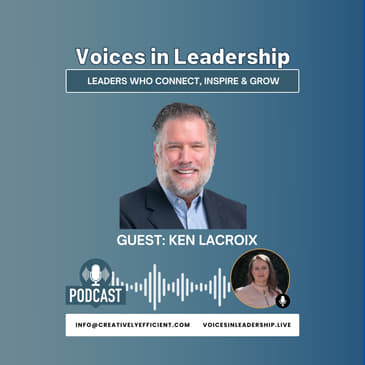


Ready to transform financial data into strategic growth? Join us as we uncover the journey of Ken LaCroix, from traditional CFO roles to co-founding Insightful Partners. Ken reveals how focusing on the right business metrics, beyond the standard accounting reports, can drive sustainable success. Listen in as we discuss the power of effective visualization in transforming complex financial information into actionable insights for business owners. Ken also shares his unique approach to maintaining clarity and focus during virtual meetings, ensuring that critical metrics are not overshadowed by data overload.
Explore the art of optimizing workflow with Ken's insights on creating effective visual dashboards. Discover how to highlight critical metrics using color-coded indicators, and learn how understanding timing discrepancies can enhance decision-making and resource allocation. We tackle the challenges that small businesses face in managing resources, suggesting that flexibility, agility, and strategic use of technology and temporary help are key to navigating these hurdles effectively. Ken's perspectives offer a fresh take on how critical data can be streamlined for better business operations.
Dive into the integration of accounting and technology, where we discuss the transformative potential of AI and automation in streamlining processes and enhancing decision-making. Ken shares his thoughts on collecting and storing data for future technological advancements. We also explore the SPIRIT of Acknowledgement framework, focusing on authentic leadership and specific recognition to cultivate an ethical work environment. Through Ken's personal stories, we learn how servant leadership can boost confidence and foster a supportive culture, ultimately driving business growth and innovation. Tune in for an episode filled with insights that can reshape your approach to finance and leadership.
00:03 - Dr. Angela J. Buckley (Host)
Welcome to Voices in Leadership, where leaders who connect, inspire and grow come to share their stories. Live. I'm your host, dr Angela J Buckley. Join us as we explore authentic leadership, gratitude and the power of connection through powerful conversations with inspiring voices. Let's inspire, uplift and elevate leadership that truly makes a difference together. Well, hello and welcome back to another episode of Voices in Leadership.
00:36
My guest today is Ken LaCroix, and I am so excited to have him join us as we talk about how and what we should be measuring for our businesses. Not vanity metrics, not the metrics that the guy down the street might recommend, but the ones that are truly going to be effective in helping us move the needle. Ken has extensive experience as CFO and now as fractional CFO. He helps turn financial data into strategic growth. He simplifies those complex financials into actionable insights so that business owners know how to make confident data-driven decisions. These are words to my heart.
01:21
Ken's unique perspective bridges the gap between high-level energy and the day-to-day operations, helping businesses find those hidden profits and scale sustainably. Ken love, I'm always a fan of let's get the right metrics, let's get the right measurements and let's take some action based on the numbers. So I'm very much excited to have you here and learn a little bit more about what maybe even I should be tracking in my own business. So thank you for joining us and love to hear where you are tuning in from today. And let's get started.
02:02 - Ken LaCroix (Guest)
Wonderful, angela, thank you. Thank you for having me. It's nice to be in a friendly environment, so I appreciate that we're tuning in this morning from Southern California Newport Beach to be accurate, orange County. So it's nice and sunny here and we've got lots of things to talk about today, so I'm excited to get started.
02:22 - Dr. Angela J. Buckley (Host)
Well, welcome again. And let's see, we are in Dublin, Ohio, and today it is sunny and the weather has decided to play nicely for the first day of school, so it'll only be mid 80s and the humidity has dropped, thankfully. So I'm sure there are many children that are grateful as they show up in school clothes for the first time all summer. So, Ken, you know, my first question is always how did you get here? So we do talk a little bit about leadership and what that leadership journey is, and then we'll jump into how you got into and what are the metrics that we should be asking you about. But first, how did you get to where you are right now?
03:07 - Ken LaCroix (Guest)
Sure, the how is, as in many cases, always very, very interesting. So I'll describe it as the hot seat, the recession and the opportunity. So, as CFO controller, vp of finance, I was tasked in my prior jobs on the other side of the consulting desk with explaining financials, explaining the numbers, and I got to be very good at it because I was in a lot of I'll call them sort of difficult positions that really challenged me. I always seemed to find myself around smart leaders that had done wonderful things and had high expectations for the role that I was in, and, as a young person, I found it challenging to rise to that occasion. So blood, sweat and tears for the beginning part of my career. And then, in the recession in 2009, it was a very difficult time for CFOs. The company that I'd worked for for a number of years was sold off to private equity Not a lot of opportunities. So I used that opportunity to create my own consulting practice At the time, one of the early fractional CFOs.
04:15
So we've been on the other side, this consulting side of the desk, for a very long time. About eight years ago, my partner Wes and I created Insightful Partners out of the work that we did as fractional cfos, because we realized that data is a large component of things. Along with the accounting data, there's operational data, sales data, there's data everywhere in an organization. It's only gotten more data oriented, which we love. So my partner wes and I started insightful partners about eight years ago to focus specifically on fractional FP&A, fractional CFO. In that specific area of helping business owners understand their numbers. We use visualization, we like to think, we use simplification, we like to think, we use focus and intensity to do that and we really just create a layer of accountability for them along with a layer of understanding, and we find from there that some great things can get done.
05:09 - Dr. Angela J. Buckley (Host)
So, Ken, I have a background as a Lean Six Sigma black belt and so big fan of visualization. We are people who like to put up all sorts of graphs and hopefully working graphs and so I find it very interesting that you have a blank background right now.
05:30 - Ken LaCroix (Guest)
You know, I just find that sometimes backgrounds are somewhat distracting. I've had this conversation a number of times and if I can have a green screen, then it would be great If I had a more of a professional environment. I think it would be great if I had more of a professional environment. I think it would be great. But when you're in more of an amateur environment, like my office is, I think it's just sometimes it can be a distraction. I had this discussion last week with a networking group that I'm in that had crazy amounts of backgrounds on all their individual screens in the hopes of sort of creating a brand, but it was just way too busy. So you get a plain background but a full Ken.
06:12 - Dr. Angela J. Buckley (Host)
Well, I will take a full, ken. So that's okay. I was just interested to understand your thinking. I know there's theories based on who does what and why, so I was just curious on your thought process. So thank you for sharing. So, ken, when people are developing, when we jump into visualization, where do you start Like, what does that process look like, and how are you identifying the metrics that are truly moving the needle?
06:48 - Ken LaCroix (Guest)
Well, let's start with my sort of anti-accountant stance, which basically says the accounting reports that are generally produced out of accounting the profit and loss statement, the balance sheet, the cash flow statement.
07:00 - Dr. Angela J. Buckley (Host)
They don't work for business owners.
07:01 - Ken LaCroix (Guest)
They don't tell the whole story. They work very well for outside investors. They were designed in the 30s that's, the 1930s, you know by the SEC to help outside investors understand what's happening in any given company and also in any given industry. But for those inside of the business they're sort of old news. Everyone that is reviewing the numbers typically was there when it happened.
07:27
So what we find is that number one the financials, the accounting data, the financial data create the most accurate data, but not the most timely data. So there's a conflict there in that we often have to wait for the story, and many times the waiting for the story means we can't do much about the story once we understand it. So our goal is to do a couple of things. Number one I have a concept of a lonely number, and this will relate to visualizations, because visualizations create non-lonely numbers. It creates a series of numbers, an opportunity to have multiple different types of numbers or data. So a lonely number would be my sales are up 10%. I don't know what to do with that, because if my sales were up 20% last month and they're up 10% this month, I don't know that that's necessarily a good result. If my competitor sales were up 35% this month and my sales are up 10% this month.
08:25
I know that's not a good result. If my plan was to be up 2% and I'm up 10%, I'm likely celebrating. If my competitors are down 4% and I'm up 10%, I'm dancing all the way to the bank. So we need to introduce numbers around the numbers to create the story, and visualizations do a really good job of that. Humans are designed for pattern recognition. We're not designed to ingest a series of numbers, zeros and ones that computers do a good job of, but we're designed to find things in the jumble that are threats and opportunities.
09:01
Visualizations help us reach into that primordial aspect of our lives where we can look at something and understand what's happening at a glance, instead of having to work extra hard to find the needle in the haystack of numbers. So when I present a financial statement with somewhere between 50 and 250 data points on it because we like to show the detail, we like to show this month versus last month, versus the same month last year, versus the budget, versus the forecast, versus the year to date the columns get voluminous. It's way too much to ingest. So the visualizations let us look immediately to say, oh, I'm up, I'm up over last year and I'm up over over target. We probably don't need to spend a lot of time talking about this. Or I'm down over last year, but I'm up over target.
09:52
Maybe we need to think a little bit about what our seasonality looks like. Or I'm I'm up over last year, I'm up over last month, but I'm down over target. Maybe we need to talk a little bit more about realistic targets. It immediately moves the conversation into something tangible that we can use to help us for the following month. And then, finally, the ability to bring in non-financial numbers, operational numbers, crm data, human resource data, any sort of numbers from the outside world, including external environmental numbers, like things that are happening in your marketplace, among your demographic, maybe among your competitors, things that will help us sort of understand our numbers better. We can throw in those visualizations as well, and that adds another layer of context. So we think visualizations are a great place to start, and then you dive into the numbers.
10:40 - Dr. Angela J. Buckley (Host)
Okay, so where did those numbers come from? When I'm in corporate large companies, I feel like I don't have a hard more to find to collate, to put all of those numbers together, for them to make sense. How do they do that in a cost-effective and time effective manner?
11:19 - Ken LaCroix (Guest)
Therein lies the challenge, and I think it's an evolution. So when you first start your business, you know what's happening in it. You can look at the bank account. It all makes sense. You can walk the shop floor, you can walk the warehouse, you can go on every sales call. We have a great informal way of understanding what's happening in your business. That will always be better than any financial statement you could possibly produce. That will always be better than any financial statement you possibly produce. However, once you get a couple of warehouses, multiple manufacturing lines, a team of salespeople, complex operations, you no longer have those informal ways. You need to create formal ways. So that becomes accounting, accounting data. But then the business owner, the leadership team, they go to the accounting data and it's just the same old one. You know a couple pages of financial reports that have a story there, but it's not necessarily evident. And accounting departments are really good at putting the numbers together, not necessarily really good at telling the story and not necessarily skilled at saying here's the story, but here's what we should talk about next, here's what's going to happen next or here's what we want to happen next. So it creates a little tension in the organization and so the business owners don't tend to invest in the technology and the people and historically it's been people.
12:38
We're fortunate now that the technology can do it. When we first go into a client, we always, by definition, we want the data to be more granular, we want it to be more timely and we want it to be more voluminous, and all those things add cost usually. So we can't do that. That really doesn't work as a consulting engagement. So we have to use technology, and the beautiful part about where we are today is that technology is available to everyone. The things that we can do for a $1 million business, a $500,000 business, a $10 million business, a $50 million business, a $150 million business the things that we can implement are orders of magnitude cheaper, easier, more elegant and faster than even just a few years ago, and I know that there's a bunch of people out there working on things to make it even better tomorrow. So we're always looking at new technology and things we can do, but most things today start as data, and if you're converting those things to analog from digital, if you're converting them to paper and then reconverting them back to digital, that's're converting them to paper and then reconverting them back to digital. That's where the inefficiencies lie. There's still a ton of accounting departments doing just that, but we think that everything that's digital should stay digital and that we can then.
13:56
Then we get the granularity we want, we get the timeliness we want, we get the accuracy that we want. So that's the discussion we have when we first go into businesses, and it takes some time and a lot of times the data needs better procedures around it. Sometimes the data is a little sloppy. Sometimes some people fill out the CRM information, sometimes they don't. Sometimes people fill out the forms right, sometimes they don't. But even now technology makes it easier to understand that.
14:22
A lot of times we'll look at labor and historically, labor gets looked at, maybe, maybe with time cards, at the end of the end of the week, but usually it's from payroll reports a week or two after. But when we're collecting data from the shop floor every evening, let's say, the following morning, we can provide managers with a list of missed punches. The following morning we can provide managers with a list of missed punches punches that you know were not done. They didn't clock in back. From lunch we can get an idea of scheduled in overtime, anticipated overtime.
14:55
We can do a lot of things. We can even do mini job costing for what they worked on that previous day and all of a sudden having that data available the following morning means a couple of things. Number one, we can fix the time card when someone remembers it rather than when payroll gets entered. Number two, we can talk about kind of why people are focused on certain jobs or certain things and have that discussion midweek well before we even submit to payroll. So those are the examples I use for how the data and it doesn't cost any more to collect that data that way. It doesn't cost any more to surface it the next morning on the desk to the people that can make a difference. So that's what we encourage our clients to do is look at technology from that perspective actionable insights from the data that they can use to make decisions, to move the needle in a short period of time.
15:43 - Dr. Angela J. Buckley (Host)
And so when you're doing that, are you doing visual dashboards, are you doing big screens? How does that look and touch and feel for them?
15:54 - Ken LaCroix (Guest)
So dashboards great, great concept. Most dashboards that we see don't don't really work. The idea of a visualization is that someone should be able to look at it, understand what it is and understand what to do with the data unassisted. And many dashboards are much more static in nature. They are a collection of data not necessarily the right data and they tend to jam more and more information into one page or one pane of glass, if you will. I'm not sure where that all started, where we need to see it in tinier, tinier detail and more and more information on one screen.
16:36
We tend to look at what is the most important metric we should be following, or say, the three most important metrics we should be following highlight that.
16:44
So in the instance of what I was talking about in the prior example, with collecting yesterday's hours, many job costing, missed punches we would have a list, first of all, of missed punches so that one can look at it and decide where to go.
17:03
With that. We would have a visual of cost to date per project and the added labor for this project, with a potential visual of cost to complete or something like that, depending on the data that's available. So we would also have drill downs between each one so we could get an idea for what's happening with all the jobs, and then a drill down to the jobs that are out of bounds, if you will, either in a positive way or a negative way, and then some sort of a drill down to find out the why or the how or the what behind that. So we like less, less data to start with, and the data becomes more available as you query it or ask questions of it or want to know more about it. But if there's not much happening, if there's no missed punches, if overtime is on schedule and the projected job costing meets your goals, that should be a three-second process and move on to the next thing.
17:58 - Dr. Angela J. Buckley (Host)
Yes, agreed. So I was just curious, because I actually employ people to create the dashboards that we need and I have seen I guess I'll say cut and paste like ones that came prepared and they are not always accurate. If you have a system that is flexible enough, that has the development task associated with it, then you can have those rotating right. What is the most important? If you have a workforce that is really reliable on punching in and punching out, that does not need to be my first metric, or it's a little green dot in the corner and I know I don't have to look at it, green dot, don't even click on it. If it's yellow, I can click on and take care of it, and if it's red I need to have a team meeting because why did everybody forget to clock in that day? Maybe there was a power outage or the crane was parked in front of the time clock. I'm just saying that may have happened at some point, right.
19:04
So understanding what that is, the dot just tells you whether you need to care on the detail or not. So the value of dashboarding that I've seen is very much dependent on whether it was well-designed or whether someone who wasn't close to operations bought something that they thought sounded like a good idea. There's a difference between buzzword and useful.
19:33 - Ken LaCroix (Guest)
Correct, correct, and so that's why we see a lot of less than optimal dashboards out there. And again, if a lot of data is good, too much is just right. We don't believe in that at all. We sort of find the data, create the visualizations and then start taking things away. That's our approach. So if we can take things away to get down to the essence of what we really need to look at, then I think we've got something that may have some success. When we're talking about difference, I want to bring up a point in sort of the interpretation of the data around dashboards as well, because I think there's an opportunity to be more efficient when you're looking at differences. So you talked about some differences, punches or the whole team, because the crane was blocking the time clock.
20:24
We like to look at differences in two main ways permanent difference or timing difference. So a crane being in front of the time clock, that's a timing difference. At some point someone's going to move the crane back to where it should be in the time clock. We'll be back, so we don't really need a task force to go take care of that.
20:42 - Dr. Angela J. Buckley (Host)
Correct.
20:43 - Ken LaCroix (Guest)
It will happen again. Punches that Correct. It will happen again. Punches will happen again, it will self-correct, in other words. But the permanent differences, the time clock got stolen. Well, that probably needs some sort of a task force.
20:55
So we like to immediately try and find out if there's a permanent difference, there's no opportunity to recapture that result or a timing difference. And then, when there are differences, there's a difference of bandwidth, because in small businesses there's no shortage of hey, I can do this now. Hey, we should do this today, we should do this tomorrow. Look what happened yesterday, we should do this today. And we find that that that lack of focus can lead to bleeding of profits or bleeding of opportunities.
21:28
And then you know just the bandwidth approach as you're growing your business, it's not easy to add bandwidth. Usually people get added in steps, technology gets added in projects. So it's hard as a small business that's growing and consuming cash, it's hard to create, know, create the resources, the budget, the, the time to do things ahead of time. You're always sort of tuning the car as you're racing the car. So we just have discussions around bandwidth and, and the fractional model works really well for bandwidth, temporary help works really well for that and again, the technology solutions, the implementations are getting easier, better, faster. So there's good news. There's good news out there for things.
22:16 - Dr. Angela J. Buckley (Host)
There's absolutely good news. I think it's flexibility and agility that are the opportunities, right. So talk to me, if you would, a little bit about prioritization then. So you're saying you're getting information, now you turn your information, you get data, you turn your data into information, and now a little bit of what you were just referring to was prioritization, like what happens next?
22:49 - Ken LaCroix (Guest)
So first there needs to be a target, first there needs to be some expectation, there needs to be some sense of here's what we expected. Then there needs to be some focus on the numbers that matter. And that's really the numbers that matter in the short run. We like 90 day sprints, we like 30, 60, six week, 13, week. We like short timeframes where we can focus on one, two or three things and really drive change and really drive the decision-making, drive the results in a short period of time to find out if we're looking at the right things, if we're focusing on the right things, because many times it's an educated guess and we need to confirm it. So if and one of the hardest parts of, I think, leadership is making a forecast, making a guess about the future, because we're just ingrained, especially as leaders, we're ingrained to get it right and, by definition, if I'm predicting something that's going to happen in the next second, I'm far less precise than knowing what happened in the prior. Second minute, hour, day, year, just by definition. So getting people to unhook from this concept of it has to be right is really difficult, because it doesn't matter if you make it or miss it. What matters is what was the thought process that went into making that estimate. Then what was different or what was the same about those thought processes when we had the result? And then can we get better at estimating that sort of constant improvement?
24:27
I'm speaking to you from your Six Sigma, that's your world. But that constant improvement cycle, I think it's often missing. From the accounting side of things and the finance side of things. There's an opportunity to take the wonderful world of operations and apply some of those same rules to accounting. And it doesn't have to be right, it has to be thoughtful. And as long as it's thoughtful, then we can learn something from those thoughts and get, in essence, better and better and better. And again, you don't have to be the best, you have to be better than your competition. Eventually you'll be the best, but for the near term you're just trying to stay ahead of the competition. And these small things can make a big difference, especially once they become ingrained in the organization. The culture, the process, the approach, all the things that sort of are the softer part of leadership, the harder part of scaling these sorts of things part of scaling these sorts of things.
25:31 - Dr. Angela J. Buckley (Host)
It is interesting because someone I mentioned earlier that my son is now a senior in high school, so we are actively taking suggestions on college job focuses, et cetera. Right, and someone said I wish I'd gone into accounting because I don't have to deal with as many people. He might want to consider that, and I would love to challenge that statement because I think people do want to go into some of these hard perceived, hard number degrees because they think that it's going to have clarity and easy and exact answers, when in fact what you're really doing is creating a model of what you've experienced in an effort to predict what you want to be doing next. And so there's a lot more gray there than people perceive. And, to your point, continuous improvement loops get you closer and closer to where you want to go, and those are actually growth mindset, flexible, you know, exciting type things, instead of just like two plus two is four.
26:41 - Ken LaCroix (Guest)
So you touched on a couple of things that I think are vitally important to understand about the accounting department. Couple of things that I think are vitally important to understand about the accounting department because a lot of times I think many business owners and leadership teams understand what happens in the different areas of business because they came from those areas or they're exposed to them, or they're somewhat easily understood. Accounting has this sort of mysticism about it. It's got a separate language. These debits and credits, these T accounts, these things can be a bit mysterious, but I think many people are attracted to accounting because of the reconciliation opportunity.
27:14
So it's one of the few areas in business where you can take an outside piece of information. The bank statement is the best example I can give you. We can take an outside piece of information from the bank that says here's what we think happened, here's what we know happened in your bank account, and we can compare that to what our systems recorded in the bank account and when they match, there's this sense of glee. It's a bit of game theory right, you've won the slot machine prize. So there's this tendency to attract people that want that sort of certainty. It's very similar to tax preparers, if you will. There's a framework within which they need to have an answer. All this data gets combined down to taxable income, tax owed, and there's all these rules that get applied.
28:00
There's some interpretation of those rules, but for the most part they're applying rules to get to a certain sum or a certain amount, and that's great, that's wonderful and that's a needed skill. But that's just the beginning, that's just the stepping off point, that's just. You know, when we move to something more like finance and a lot of people confuse accounting and finance they're very, very different. I like to think of accounting as doing the work to get to a result and finance taking that result and creating future results from it and understanding risk around those future results. So I think it's important to recognize that the natural tendency of people in accounting makes them less willing and these are broad statements. I'm not implying everybody is like this, but in general it's very difficult to get someone with a reconciliation mindset to be comfortable with.
28:50
Don't look at the bank statement, just trust what you did inside of your own processes and reconcile at the end of the year. Oh my goodness, I could never do that. Well, you do that with depreciation, you do that with prepaid expenses, you do that with other estimates that we make, and so, again, I'm not suggesting that people don't do monthly reconciliations, but if you have a process where you're confirming the bank account data every day, and we think you should do that. We think you should know everything about your bank account before the end of the month. So we do, in essence, daily reconciliations the the bank tells you every day what happened in your account yesterday. So if you do those reconciliations daily and find out what those issues are daily, there's no reason for this monthly process to do that. The yearly reconciliation process might take 35 minutes and that's roughly the equivalent of what each monthly reconciliation process might take.
29:44
Anyway, that's a bit esoteric. I don't want to get too far down that rabbit hole and I'm sure I'll have a bunch of comments coming at me about the absurdity of not doing bank reconciliations. But in essence the concept is look, we have the opportunity with technology to do a daily bank reconciliation, so you can do that and you should do that. Forget about the monthlies. If it's done daily, then if you've done it correctly daily, then the monthly is already taken care of. It's an absurd example, but I want to just highlight what technology allows us to do in accounting every day. Then recognize that the people that are really good at reconciling aren't necessarily the ones that say, huh, I wonder what might happen in the future. Let's try out a few different things. They're very different mindsets and I think it's important to recognize that.
30:27 - Dr. Angela J. Buckley (Host)
So that leads me to the next question, ken what type of technology Are you employing any type of AI, ai, agentic support for doing some of these reconciliations?
30:43 - Ken LaCroix (Guest)
That's a great question, and the AI world is moving so rapidly that I think whatever answer I give today may be changed tomorrow. However, we've done a lot of work in this area and I'll describe it in a certain way. More than statistical analysis, it's nothing more than really regression analysis, and so we don't think there's enough data. That sits in our client base and again, our clients are $5 to $50 million in sales, $100 million in sales, $200 million in sales in that range. There's a lot of data being generated, but in the grand scheme of things, from a large language model or from an agentic approach, that's not a lot of data. From a financial perspective, now there's a lot of things happening at the CRM level, at the customer service level, the contact center level, operations, but when we talk about accounting and finance, there's just not enough data.
31:40
That's there currently with the current sort of modeling that exists in. You know that exists in the AI world right now. That could change any moment. In fact, I'm certain it'll change. So what we're advising our clients to do is start holding on to as much data as you possibly can in an unstructured I hate to use the word data warehouse, more of a data lake if you will start collecting all the data that will be really important in the future for some future model.
32:09
So you may not be able to do much with it now, but every single piece of data that you can possibly grab, put into a place whether you're a Google shop, an Amazon shop, a Microsoft shop, an Oracle shop, whatever shop you are, whatever the IT department supports throw that in as much as possible. Keep it updated. Keep all those sources updating it, because at some point I think that will be valuable. Is it valuable today? We've talked to a lot of other consultants in the space and everyone that's tried has come to the conclusion that not yet. Not yet. Hopefully I'll be proven wrong tomorrow or next week, because I do think it's coming, but currently not much there. But prepare for the future.
32:52 - Dr. Angela J. Buckley (Host)
I feel like you know, my experience is not yours at all with that stretch of information, but I feel like there is an opportunity for workflows and sort of the if this, then that type of things. But that's not the same as AI.
33:10 - Ken LaCroix (Guest)
Correct. Very well stated.
33:13 - Dr. Angela J. Buckley (Host)
So understanding, like, what that difference is. There is a way of reducing all of some of that manual work, right, like, okay, if what we expect in the bank account is what's in the bank account, again, if it's a green dot, you don't have to put your eyes on it, except maybe once a week or something. Same thing with the time punches, right, like making sure that it's there, you can do these checks, the systems can do checks and you can be making sure that you're looking at them. The biggest weakness, I'll say when you have employee turnover within your systems, is understanding the data and the data flow, because when something breaks, how do they fix it?
34:02 - Ken LaCroix (Guest)
Agreed.
34:03
That's a very, very good statement and you know, documentation helps, but we feel as though there should be some element of self-correction. There should be some. You know, when we design our flows we try really hard to highlight what breaks. We sort of check for the and again, this is just best practice, everyone should be doing it, but we try really hard to check for the integrity at every opportunity that we have and highlight if there's a particular problem, because data is, it's finicky sometimes things, things do break, things change, apis change, all of that. So you know, and and usually when someone transitions, when a person transitions out of a job and someone else transitions in, we try really hard to make that as seamless as possible. It's not always possible, but you know, we try and reduce that tribal knowledge to someplace that someone else can grab onto that tribal knowledge and move it forward. Again, it's easily talked about, really tough to do in the real world.
35:12 - Dr. Angela J. Buckley (Host)
It is. We would put, basically, a data flow diagram at the end of each one of our documents. But even with that your understanding of the data flow diagram and somebody else's understanding of the data flow diagram there's not super great standards that I'm aware of, and, again, things have changed quite a bit and it's not it's my job to manage, but it's not my job to do so. I don't know all of those standards either, and so it is an absolute challenge for organizations, small businesses in particular, to make sure that there's more than one person that understands your data flow.
35:58 - Ken LaCroix (Guest)
Yeah, there's a couple of clues that if you observe the workflow, there's a couple of clues. My favorite one is you know yellow sticky notes. There's a couple of clues. My favorite one is you know yellow sticky notes. If someone is writing something down on a yellow sticky note, that's my first sort of a telltale sign that something's not working right, because it's permanent enough and important enough to be written down, but it's not important enough to be saved.
36:26 - Dr. Angela J. Buckley (Host)
Yeah.
36:26 - Ken LaCroix (Guest)
And that's a very interesting contradiction. So there's a couple of things you can look at it. If you, if you observe the workflow, that would say, huh, I wonder why that's happening, and usually it's some sort of a change. Well, we used to be on this platform and now we're on this platform where our customers used to be over here. But now we have one customer over here or it's some anomaly that doesn't really get caught because it's not big enough and then all of a sudden it grows into something big and anyway, we see that a lot and that's the good part. We should be expanding as businesses. We shouldn't say we're not going to take that customer because they're on a different platform. That's not the answer. The answer is absolutely we'll take the customer and let's see what the impact is on our existing platforms and do we need to do anything different?
37:11 - Dr. Angela J. Buckley (Host)
How robust are we, ken? I think we are from the same school of thought. I also look for yellow post-it notes whether I'm on the shop floor or in the office. That is a key indicator of systems that are not functioning correctly, whether it's standard operating procedures or elsewhere. If it were up to me, there would be no such thing as sticky notes in the office.
37:33 - Ken LaCroix (Guest)
So I am with you.
37:36 - Dr. Angela J. Buckley (Host)
I am absolutely with you on that one, and so, when we spoke earlier, I asked you to think of a person that you would like to acknowledge in supporting your leadership journey, your entrepreneurial journey, and so who would that be for you today?
38:10 - Ken LaCroix (Guest)
So what a wonderful thing that you do here, Angela, and I really appreciate it. I mentioned before that I've often been in the hot seat of trying to make sure.
38:41 - Dr. Angela J. Buckley (Host)
So I think Ken has lost his sound. Maybe when you reached over it, you hear it. Hit the mute button on your microphone. Is that possible? No, we still don't have you right now. You are not shown as muted within the software, so it might be something either hardware or on your computer specifically. I hear you now. I hear you now, yes.
39:30 - Ken LaCroix (Guest)
Sorry about that Sorry about that.
39:31 - Dr. Angela J. Buckley (Host)
No problem at all the beauty of editing later on. So, ken, you were starting to say thank you, and I think that's pretty much where we lost you.
39:44 - Ken LaCroix (Guest)
I'd like to say thank you to a CEO of mine at a prosthetics company, maynard Karkoff. Maynard was a wonderful is a wonderful leader. He's since retired. Maynard was a wonderful is a wonderful leader. He's since retired. But Maynard was the one that really helped me understand my gift for explaining things. He pulled me aside on numerous times and said you know, ken, I've had many CFOs or other people explain financials to me and I understand financials very, very well as well, ken. But when you explain the numbers to me, you have a gift of focusing on the right numbers, the right thing to say, and you put it in a context that's not accountant speak, and I really appreciate that.
40:21
So he was actually my last CEO that I worked for as an employee. I transitioned out of that role into consulting and he was the one that gave me that confidence to say role into consulting. And he was the one that gave me that confidence to say I can do this for other people. And so for me, in addition to being a great leader in so many different areas, just his observation and support of my ability to explain numbers to others in ways that made sense and was very helpful was a big confidence building boost and it's worked really well for me in the last 15, 16 or so years of consulting that I've been at this. So thank you, maynard.
41:00 - Dr. Angela J. Buckley (Host)
Okay, so we're going to use the spirit of acknowledgement process and so specifically, so what spirit stands for is specific, so exactly like what he did and how he supported you in this endeavor. And then personal, so this talks about did it cost him anything? What is he showing by being specifically supportive of you, of that action? And then the first I stands for impactful how did this impact? And preferably with metrics your career. And then relevance talks about really the values that are demonstrated by this action. Then the second I talks about inclusive, which generally means being public and including others in the thank you and acknowledgement process. And then T stands for timely, right, so often when we use this method, if we're using it for managing groups, then it's also important, when possible, to give this acknowledgement as close to the event as possible. Okay, so that's the framework of spirit. So specifically, if I understand correctly, you're saying he recognized your gift and told you about it.
42:30 - Ken LaCroix (Guest)
Yes, okay, so, yeah, so he, he, he didn't have to go into such detail. Most leaders don't always share their secrets. They don't always share what others do that make them better at what they do there. There, there can often be a tendency to hold on to those things from a fear perspective or a power perspective, and, and we all know that that leadership is much better done usually in a servant perspective or an inclusive perspective.
43:06 - Dr. Angela J. Buckley (Host)
So, um, he clearly demonstrated that okay, and what do you think that reflects, based on his character? What makes that personal this activity for him?
43:20 - Ken LaCroix (Guest)
Well, his advice was extremely personal. It's something that was tailored only to me. It wasn't. He didn't say that my spreadsheets looked really good or that my understanding of you know, the difference between one number and another was better than others. He talked about a very unique thing to me, a very personal thing to me that helped me understand my pathway that got here, but also helped me draw upon that almost every engagement that we at Encyclopedias Partners have upon that almost every engagement that we at insightful partners have.
43:59 - Dr. Angela J. Buckley (Host)
So the p is about reflecting on him, his person, like how does it reflect his character? Tying this back to to, about him, this part of it sure.
44:10 - Ken LaCroix (Guest)
so he exhibited that same leadership approach across all elements of his leadership, across all people that were incredible, people that could do incredible things and were incredibly loyal. And so, from his perspective, he shared those types of things, those personal things, with others that made for a very loyal and incredibly talented workforce that he could draw upon, given what the needs were. And his network of other CEOs, other other C-level executives, other investors, other founders, was almost unparalleled here in Southern California and it was just, it was wonderful to observe in him that that very same, that the same thing that I experienced, I knew that others were experiencing as well.
45:16 - Dr. Angela J. Buckley (Host)
Can I try some words with with this one to try to see clear or authentic or even exhibiting an element of generosity or even servant leadership in recognizing these skills in others, taking the time to recognize those skills but, more than that, calling them out and bringing them up so that they saw that in themselves sort of shining a light on their special skills.
45:57 - Ken LaCroix (Guest)
So so yes, bringing them up, shining a light and, I would say, cultivating them. So it wasn't, it wasn't. That's a good skill, ken. Um, talk to you later. It was, get better at it. Tell me more. Let's let's delve deeper into that, challenging me to take that skill and not just phone it in, but to get better and better at it and to look for it in more challenging ways. So definitely, definitely. The cultivation aspect was very important.
46:26 - Dr. Angela J. Buckley (Host)
I love that word. That's a great word. Cultivation, yes, okay, and then how did this impact your career?
46:41 - Ken LaCroix (Guest)
It provided me with the confidence to go out into the world as a consultant. It provided me with the confidence to know that not only had I, when I look back at my career, not only had I done that for Maynard, but I had done it for others as well, and I look back at all the ways that I had not done it or had made mistakes or had been less, you know, less less good at it, if you will. But I could also see the progression and I could also see that, the trust that he entrusted in me to explain the numbers to others as well, and that allowed me to be very confident as sort of my secret sauce, my difference when I went out in the consulting world for what I could do to explain to smaller business owners that do struggle with understanding financials, that I could be successful in doing that to them as well.
47:45 - Dr. Angela J. Buckley (Host)
Okay, that's wonderful. And then values. How do you think that this?
47:48 - Ken LaCroix (Guest)
reflected his values and also the values of what has become insightful. Maynard was a Midwestern boy. He used to have a phrase mama didn't raise this Midwestern boy to do that. He was from Iowa and he always remembered his roots and he always remembered that Midwestern ethic. So it sort of drove every decision.
48:09
There's no shortage of opportunities when you're making decisions, to shortcut things or do the wrong thing or do the less ethical thing and he sort of had this guidepost, this value of you know, at the end of the day, it needs to be right for everyone, it needs to be right in the world and, as a result, that permeated through all of his decisions. So the ability to reach back into his sort of you know aw shucks just a young kid from the Midwest, however very experienced and obviously had been in many situations to make these decisions just his values just showed all the way through at all times and it created a team of people that upheld those same values and were attracted to those same values and in many ways, exhibited those same values as well At every decision, small or large, mid-size. That makes up the culture of an organization and he did a very good job of that.
49:06 - Dr. Angela J. Buckley (Host)
That's a very powerful statement. Thank you for sharing that. Do you mind if I try to put all of this together in just a couple sentences?
49:17 - Ken LaCroix (Guest)
Please.
49:22 - Dr. Angela J. Buckley (Host)
So, maynard, thank you on behalf of Ken for seeing him and the gifts that he had in creating stories out of numbers and explaining them to people. You didn't just see this as a skill that he had, but you cultivated that in him, which took time and effort, clarity and demonstrated not only your work ethic but also your dedication to servant leadership and ethics. The impact that this has had on Ken has been a 15, 16 year long successful career, running his own business as a consultant, now with other supports, and, once again, delivering values that are important ethically, not just to the customers but also to the cultures and the employees that are being impacted by the work that he is doing. So thank you for seeing that skill, cultivating that skill and highlighting the values that have been so important to your own development as well.
50:38 - Ken LaCroix (Guest)
Thank you Well done.
50:42 - Dr. Angela J. Buckley (Host)
Thank you. I hope that it really it resounds for you and kind of also demonstrates the power of understanding. Really, the P kind of catches people up right Like how, how do you go from specific to personal for that person on on the work that they've done to help us right? We, we all, can use this, this method, to really make your thank you more than just the thank you. That's the goal.
51:15 - Ken LaCroix (Guest)
Well, you accomplished it. Thank you very much for that.
51:19 - Dr. Angela J. Buckley (Host)
So well. Thank you very much for your time today, ken. I have greatly appreciated all of the insights that you've shared with us.
51:32 - Ken LaCroix (Guest)
Do you have the best method for people to get a hold of you if they have more questions. Our website. That's where everything lies. You can reach out, we can get a meeting scheduled, you can download some stuff, you can get our ideas and concepts and things.
51:44 - Dr. Angela J. Buckley (Host)
We've got a lot of good things for you there, so that's insightfulpartnerscom, insightfulpartnerscom, and I will make sure to keep that in the show notes and also the blog that goes with each one of these episodes as well. So, ken, once again, I so appreciate the conversation that we had today Absolutely fantastic. I think there are some very lucky customers in your future to have you supporting them and their data development. So thank you very much.
52:11 - Ken LaCroix (Guest)
Thank you, angela, have a great day.
52:12 - Dr. Angela J. Buckley (Host)
So thank you very much. Thank you, angela. Have a great day. Thank you for joining us on Voices in Leadership, where leaders who connect, inspire and grow share their stories. I look forward to welcoming you back to our next conversation. In the meantime, visit wwwvoicesinleadershiplive to access show notes, links and to subscribe and stay connected. And in the spirit of gratitude, let's remember to thank one person near you Until next time. This is Dr Angela J Buckley signing off.