
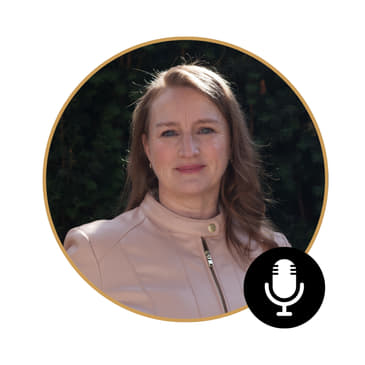


Unlock the secrets of likable leadership with Dr. Angela J. Buckley and her son, Aidan Buckley, as we explore the dynamic trust triangle model. Through their personal stories and experiences, you'll discover the critical importance of self-leadership, community engagement, and execution abilities in creating effective leadership. Aidan, through his involvement with the National Youth Leadership Training, offers a fresh perspective on leveraging individual strengths within a team, while Dr. Buckley shares insights from her research on empowering manufacturing employees. Together, they stress the transformative power of skills like time management and a positive attitude in enhancing team dynamics.
Join us as we dissect the qualities that define impactful leadership and examine the contrasts between supportive and demanding coaching styles. With frameworks like SMART goals and the Spirit of Acknowledgement, learn how timely and personal recognition can reinforce positive behavior and drive organizational growth. We also tackle the prevalent issue of burnout, emphasizing the necessity of effective delegation and time management. Methods like the EDGE method and the Eisenhower matrix provide practical strategies to manage tasks and prevent exhaustion. This episode aims to inspire proactive, inclusive leadership that aligns with your values and supports continuous improvement, offering workshops and consultations for those eager to refine their leadership skills.
00:02 - Dr. Angela J. Buckley (Host)
Welcome to Voices in Leadership, where leaders who connect, inspire and grow come to share their stories live. I'm your host, dr Angela J Buckley. Join us as we explore authentic leadership, gratitude and the power of connection through powerful conversations with inspiring voices. Let's inspire, uplift and elevate leadership that truly makes a difference together. Good morning and welcome to Voices in Leadership stories of leaders who inspire, connect and grow. This is our first episode and today I have invited my son, aidan Buckley, an aspiring Eagle Scout, to join me and, instead of me conducting the first interview, he is going to conduct the interview of me, and we'll be talking about likable leadership. So, aidan, would you like to kick it off please?
00:59 - Aiden Buckley (Host)
Of course, Dr Angela Buckley is a distinguished leader in organizational development and an inspiring voice within the world of leadership transformation.
01:08
With a PhD in organizational leadership and development, she brings a wealth of knowledge and expertise into her role as a consultant, where she excels in improving both material layout efficiencies and people effectiveness within organizations.
01:23
Dr Buckley is a respected author of Likeable Leadership, a groundbreaking work that explores the intersection of leadership effectiveness and relational trust. As the founder of the Gratitude Leadership Collective, she champions the power of gratitude in fostering positive organizational cultures and sustainable leadership practices. In the interest of sharing leadership practices across generations, as well as stories of inspiration, connection and growth, she is now launching the Voices in Leadership podcast. Leaders across industry sectors come together to share their highs and lows of their leadership journey. Each episode will include one session of the Spirit of Acknowledgement. Dr Angela Buckley's work is driven by a passion for helping individuals realize their full potential and create environments where both people and organizations thrive. Her academic background, coupled with her extensive consulting experience, enables her to provide actionable, science-backed strategies that lead to transformational change. Whether she is speaking to a global audience through her podcast or leading a workshop, dr Buckley is committed to inspiring a new generation of leaders to overcome challenges and become their best selves.
02:31 - Dr. Angela J. Buckley (Host)
Thank you, aiden. So one of the things that we want to do in this episode in general is make sure that we are talking about what the different generations want, and then we also want to talk about what likable leadership looks like and the three pillars of likable leadership. So first of all, I have a question for you. You have attended national youth leadership training for Scouting America and I was wondering if you would tell us a little bit about the experience and what youth are looking for in their leadership journeys right now.
03:12 - Aiden Buckley (Host)
So a large focus of NYLT was on the individual. A majority of our time was spent trying to figure out what each individual brings to the table so that we can more effectively utilize the team. So I think that a focus on individualized leadership could be a huge help.
03:32 - Dr. Angela J. Buckley (Host)
Okay, and so what did you take away? What was the most important part of NYLT for you?
03:39 - Aiden Buckley (Host)
Definitely making sure that you learn all of your team's strengths and weaknesses. Once you have an idea of who is good at what, you can more effectively manage tasks and diverge responsibilities.
03:51 - Dr. Angela J. Buckley (Host)
So when we talk about likable leadership, likable leadership has a trust triangle in the center of its model, and so it talks about leading yourself first, and then it talks about building community and the capability to execute, and one of the things that I really like about the leadership models that are existing within Scouting America is that we really spend more than a decade pouring into the youth, developing them and their individual skills, not just in leadership skills, but also the building of confidence in their individual capabilities, primarily in outdoor skills, so that they can become effective community leaders. And so we've seen, through a lot of research, that when leaders are able to lead themselves first, then they are more effectively able to lead community members.
04:49 - Aiden Buckley (Host)
And so how did this research come about, and who do you think could benefit the most from it?
04:54 - Dr. Angela J. Buckley (Host)
So a lot of the research, like my leadership journey, is focused on helping hourly manufacturing employees become successful, because what we really want to do is it focus on how do we become good individuals in our task, but then also how do we become good individuals in leading the teams that are around us. So we talk about peer-to-peer leadership, and many people have not had the privilege of Scouting America or some of the other leadership programs that exist in the United States, and so how do we help those same people who are working for us become effective leaders? And so it's very important to me to understand that the leadership journey for people is very different, and that we can help them become excellent leaders. I believe that leadership is not something that is born into, but is definitely developed, and so creating a framework for people to understand where their different skills go helps them create a way of categorizing what they're working on and how they can become better and more effective leaders.
06:06 - Aiden Buckley (Host)
And so what type of skills would you think that are required for different parts of the leadership journey?
06:11 - Dr. Angela J. Buckley (Host)
So certainly fundamental to leadership is being able to lead yourself. So basic time management skills being able to show up on time consistently, day in and day out is definitely a sign of leadership, and in fact, it's not just showing up on time day in and day out is definitely a sign of leadership, and in fact it's not just showing up on time, but it's showing up with a few minutes to spare and being prepared so that your team members are also comfortable that they can come in and trust you and rely on you. So it's not just about walking through the door on time and being able to punch a clock. However, it is the energy that you bring in of preparedness and calm that really makes a difference. So that is the beginning of leading yourself, and when you're able to lead yourself and really be consistent, that energy is contagious, and so that is beginning to impact your peers and the team members that are around you.
07:09 - Aiden Buckley (Host)
So those are some of the things that we look for in emerging leaders so good attitude and positive energy has a has a very good impact on the people surrounding you. This is working inversely. Can a negative attitude have a bad effect on you?
07:26 - Dr. Angela J. Buckley (Host)
Yes, and in fact, unfortunately, the ratio is like seven to one the negativity bias, the negativity bias yes. So you've heard of that, right. So what that means is that when you come in with that positive energy, you need to be seven times greater, seven times more positive, for each day that you have any negative. So I'm not saying you don't get to have a down day or a calm day or something like that, but when we become leaders, we're looking for consistency, because you're impacting all the people around you, and that means, at maximum, to be effective, you get one less than day every two weeks, right? So, just like just doing your math, think about it that way that it really has a huge impact on the people around you, both positive and negative.
08:13 - Aiden Buckley (Host)
Yes, so circling back to the leadership journey, what do? You think are some major milestones that someone might see within their work.
08:23 - Dr. Angela J. Buckley (Host)
So the first thing is that showing up consistently and doing a good job in and of your own work Certainly if you're a young engineer or in retail or some of these others we're looking for people who are able to handle projects that are a little bit beyond their scope, and that means that they are able to manage resources, which includes people. It means that they're able to influence people outside of their normal realm by speaking, by making eye contact, by working together with people, so understanding what their needs are to be successful in meeting that project. And then also time matters. Time matters in business all the time.
09:06
First to market is a very important thing, and so being able to understand how long will the project take, how many hours are you going to need, with support from other people, and then making sure that you get it done, no matter what happens in that amount of time, like by that deadline, and if not, then what does the communication chain look like to all the other people that are involved? So these projects are often smaller when you are a young professional just starting out, and then they become quite large in scope as people progress. So those first early projects are very critical to self-organization and influencing the people you're working with. So I have a question for you.
09:50 - Aiden Buckley (Host)
Go ahead.
09:51 - Dr. Angela J. Buckley (Host)
What do you want to see in a good leader?
09:56 - Aiden Buckley (Host)
I'm going to have to go with strong and energetic leader, someone who's capable of driving the team forward towards a goal that is tangible and realistic, a smart goal.
10:08 - Dr. Angela J. Buckley (Host)
Oh.
10:09 - Aiden Buckley (Host)
Something we learned in NYLT.
10:10 - Dr. Angela J. Buckley (Host)
It stands for I'll give it to you Specific, measurable, actionable, reasonable and timely actionable, reasonable and timely.
10:26 - Aiden Buckley (Host)
So so I want some. So what I want to see in a later is someone who is able to give me something that we know we can work for in a reasonable time frame that's ours, and is willing to able to push the team to get there so I want to talk to you about a time when you were on the lacrosse team and you had two different coaches.
10:42 - Dr. Angela J. Buckley (Host)
It was a few years ago, right, but you had two different coaches and one coach was the kind of mean scream-at-you bully-type coach and the other coach was definitely a you-can-do-it get-out-there, there, pump you up kind of coach. And I could always tell which coach was coaching that day based on the way that you were playing. Do you remember that?
11:10 - Aiden Buckley (Host)
Yeah.
11:11 - Dr. Angela J. Buckley (Host)
What would you adopt? What were some of the things that that good, positive coach brought into the huddle, that you would adopt as a young leader, and some of the team dynamics that you learned at NYLT.
11:24 - Aiden Buckley (Host)
So one of the things with the two coaches I found that when I had the nice and energetic coach, I always wanted to get out there and play, Whereas when I had the loud screaming coach, I always wanted to get it over with. I wanted to do it so that we would be done with it. I think that overall, the fact that I was out there wanting to play made me a much better lacrosse player. So that is a good part. And then the second part of your question.
11:49 - Dr. Angela J. Buckley (Host)
What is something from that experience? Because it was so night and day difference between those two that you would like to carry forward in your own leadership journey.
11:59 - Aiden Buckley (Host)
Definitely having a good bit of patience when dealing with someone. I found that being nice to someone even a bit more than they would expect can always get them to basically try to actually contribute back into the team. If you show that you're willing to work for them, they're going to be willing to work for you.
12:16 - Dr. Angela J. Buckley (Host)
I did not even pay him for that, but thank you. I did not even pay him for that, but thank you because one of the frameworks that I create is called the spirit of acknowledgement and so, building off of the importance of frameworks like SMART goals which I understand some people have moved beyond into key objectives, but frameworks are important because it helps people remember what you're talking about and it helps us categorize things so that, as we're learning, we can build and stack that information. And so, based on what you just said, when people are recognized and they're given extra energy by this positive feedback, I created a framework called the Spirit of Acknowledgement. So we were talking about the Spirit of Acknowledgement when we left off, and the Spirit of Acknowledgement stands for S for specific. We really want people to be very clear about what they're thanking people for, not just thanks it was a great day, but specifically thank you, you showed up, thank you you brought energy, thank you you completed the tasks on time and you completed the documentation. Being very specific about what you're thanking somebody for helps them understand how to behave better and how to continue those really great behaviors as they move forward in their journey right, whether it's leadership or technical strengths. And then we want to make it personal P for personal and that means, yes, using your name, but more than just that, it's also acknowledging the effort that went into the action. That was being recognized. So sometimes that means I recognize that there were obstacles along the way. I recognize there was potential for conflict, but you handled it very well. I recognize that this isn't a task you enjoy, but you did it anyways for the betterment of the team. So, understanding sometimes there is, and frequently there is something that happened along the way, that was difficult, that needed to be improved. So making it personal and really recognizing the effort that's associated with it drives that home and really talks about the character of the person that completed the action you're recognizing.
14:38
And because we're talking about organizational development, we have I for impact. How is that behavior impacting your corporate and organizational values? The impact is a measurable metric. We're talking about safety, we're talking about quality, we're talking about cost. What does that mean? That delivery metric, that's what we want to be talking about and we always want to be able to tie these good behaviors back to the impact that you're seeing in the organization when we move forward with spirit. We're also talking about R for relevant, and relevant has to do a lot more with the how. What are the organizational values that are being impactful? Safety is such a great one because we can always talk about safety for the I, for impact, because it's measurable. But safety is also a value, so we can talk about that as well. And then we have the second.
15:34
I followed on with T, and that refers to inclusive and timely. Inclusive means are you giving this out publicly? And timely means are you giving this out in a way that is close to the time that it was impactful? Sometimes, on really big projects, it's more difficult to do that, but on these smaller things, these day-to-days that are so critical, it's really important to be as close as possible in order to capture that success and that emotion and also to bring people forward. So when we do that, we are pulling people in, and I call it Q1 feedback instead of Q4 feedback.
16:15
That means that we're really driving activities throughout the year instead of waiting till the end of the year and looking back. In order to do that, that means you have to be very proactive in your leadership and progressive in your thinking. So that is the spirit of acknowledgement. You, my friend, have seen this from time to time because you've even said to me, mom, I've seen this from time to time because you've even said to me Mom, you don't have to do that every single time. When is a time that you recall that I've given you a full-fledged spirit of acknowledgement?
16:49 - Aiden Buckley (Host)
So I remember one time around a Boy Scout meeting I had something important I had to do. I think it was for a mayor badge. I needed to talk to my counselor preemptively before the meeting, and so I got my stuff ready to go and we were able to arrive 10 minutes early so that we didn't have to constantly have nagging. We didn't have to yell at me to get ready, you didn't have to drag me out the door, and I remember you talking to me on the way there that that was a much better change of pace than our previous weeks where we had to basically fight to get me out of the door to go to boy scouts so do you remember how I talked about, how it impacted you and how that, how your timeliness, impacted me?
17:29
uh, yeah, actually. So overall, because I decided to show up and actively participate in the whole process, we were able to get there already earlier. She was able to have less stress, which meant that she was able to get more done because she had to spend less time focusing on me my favorite thing right.
17:48 - Dr. Angela J. Buckley (Host)
So it's important to understand that sometimes getting teenagers out the door takes a little bit of effort when it comes to timeliness, and so anytime that he is ready and going and moving forward through that pace, it really takes a burden off of me, because timeliness is an important part of leadership Right, and it takes a lot of practice to get there. So, yes, so we do use spirit of acknowledgement in the household, but I also often like to use spirit of acknowledgement, of course, in the workplace, and so what that looks like is, for example, one time I walked out the door and this was before I had developed spirit of acknowledgement and the reason I developed it. So I walked out the door. I said thanks, guys, for a great day. And they said for what Our job was to identify those obstacles. And my team, they were the ones who went out and identified the obstacles and, frankly, they carried the burden primarily of some of the conflict that happened, because they were talking to people at different times and different modes and interacting, and I was handling some more of the strategy, and this is a normal distribution of work. But, as a result, on that particular day, they had a bunch of conflicts that they had engaged with, and I had just come from the CEO's office and he told me what a great job my team was doing and the impacts we were having on the organization. I had not yet shared that information with my team, but I was in a good mood and my team clearly was not, and so from that I realized clearly I had an opportunity to do a better job with my communication, and so I did what I love to do most I research and with that I came up with the spirit of acknowledgement.
19:48
It's very similar to some of the other things that you're going to hear with situational behavior, leadership and talking about making it personal, talking about tying it back to who that individual is and also adopting a framework, because whenever somebody is new, they want to learn how to do that. And, just like when we talk about smart objectives, smart goals, it's easier for somebody, as they are engaging early on with the learning, to have a framework. It's easier for them to memorize that as we become more advanced with our tool set and becomes a little more nuanced. Maybe we don't use some of those frameworks anymore, but they're a great introduction tool. So from that we now see that we can positively pull, and many of the teams that I've gone on to manage have been award-winning teams that have set records within their organization globally and also been recognized by the local governments for the impact that they have been having, particularly on safety. So I really love to use it and I also see you glow personally right when I do use it, like you do feel recognized when I take the time to use a full spirit of acknowledgement instead of just saying thanks for helping me.
21:40
No-transcript.
21:42 - Aiden Buckley (Host)
And so, how does the spirit of acknowledgement tie into likable leadership?
21:46 - Dr. Angela J. Buckley (Host)
So when we were talking earlier, likable leadership is built on the trust triangle of character development. So you have to lead yourself first before you lead others. And then on the other one side of the triangle is about building community. So now that you can lead yourself, how do you lead others and how do you influence others? And then the third leg of the triangle is about capability, and really what we're talking about there is that it's very industry specific to have the tools, the knowledge, the experience and the wisdom associated with really being successful. And around that pillar, that trust triangle, are the 12 elements that tie into that and those kind of merge come in and come out.
22:40
There's some discussion about which ones are the maximized ones, based on research and times changing. But within that we talk about honest integrity, authenticity, et cetera for the lead yourself part, and then we talk about the positivity and the celebration and being available, and so that is on the community side of it. And then on the capability side again, we're talking about generosity, we're talking about focus and really getting things done. We talk about consistency and the repeatability of success. So it's very interesting because when you do the spirit of acknowledgement, on the one hand you want to say wow, it really falls into the category of positivity, but it doesn't exactly, because it is also hitting on the other side of the triangle with celebration and consistency.
23:41
But then again, it is also hitting on the lead yourself. Part of it because it requires you to be transparent, authentic and honest, really giving credit due where it is. So the spirit of acknowledgement when you tie it up, it is a really powerful tool that hits on all three parts of the triangle. It is not the entire likable leadership system, but it's such a great entry point into likable leadership because you really have to know yourself, you really have to know your team and team members and then you have to have that capability to deliver it in a powerful way. So that's why I like to use the spirit of acknowledgement as the entry point for likable leadership.
24:26 - Aiden Buckley (Host)
And so you're talking a lot about entry points. After you get to the entry point of likable leadership, what can you do to further expand upon it?
24:35 - Dr. Angela J. Buckley (Host)
Sure. So one of the things that we often see, especially now with so many busy things and it's like there's this opportunity to be always connected is we see a lot of burnout. Right, so you might be great for a year or two and then all of a sudden you just find that you are exceedingly exhausted. Somehow you've said yes to everybody and anybody, and so you have too much work to do, and perhaps you have not learned all the skills associated with delegating. So one of the things that we move on to is being able to lead yourself, first from the perspective of setting boundaries, from the perspective of prioritizing and getting things done, but also from the perspective of learning how to delegate. So it's really important in your I'll say, junior years, in your leadership and technical development, to learn the skills, but then you have to also gain the discernment associated with not doing all the things but teaching. And that's one of the things that I really do like about the scouts as well is because they have that four-step method, the edge right Educate, demonstrate, guide and explain.
25:48
Yes.
25:49 - Aiden Buckley (Host)
Enable not explain, sorry.
25:50 - Dr. Angela J. Buckley (Host)
Enable, right. And it's very similar to the four-step method that we talk about in TWI, which is a training program that we use, which is a training program that we use, and so there's a lot to be said for these four-step methods in training and enabling. And so when I talk about the Eisenhower matrix, which is do, delay, delegate and delete, we talk a lot about delegation. And what does successful delegation look like? Because it does not mean just go get it done. How many times have I asked you to load the dishwasher and then I had to basically rearrange, right, I had to continue, I had to go do Tetris, mom on you to get all the dishes in there, so that we didn't have to run two loads when we only need to run one, right.
26:43
So that is part of delegation, is not just doing it, but teaching the person how to do it up to your level of expectations and I admit I have high expectations, right. So? But so we talk a lot about what that looks like also in a workplace, because it's interesting. As a parent, I expect that I'm going to have to teach you.
27:09
It's my job, that comes with the job description, but when we are managers and supervisors, we often expect people to already have these skill sets. Expect people to already have these skill sets, and we do not always have. Managers and supervisors do not always have the experience of 10 and 15 years of practicing the edge method, and so sometimes they're not actually effective in teaching and so, as a result, when they delegate, they're not delegating well and the outcome is that they become very burned out. And so the other part of character of leading yourself first is learning how to lead the others so that you can prioritize your own efforts and your time. Time management becomes a very critical part of successful leadership for yourself as well as for your team and community.
28:06 - Aiden Buckley (Host)
And so all this sounds really interesting. Now, if people want to work with you, what would that look like?
28:11 - Dr. Angela J. Buckley (Host)
So I have workshops, I have websites, I have courses, and so really the best way to work with me is to get on my calendar, and you can do that by reaching out to me at thegratitudeguru, and that is my scheduling appointment, and so thegratitudeguru, g-u-r-u, and then we can really talk about the situations that you're facing. I can really delve into understanding what your needs are. I am experienced as a keynote speaker. I am experienced as an author, publisher, podcaster, but I love facilitating workshops. I love going in and helping people understand what their problems are and what we can do to work together to start fixing that. It is really important that we have those kind of conversations and follow through on that discovery method, because when we define the problem really well, then we are able to get to the solution and put together a sustainable solution. The projects and the things that I'm working on these are not fly-by-night activities. They are things that we can get quick wins and then we really focus on the sustainability of all of the work.
29:31 - Aiden Buckley (Host)
Thank you.
29:33 - Dr. Angela J. Buckley (Host)
Thank you very much. I'm glad that you joined me, and I am still so interested to see what your leadership brought.
29:40 - Aiden Buckley (Host)
And I'm also interested to see what my leadership looks like going forward too.
29:43 - Dr. Angela J. Buckley (Host)
Great Thanks for joining me today. Thank you for joining us on Voices in Leadership, where leaders who connect, inspire and grow share their stories. I look forward to welcoming you back to our next conversation. In the meantime, visit wwwvoicesinleadershiplive to access show notes, links and to subscribe and stay connected. And in the spirit of gratitude, let's remember to thank one person near you Until next time. This is Dr Angela J Buckley, signing off.