
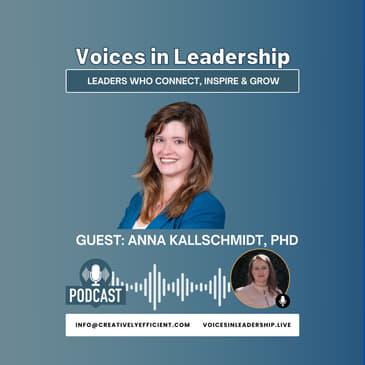


Dr. Anna Kallschmidt, a trailblazer in industrial organizational psychology, sheds light on the unwritten rules of work in our latest episode. She's renowned for her pioneering research into how social class and neurodivergence impact workplace dynamics. Dr. Kallschmidt's insights reveal the often invisible barriers individuals from low-income and neurodivergent backgrounds face and how these barriers can persist despite upward mobility. Her upcoming book aims to address these critical issues, providing strategies for fostering healthy and sustainable work cultures.
We navigate the complexities of unspoken communication in the business world, particularly at the intersection of neurodivergence and class. Dr. Kallschmidt explains how literal interpretations of communication can cause misunderstandings in corporate settings. She offers valuable strategies to improve collaboration among teams, emphasizing the importance of recognizing diverse communication styles. The conversation expands to cover cultural dynamics in the workplace, the impact of individual versus collective mindsets, and how a balanced perspective can prevent the pitfalls of overly competitive environments.
Mentorship takes center stage as we explore the SPIRIT framework—Specific, Personal, Impactful, Relevant, Inclusive, and Timely—as a tool for personal and professional growth. Through inspiring stories, we witness the transformative power of being seen and heard, amplified by effective mentorship. Highlighting the pivotal role of Dr. DeSantis in shaping a mentee's career, we examine how true leadership prioritizes personal development over administrative tasks. The episode wraps up with a reflection on AI's role in changing workplace dynamics, underscoring the enduring value of human connection and guidance in the evolving professional landscape.
00:03 - Dr. Angela J. Buckley (Host)
Welcome to Voices in Leadership, where leaders who connect, inspire and grow come to share their stories live. I'm your host, Dr Angela J Buckley. Join us as we explore authentic leadership, gratitude and the power of connection through powerful conversations with inspiring voices. Let's inspire, uplift and elevate leadership that truly makes a difference together. Well, hello, and welcome back to another episode of Voices in Leadership. Today I have my guest, Dr Anna Kallschmidt, with me. We have been, I don't know, chatting around these topics of unwritten rules of work for a year or two maybe more yeah.
00:49
Yeah, so well. Thank you for joining us. Thank you for sharing your expertise today, and it's exciting to be here. Where are you located right now?
01:02 - Dr. Anna Kallschmidt (Host)
I'm in DC at this point in time, but I moved to London in four days.
01:07 - Dr. Angela J. Buckley (Host)
Exciting times, exciting times. So let me introduce you very quickly by running down this bio here. Dr Anna Kallschmidt is a trailblazing industrial organizational psychologist. She first recognized excuse me, today she recognized as the first to publish research on the social class background as a socially stigmatized identity in the workplace. Her groundbreaking work identified how social class continues to operate as a cultural identity even after experiencing social class mobility. Experiencing social class mobility. The American Psychological Association has acknowledged Dr Kallschmidt as a leader in research on socioeconomic status and across all domains of psychology. Her cutting-edge research identifying the unwritten rules of work for people from low-income backgrounds and neurodivergents has attracted her a global following.
02:04
She shares her thought leadership on the books, on written rules of work via speaking, coaching and consulting business. Her mission is to collaborate with leaders to build healthy work cultures that are both successful and sustainable. Her mantra people versus profit doesn't have to be a choice. In a healthy organization, they support each other. It encapsulates her. To be a choice In a healthy organization, they support each other. It encapsulates her approach to organizational development. She's worked for global organizations, big four firms and consulting as well as smaller individuals along the way. So, anna, welcome Thank you for being here today.
02:44 - Dr. Anna Kallschmidt (Host)
Thanks for having me Excited to chat with you again.
02:49 - Dr. Angela J. Buckley (Host)
So I like to start off right off the bat by asking what? What has guided you along your leadership journey? How did you get here?
03:01 - Dr. Anna Kallschmidt (Host)
Hmm, I mean, I often tell people I'm just stumbling through life saying, yes, I'm one of those people who's always struggled to answer the five-year plan. I don't think that really cemented for me until like two years ago where I'm going, and I'm very thankful for that. So I think I've had a lot of opportunities that I wouldn't have even known to plan for. I've had a lot of opportunities that I wouldn't have even known to plan for, and so I think what has guided me has been curiosity, and I was always raised with the mindset of, like you should do things that matter right, like you should always be serving a higher purpose, and so I think that that probably influences as well my mission, that we shouldn't just be focusing on profit. We should also be making sure that the world isn't worse because of us, right?
03:55 - Dr. Angela J. Buckley (Host)
Yes, I agree. And how do we balance that and how do we have these conversations?
04:00 - Dr. Anna Kallschmidt (Host)
In particular, it feels that right now, that is a an incredibly relevant point yes, I swear, the introduction to my book just keeps getting longer because it's like, well, another thing just happened, so yeah um, yes, editing, editing will be fun it's easier to take away than to add in I agree. Not everyone says that, but I agree. And yeah, I already have the edits back, so just need to get those. I'm trying to get them back before I move, but I don't know if that's going to happen, so we'll see.
04:36 - Dr. Angela J. Buckley (Host)
And what is the deadline or what's the target date for the book at this point?
04:41 - Dr. Anna Kallschmidt (Host)
So they do the like 60 day presale thing now. So I anticipate that it'll be released sometime in November. But in between, like Amazon and such will do like the 99 cent download for five days type thing. So I don't know when that will be, but I'm going to try to push that because I would like it to be out sooner than later, because I would like it to be out sooner than later. But yeah, that's like the whole pre-sale window.
05:10 - Dr. Angela J. Buckley (Host)
Now that all of the stores require which is fun and relevant, really right, relevant to the times. That's a hot topic.
05:16 - Dr. Anna Kallschmidt (Host)
Yeah, yeah, I mean I'm impatient in general, but yeah, it does with how quickly things are changing. It's like, yeah, I would rather have it out sooner than later so tell me a little bit about it.
05:29 - Dr. Angela J. Buckley (Host)
Right, like um. Why did you go down this path of looking at the as classes and then understanding how some of that um initial experiences isn't lost, even though you have class mobility? How did you start there? How did you get there?
05:51 - Dr. Anna Kallschmidt (Host)
Yeah, so when I started my PhD program at Florida International University in Miami, I met with my to-be PhD advisor. So I know, you know, but a lot I didn't know. Walking in, like you're really when you apply for a PhD you're applying for to a person right, like you're working with that person and your mentor. I tell people all the time that makes or breaks if you have a good experience. And I met with my mentor and she was really great and she was telling me about all the other research people were doing in her lab.
06:17
And you know Miami is a Hispanic majority city and so a lot of it was focused. I remember one that stood out to me was somebody was researching why might Latinos choose to stay out of the workforce and like the cultural implications that they might be more likely to be stay-at-home moms because, like, only one percent of executive leaders are Latinas right, and I was like that's really interesting to me because I have grown up in an area where you were either a stay-at-home mom, even if they were poor, or you were like a stay-at-home mom even if they were poor, or you were like a CNA, maybe a teacher, but it wasn't.
06:49
There weren't a lot of Latinas, it was a lot of white people. And my advisor was like, oh, you're talking about class, so why don't you? She's like there's not a lot on class right now in IO psychology, so we'd have to start qualitative, because there's no scales we can just use. And, you know, start looking into that and let me know. And that was like the week before we started PhD classes and I was like, okay, that sounds really cool. And then my first week of classes, they literally told us, like it's in the textbooks, there are two different types of job performance task performance, which is in your job description, and contextual performance, which is all those other things. And I was like, what are all of those other things right? If they're not written down, how do you know what to do? And I know psychology is very measurement focused, like we are all about.
07:37
it doesn't matter if you can't measure it, what you measure matters, etc. And so that they just looked at me like I was insane. Like it was like what are you talking about? And I was like, oh, I guess one of those unwritten things is like you don't ask about it, right? But then after class a lot of my classmates were like I don't know what it is either, and I was like y'all are cowards. So I was already looking into class and such and I just I was like maybe that'll be my dissertation question and it ended up being my dissertation question what are the unwritten things as you move up in class? But first I interviewed white men on. Did they disclose a poor background at work, even if they were middle-class or higher? And we chose white men intentionally because there's so much. There's so much evidence of race and gender discrimination. Right that they were. We don't want this conflated, you know we want to know.
08:29
Is this still an issue? Even if you don't have race and gender stigma and like 70 of them hit it, like they, they did say there was stigma. And that resonates with um imprinting theory, which is the I, the idea that there are certain imprints, like major changes in our lives that happen when we're younger, that impact us for a long time. And the only other study at that time that used that was in business, which found that CEO behavior, risk behavior, was determined by their class background. So it was building on that theory and the idea of background. So it was building on that theory and the idea of. I mean what you grow up, the resources you have access to and the culture you're in do influence your behavior. Even if you're not always in that environment. It's where you became you, you know.
09:18 - Dr. Angela J. Buckley (Host)
It's your fallback and your default right.
09:26 - Dr. Anna Kallschmidt (Host)
Yeah, you can grow, but it's like the frame that you are right, Like maybe you put on some more muscle, but it's still your frame Right and, yeah, that's a nice analogy, so you're learning different things as well.
09:35 - Dr. Angela J. Buckley (Host)
But here you are.
09:38 - Dr. Anna Kallschmidt (Host)
Right, can't change your bones. I mean you can have your calcium and stuff, right, but you know I'm not going to have some rib removes to have a Kardashian waistline, that's just not in my cards. So. But you're still going to have your frame no matter what you do.
09:56 - Dr. Angela J. Buckley (Host)
Interesting. Okay, so in print theory you started with understanding, first studying the class, and started with white men, and then where did it go from there? And also why? A little bit of why.
10:14 - Dr. Anna Kallschmidt (Host)
Why I did it or why they responded the way they did.
10:20 - Dr. Angela J. Buckley (Host)
Why they responded the way they did.
10:22 - Dr. Anna Kallschmidt (Host)
Okay. So in the first study with white men, a lot of the number one reason they hid their background was for fear of judgment and because they didn't want any pity, which is very masculine, right, Very, because men are not allowed to show emotions that aren't anger and there's like that dominance piece of masculinity that is really pushed. And when I did my dissertation on what are these unwritten rules that you had to learn as you moved up in class, I interviewed black and white women and men and so we looked at a broader audience of what are these experiences as you move up. And then last year I built a scale off my qualitative data and included neurodivergence in all the race and gender identities in the US on looking for more statistical differences and looking at more groups.
11:14
So it's just steadily grown to look at more, and neurodivergence has been a very interesting addition because it has some very strong relationships with all but one of the rules, which was interesting.
11:30 - Dr. Angela J. Buckley (Host)
That is very, that is very interesting.
11:33 - Dr. Anna Kallschmidt (Host)
Most of the people in my family are neurodivergent and it never occurred to me to include it in my research, I think because it was so normal to me that. But once my work on class started catching up on social media, everybody was like I'm neurodivergent and this resonates, and I was like I think we had that conversation at some point as well.
11:55 - Dr. Angela J. Buckley (Host)
It is interesting. I would say our. I would argue that the majority of our family is neurodivergent and undiagnosed because high functioning.
12:07 - Dr. Anna Kallschmidt (Host)
It's interesting. My family is kind of the stereotype of the men are diagnosed, oh but, and so the women? We either were told we have anxiety or nothing and like that. So that's also very interesting is like those nuances. But there are absolutely things that as I learned more and more about it, I was like, oh, not everybody does that.
12:42
Which is like part of the I mean, the whole thing behind the unwritten rules is they're unwritten to someone who. They're normal to them. You don't have like it's normal to me as an American when I meet someone to shake their hand. Nobody had to tell me to do that, I picked up on it immediately. Okay, but if I go somewhere else where they greet differently, I'm going to need the rule book because otherwise I'm gonna shake their hand and so that's just it. I don't there.
13:04
I tell people like there's no powerpoint that wealthy people are giving their kids called here's unwritten rules. Don't tell the poor kids, right, it's just things that are assumed to be normal, that unless you change environments and then nobody's talking about it it's like like what's going on? And so what's funny about me not noticing neurodivergence was I was so used to being around neurodivergent people that my lens from when I was younger was still like, oh, whatever, this behavior is at work, that's weird. I don't know what's going on there, but, like you know, we just say like it is in my house, right, yeah.
13:45 - Dr. Angela J. Buckley (Host)
Okay, so and so where did it, where is it taking you and what are, what are some of the findings and what are people? How are people using some of the information that you have?
13:57 - Dr. Anna Kallschmidt (Host)
So I think the one that stands out to people most is the indirect communication. Okay, one of the unwritten rules that drives people nuts and even drives people nuts who aren't neurodivergent, right, or who have maybe even been middle-class for a while, who were still like it's just gotten so ridiculous, with the corporate jargon meaning anything and everything, that it's very confusing. I mean, 70% of business leaders will tell you their top problem is communication and I, as I went through, I was still consulting in the federal government and in the private sector. It just kept coming up as a problem. Just, people have a hard time being on the same page when there's this unspoken and one of those unwritten rules is that you're not allowed to acknowledge it Right. It makes people uncomfortable. Unwritten rules is that you're not allowed to acknowledge it right, it makes people uncomfortable.
14:52
And so I started implementing solutions and facilitating those conversations about trying to get down to, like, those foundational cultural beliefs that had different perceptions that are causing these confusions, and it helped a lot.
15:00
But it was like shocking to people, right to take it to that level. And, yeah, I just started building my own resources on my own, my own workshops, my own coaching strategies, et cetera, and I've just been doing that for a few years now, and a lot of it is about learning how to communicate better and also learning what not to just attribute things to, because I think we see these clashes a lot but we write them off as that person's just unprofessional or the age old. The age old oh, it's the younger generation, right, it's like the easy cop out of like, oh, this person just doesn't know what they're doing, when it's like it could be a factor of their age. But it's likely also that you're seeing it in a young person because this is the first time they have been exposed to this environment and they're from a different background. And this has been happening for a while. We're just seeing it now. So, yeah, it all, it it comes up and it it definitely impacts business.
16:13 - Dr. Angela J. Buckley (Host)
I mean, if people aren't communicating, Can you tell me some of the different communication styles or what, where you see that, where the communication breaks down, whether it's class background or whether it's um neurodivergence?
16:32 - Dr. Anna Kallschmidt (Host)
yes, so I mean you can see it right away from the interview. Okay, so from a neurodivergent standpoint or a class background, there's a very literal interpretation of words and this is still. I still get tons of comments on social media or whatever. That is a sign of a lack of intelligence and that's again that's attributing it to something, because you don't understand another culture when it makes no sense, and you know this working in manufacturing it makes it is dangerous to be indirect in many blue collar jobs.
17:13 - Dr. Angela J. Buckley (Host)
True.
17:14 - Dr. Anna Kallschmidt (Host)
You do not indirectly tell somebody that they're in the forklift's way.
17:20 - Dr. Angela J. Buckley (Host)
Right.
17:20 - Dr. Anna Kallschmidt (Host)
You do not indirectly tell somebody that something's about to fall, so if that is seen like unnecessary fluff, they would rather hurt your feelings than watch you die. And when you're around that environment your feelings don't usually get hurt because you're grateful to be alive and somebody was looking out for you right right, and so that's.
17:47
that's not a lack of intelligence. That's these people work in this environment and they go home and they talk to their families like that, and because class communities tend to work and live in the same areas, because they can afford similar things, those schools are funded by their taxes and they're all very similar, so they just all are around. The style of communication and with neurodivergence, that's just how the brain works is interpreting what is said and not necessarily interpreting contextual cues, because contextual cues can have different meanings depending on where you are, and I talk about that in my book on like a raised eyebrow in the U? S means something different than a raised eyebrow in China.
18:29 - Dr. Angela J. Buckley (Host)
Ooh, raised eyebrow from my dad. Was meant we were in trouble, right? I don't know what it means for some people, but for us we were in trouble.
18:39 - Dr. Anna Kallschmidt (Host)
It can depend on the person, too, and it can even depend Like I can be like oh, really tell me more. Or I can be like yeah. Right. So there's a lot that goes into that and there's a lot like in the West we really want people to make eye contact. There's a big push for that, while that is considered rude in certain Eastern parts of the world, right, and for a lot of neurodivergent people who are very, like, sensory sensitive, it's too much or it's distracting yes so they kind of like look into space and you're thinking and you're actually very focused, but people get angry at you for not being assertive and looking them in the eye.
19:19
So it's, it's all of these things we attribute behaviors to which actually show how narrow our view is of the world, that we're not like. It's very different to tell somebody I notice you did this thing. I notice you don't make eye contact. We usually make eye contact here. Tell me more about, maybe, why you don't do that as opposed to being like hey, so not making eye contact makes you look. Maybe why you don't do that as opposed to being like hey, so not making eye contact makes you look weak and you shouldn't do that.
19:50 - Dr. Angela J. Buckley (Host)
Correct.
19:51 - Dr. Anna Kallschmidt (Host)
Okay, well, you know, maybe they immigrated here from the East and like they were trying to be respectful, right? You don't know that when you make that assumption.
20:03 - Dr. Angela J. Buckley (Host)
So as I look off to the side because I'm responding to comments here. So how do we help people get on the same page when there is these communication issues, whether it's eye contact or words, or the context changes the meaning of the words. The context changes the meaning of the words. How do we help someone get back to the meaning and not talking about how the message was developed?
20:32 - Dr. Anna Kallschmidt (Host)
delivered. When I do work, when I do workshops with, like people who supervise others, I do have a framework for helping them give feedback and for looking for cues that somebody might be from a more communal background. One of the things again in an interview is that somebody from a working class background will say we instead of I, especially if they're a woman. Yeah, because they're used to. When you have limited resources, you share them. While in a middle class or higher environment, you're raised, you know to. While in a middle class or higher environment, you're raised, you know to be unique and to claim your accomplishments, and this you know.
21:12
It's not saying one is better than the other. But if you automatically dismiss people who interview for saying we and then you wonder why nobody in your workplace gets along or knows how to work together, that is one of the problems. You're not leveraging the yin and the yang there, right, you're not leveraging the. You need the I and the we. I mean I don't know. The Wall Street Journal just had an article come out yesterday about how Meta is having a hard time keeping these millions of dollars AI people they've kept, because they're all killing each other. I mean there's competition.
21:39 - Dr. Angela J. Buckley (Host)
They hired competition. They hired people to compete within each other and they didn't build a team.
21:45 - Dr. Anna Kallschmidt (Host)
Exactly Like these things matter. Even people tell me all the time AI is going to replace all of this. No, AI is just going to make these issues faster and bigger. It is true, you know, AI does what we tell it to do Yep, and it's an excellent tool, but it is not going to replace your culture it will. It will put your culture in your face, if you don't already know what it is. So I have frameworks for talking about cultural blending and for giving feedback or for recognizing when you think somebody's struggling with that and a lot of it is, I think. Having noticing and asking an open-ended question without making assumptions, I think it's a lot different to hear someone say this is the what usually happens here, and I want you to know this as an option for strategy versus being like you're unprofessional and you don't belong here. Exactly which employee do you think is going to retaliate and which one do you think is going to implement what you recommended?
22:51 - Dr. Angela J. Buckley (Host)
Well, also, where's the growth strategy?
22:54 - Dr. Anna Kallschmidt (Host)
Right Cultural contributors and not just fit Right.
22:58 - Dr. Angela J. Buckley (Host)
Yes, yeah, it's it is interesting. Yep, it's, it is interesting. I, I know I had a. One of the harder not hires that I ever had was a person who was skilled and I liked them a lot, but within my team they were almost the same, almost the same personality as other members in the team and I needed more. I needed different. Yeah, because the challenge was going to be that we were all going to have fun and not necessarily get work done. So sometimes you do. I always struggle personally with when the fit is right and and not biased Right. I was able to hire when I built another team. Later I hired that person and I was so happy to be able to do that because they were deserving. But I needed to fund guys in different groups not in the same group Right To build the different, to take advantage of the strengths they offer.
24:03
Right To build the different to take advantage of the strengths they offer. Yes, but not also be like we're the game team. Right Like, how do?
24:11 - Dr. Anna Kallschmidt (Host)
you find that that have those connectors is also beneficial because you learn more about how the whole organization operates. Yeah, so you can also get a bigger picture there of like yeah, do happy hour with your teams together. Yeah, learn more about what sales and maybe engineering like you wouldn't think of putting those groups together, but then knowing each other and sharing ideas is not a bad thing, right, yeah, so yeah, it's.
24:40
We like to talk about culturally how opposites attract and like romantic relationships and I love. More recently, we talk about how, like girlfriends have similar tastes in drinks, not men.
24:52 - Dr. Angela J. Buckley (Host)
Right, I saw that.
24:53 - Dr. Anna Kallschmidt (Host)
Yeah, all of these like jokes about how opposites attract, but we totally throw that out the door with work where we're like you must be like me, and then we're like how did we miss that market gap?
25:07 - Dr. Angela J. Buckley (Host)
Because we are driving productivity and not innovation, like when, when you change some of the measurements, then I think some of the answers become different. And we, I'll say from the manufacturing side right, we are driven primarily by cost and productivity. Quality comes in there, safety slides in there right, but you need innovation, you need the market, you need the go-to-market strategy, you need the voice of the market, voice of the customer, you need all of those others.
25:52 - Dr. Anna Kallschmidt (Host)
but if you're only the manufacturing arm, you're only getting measured on safety, quality, delivery and that's you know, with all the talk of silos, right now we have silos but a lot of the way it's talked about I'm like that's not actually going to fix it right. Like the flat hierarchy. That kind of seems like a scam to me. I'm not going to lie, like I'm hesitant about I've seen this in some places, but a lot of it I'm just like. So now there's just no promotion path but the silos of like how things work together and how we're measuring collective performance. I do think that's a problem and I would make the argument that productivity without looking at quality and holistically isn't usually really productivity and that's one of the reasons why toyota it has been so hard to replicate.
26:34
Uh, in my, in my book, I give the example of the numi plant, which I'm sure you're familiar with, very done inside, and I explain, you know, and I think I write um that gm, because there was not, there was a stop, the line policy, you can't stop for anything that there were. There were no errors corrected till the end, and so I said they were very quickly making shit cars. That was the productivity, and then toyota had to come in and be no, we need to look at what is the source of the error. Stop the line. Let's find the source so the line doesn't keep having the same error, which just seems like common sense, but it is harder to integrate, especially in our work culture which is very siloed and individualistic. Yep.
27:23 - Dr. Angela J. Buckley (Host)
Yep.
27:25 - Dr. Anna Kallschmidt (Host)
I would say we're focused on speed and not always actual productivity. But if you're measuring cars got out, then it might look like that but are you also measuring? Are the cars ready to go to market?
27:40 - Dr. Angela J. Buckley (Host)
Those are two different metrics.
27:42 - Dr. Anna Kallschmidt (Host)
Yeah.
27:43 - Dr. Angela J. Buckley (Host)
In the world. Yeah, yep, and you. And there's depth. Those things have changed and gotten better in some cases and some organizations, and on less complex products, it's an easier measurement as well. So the more complex, the more difficult it is. More complex, the more difficult it is Okay. So, but where do you go with unwritten rules? What if you're in a situation where you recognize there's an unwritten rule? How do we go from somewhere behind you know, either hidden or unstated, to bringing it up to the forefront? If you're a person that's recognized that out, a fish out of water in a certain situation, what's their navigation path?
28:32 - Dr. Anna Kallschmidt (Host)
Well, I mean, you know, there's the psychologist answer. It depends, right, because I'm like which rule? What's the context? How long have you been there? Who do you know?
28:44
I have recommendations in each of my chapters for staff who are like entry level and not supervising people, people, leaders in HR and I think one of the one of the most simple things to do is to, like, in a communication scenario, paraphrase, not repeat, because paraphrasing shows understanding. Anybody can be a parrot, right? Okay, so what I'm hearing is you want this and if they're like, well, no, I want this. Okay, thank you for that clarity, which is part of like narrowing down. What do they really want?
29:26
And there's so much schmoozing and flattery and such, and one of the unwritten rules of schmoozing because, again, there's not a lot of that in the working class world is learning how to put a preface to your questions, which is something you don't do in a safety situation. Right, you get straight to the point, but doing things I just want to make sure that I understand right, or I have an addition based on my legal expertise, just want to make sure we've covered it of ways to like probe deeper and underlying and the what the underlying issue is without triggering. Triggering all the fragility around of, because one of the unwritten rules is compliance, the expectation that you cannot disagree with with people, especially if they have power, even if it's informal power and I'm not, I'm not saying it's right they do. All that tiptoeing, I do, I do, I swear to God. I read some business books that I'm like OK, if somebody is this fragile, I don't really want them in charge of anything.
30:43
If you are that delicate, if you are that delicate, maybe do something else, but it does help. Like none of us like feeling attacked, especially publicly. On some level, all of us, even changing your question from why to how, can get you a different response, and that's very common on neurodivergence, because we want to know the why, because it helps us remember and it also sparks innovation of like okay, someone with ADHD is not going to have the same path to getting that task done as someone without ADHD. But if they know why they're going to get it done. But if you ask somebody why they get defensive. If you ask, how is this important to the company or how does this align with this goal, then people, it looks more like you're trying to learn instead of because I said so yeah, which is a very unsatisfying answer and doesn't help you.
31:43 - Dr. Angela J. Buckley (Host)
That doesn't help anyone, right no?
31:46 - Dr. Anna Kallschmidt (Host)
It's like cool.
31:47 - Dr. Angela J. Buckley (Host)
Because it's the way we've always done it here.
31:51 - Dr. Anna Kallschmidt (Host)
Right, which is it's really ridiculous. In all this time of change, where everybody's talking about work has never been like this. We don't even know what it's going to look like, how often we still hear, but we always did it this way and it's like cool. Clearly we pick and choose when that.
32:06 - Dr. Angela J. Buckley (Host)
So when we started working in international remote teams, we actually had a discussion because we had different cultures involved and different start times, but we were communicating regularly through emails. The Zooms weren't as strong at the time yet and we literally had a discussion on first email of the day being the polite good morning, how are you. And the rest of the emails could be like strike, get to the point, because otherwise I sent 20 emails to the same person because it's really an ongoing discussion, and so we actually talked about what the polite boundaries were going to be balanced with efficiency, I mean, for lack of a better word, right, and basically said like okay, hey, our first email of the day. How was your night, how are you? Et cetera. The rest of it is get done, get done, get done, get done, goodbye, see you tomorrow morning.
33:13 - Dr. Anna Kallschmidt (Host)
those came at different times of the day, but it framed series of conversations without having to be on your toes every single second and I think that's a really powerful practice to talk to your team about what respect looks like and how you want to be communicated with, because a lot of a big part of the problem comes from when we assume other people are just like us. Right, that we assume like a lot. There's a lot of conflict avoidance because people assume that that's how they want to handle conflict is to sweep it under the rug and that's.
33:50
I'm sorry, I've always thought that was stupid, but it just, you know it just because it's uncomfortable it doesn't mean that, one, you're an adult and you can't learn how to do it, and, two, it doesn't mean you can't set the guidelines for when there is an evitably conflict, because there will be. Yes, what is the path that we are going to use moving forward? And that I think that still needs to be on the team level? I mean, like the overall organization can set some goals, right, but on your individual team, how do you work with each other, right, right, and you can say things like when there's a conflict? I'd really feel more comfortable if you talk to me one-on-one instead of in the team meeting.
34:36 - Dr. Angela J. Buckley (Host)
That's good to know. Right, it is true, and some people feel better than others and I've seen people grow Like at first you had to talk everything, everything had to be offline and, as the manager got a little more comfortable in their own skin and realized the value of authenticity and openness, they were willing and they were just more comfortable in their position.
35:00 - Dr. Anna Kallschmidt (Host)
They knew you better and they trusted you and they knew, like you have, you're on the same page. You have the same goal.
35:07 - Dr. Angela J. Buckley (Host)
Right, and they understand that when you challenge them, you're challenging the idea, not them not them Right.
35:14 - Dr. Anna Kallschmidt (Host)
And you're also like it's. In a way, it's a sign of respect, of feeling respected, that you were brought on to bring your expertise and I'm going to talk about this from this angle and that you respect them enough to Know that they can and will give you feedback and that they can latch on to an idea that you think is good and even make it better.
35:35 - Dr. Angela J. Buckley (Host)
A common question. I like to ask people when I'm getting to know them they're new to my teams what makes you feel, seen? I like that, and it is actually a little surprising how many people frankly cannot answer it.
35:50 - Dr. Anna Kallschmidt (Host)
A lot of people don't want to be seen Like people do, but there's also people who don't, who are terrified of it.
35:58 - Dr. Angela J. Buckley (Host)
One lady, no matter how much probing and kind working around with her. She just said well, when you look at me and she would not go any deeper, would not at me and that she would not go any deeper, would not many of the others like? They started here or what do you mean by that and had a little, you know, kind of a two-step. How much do I trust before I open up, which is fair. She was not going. She was like you just have to look at me and then you can see me. Now she would not go any deeper. It was.
36:29 - Dr. Anna Kallschmidt (Host)
It was very interesting to see and in many years of asking that question, she's the only one that's really like just stuck at it you know, something I find in a lot of my coaching clients, because a lot of people come to me when they're like on that cusp of becoming an executive and they're like I just don't, I'm just hitting that wall is realizing how many even executives do not feel. Heard, oh yeah, but seen, but then there's heard, and so a lot of people don't.
37:05
Most people do not feel heard and it's it's kind of wild to think about when you around this person who you perceive as having so much power. But a lot of people act out or act in weird ways because they do not feel heard. And it's an interesting. It's a conversation I have a lot with my clients about not being like the like. I'm the last one to tell you to look a boot. Okay, I am like the class researcher rebel Right, but to also humanize your leader because they may. They may have tons of money and influence, but there is that, that little frame on the inside right.
37:48
They are also human Projecting that they're not getting this need met. Yeah they are also human. You're not going to make any progress with them until that need is met.
38:01 - Dr. Angela J. Buckley (Host)
Yep, yep, it is very interesting. There are many, many options I liked, so I've read some of your chapters.
38:12 - Dr. Anna Kallschmidt (Host)
Yes, thank you she's been my editor. Y'all loki loki.
38:19 - Dr. Angela J. Buckley (Host)
Um, completely unofficial um, but some of the suggestions right, like in the way you broke them out, as you mentioned earlier that there might be different steps that you're taking at different levels of an organization to highlight what the culture looks like operating procedures we literally say we assume a fundamental culture and a fundamental knowledge. Like I write an engineering standard operating procedure for an engineer and I write a technician's procedure for a technician, I am assuming a certain amount of knowledge and background, and I have to because I cannot write a certain amount of knowledge and background and I have to because I cannot write a book for every single job.
39:12 - Dr. Anna Kallschmidt (Host)
Now you can't write a bachelor's of engineering background, or even a master's.
39:17 - Dr. Angela J. Buckley (Host)
Yes.
39:18 - Dr. Anna Kallschmidt (Host)
In every SOP.
39:19 - Dr. Angela J. Buckley (Host)
So you do expect a certain amount of background, a certain amount of judgment and discernment based on the education and the role that they hold, and that is challenging because that assumption changes over time, which is why they do need to be edited. They do need to be walked through with a person that's been in that role, and that is what is incredibly difficult with turnover is you do seldom have the opportunity to walk through. Was it documented? Yes, was it documented adequately for the people when they wrote it? Yes, is it adequate now? Maybe not, maybe not.
40:03 - Dr. Anna Kallschmidt (Host)
I mean. Well, it does the person who may have the requirements but just doesn't have the organizational knowledge, or they can be able to pick it up on their first day and know what's going on.
40:12 - Dr. Angela J. Buckley (Host)
You know, some people still struggle to print PDFs. Do I have to tell you how to make a PDF or do I just say print it as a PDF. Right, it's real.
40:21 - Dr. Anna Kallschmidt (Host)
Yeah.
40:21 - Dr. Angela J. Buckley (Host)
It depends on your audience.
40:24 - Dr. Anna Kallschmidt (Host)
Yes, and but I do think we have done a better job of outlining technical skills than we have soft skills, and I, as an IO, am a firm believer that. But we, we do measure the soft skills when we're brought in Like we were, like no, we have ways of measuring if this person is a good communicator, if this person is extroverted, if this, for all of these things. Uh, they're not perfect, but it's a lot better than your gut feeling and we have never assessed those. I mean we, as in you know, white collar america we have never assessed those as well as technical skills, while openly saying that that's office politics and you've got to know how to play them and they're more important and fake it till you make it. And we have never expected those.
41:13
Evenly, I mean, part of why teaching is so low paid is because it used to be a male dominated field and then, when women, women's suffrage and stuff started pushing more we need to be in the workforce they literally paid women half, because the thought, the reasoning, was well, all the skills you need to be a good teacher, like being nurturing, caring about your students, et cetera that just comes naturally to women, so we don't have to pay them for it, while like a man, that's harder, so he has to be paid for it. And the irony is now, ai can do not all, but it can do a substantial amount of admin technical work. So what are we going to do now? Right, that we don't, that. We're like oh, now it's all about the personality hire and people will tell you that, but are they rigorously assessing? Do they know what personality traits are successful in the occupation? Do they know what soft skills are needed for that job? And are they assessing across the board in a fair way? Rarely.
42:18 - Dr. Angela J. Buckley (Host)
Yep, rarely. I'll agree with that. So if people want to learn more about your book and they want to learn more about your writing, how do they get a hold of you?
42:32 - Dr. Anna Kallschmidt (Host)
I'm easy to find if you can figure out how to spell my last name. So fortunately Dr Buckley has put my website below. Here on my website you can get a free chapter of my book. I also have a school community as an SKOOL which has a seven day free trial where I do weekly group coaching calls and I have a course that I'm doing live every week and putting the course materials on for subscribers on navigating workplace bullying, and the book should come out in November. But if you get the free chapter from my website you'll be on my mailing list which you can unsubscribe from. But that will also be how I notify y'all when those 99 cent download days are live.
43:12
Um, and then my handle on everything youtube tick tock is dr kalschmidt and linkedin. I'm easy to find if there, if there's, I I don't think there's another kalschmidt with the phd. So anything dr kalschmidt is me and anybody Kallschmidt in the States is, like, directly related to me. So if you want to make fun of them, you can also send me a message. It's probably my brothers.
43:34 - Dr. Angela J. Buckley (Host)
Got it Well conveniently. That is very helpful. I do not have the luxury of an unique name at this point, so Pluses and minuses.
43:46 - Dr. Anna Kallschmidt (Host)
I mean people tell me all the time they're like your email. Did you change it to bounce back and it's? You had to misspell my name, which is fair.
44:06 - Dr. Angela J. Buckley (Host)
Well, my maiden name? No. No one could get all the vowels right, so I was glad to have a married name that was easy to spell, but it went from no one has my name to everyone has my name, Including another, dr Angela Buckley, who writes quite prolifically.
44:15 - Dr. Anna Kallschmidt (Host)
So you don't want me now that you say it, my sister-in-law is a Buckley.
44:22 - Dr. Angela J. Buckley (Host)
Yeah, the Irish did the Irish thing. So, yeah, quite a few Buckleys, and especially in the United States. So, anna Dr Kallschmidt, we are now moving on to the spirit of acknowledgement portion of the show, and so I had asked you to identify a person who helped you with your career, put you on your path, that you wanted to recognize today. Do you have that person in mind?
44:45 - Dr. Anna Kallschmidt (Host)
Yes, it's hard to pick just one. Agreed, I would say the one who really that first comes to mind would be I had an undergraduate mentor really the only undergraduate mentor I had who was Dr Anthony DeSantis, and that man just never left me alone about going to grad school and like having ambitions that I didn't really know to have, being from such a rural area. So and he, you know, maintained the relationship outside of school, like as in, like after I graduated and was like I was like hey, can I get a recommendation to apply for master's? He's like you can get a recommendation for a PhD. He's like you can get a recommendation for a PhD. And I always valued how, as a woman, I could tell he had daughters, because he was always very aware of boundaries and like making sure the office door was always open and everything. It's just those things you notice, which is like when somebody intentionally makes a safe space for you, and I wish more mentors were even aware of those things.
45:55 - Dr. Angela J. Buckley (Host)
I was blessed in my academic career, so I understand. Okay, so the nice thing about what we're going to do today is that it's a framework, so you're welcome to apply this to more than one person after the show is over. Well, the framework is called SPIRIT and it stands for specific, personal, impactful, relevant, inclusive and timely. Don't worry, you don't have to memorize that all.
46:26 - Dr. Anna Kallschmidt (Host)
Okay, good.
46:27 - Dr. Angela J. Buckley (Host)
So what did remind me his last name? Oh, desantis. So remind me what did Dr DeSantis do specifically to support your development?
46:44 - Dr. Anna Kallschmidt (Host)
He connected me to higher ups in the Honors College, which encouraged me to get into a research lab where I learned more skills and was persistent in following up with my career and encouraging me to go farther.
46:58 - Dr. Angela J. Buckley (Host)
OK, and P is for personal. So the question there is what did that cost him? How did it reflect on his personal character? It's kind of two questions, so it gives you a choice.
47:17 - Dr. Anna Kallschmidt (Host)
Definitely his time, which in academia he was not tenured, so any time is time away from research, right. So his time and I'm sure compassion fatigue can be a thing when you there are so many students. I went to a very large undergrad so there's a lot of students. What do you mean by reflect on his character, like would it harm his perception or no.
47:43 - Dr. Angela J. Buckley (Host)
So if I you know, like I, I value openness and so it would demonstrate my openness, or what does he value? What do you perceive that he values, that those actions highlighted characteristics that he values.
48:04 - Dr. Anna Kallschmidt (Host)
I know that he valued seeing more women in leadership because he was involved with women's unions on the campus and I was actively, openly not feminist at that point, which is really funny that he was more of the feminist than I was and he had more of like a tough I think like tough love. When I think of him, like he would call me and he'd be like, do you really not this, or do you just not see yourself as capable?
48:30 - Dr. Angela J. Buckley (Host)
So challenging assumptions.
48:34 - Dr. Anna Kallschmidt (Host)
Yeah, exactly yeah, challenging yeah.
48:37 - Dr. Angela J. Buckley (Host)
Okay, no, that's that's helpful. And then how did that impact your career?
48:47 - Dr. Anna Kallschmidt (Host)
Oh man, everything I mean I never would have considered it an option. I had a, really I had a. I definitely had a bias against higher-ups, academics etc. And so he did challenge my perception of like, okay, maybe they aren't all with their pinkies up on the teacup type thing.
49:10 - Dr. Angela J. Buckley (Host)
Ivory tower.
49:12 - Dr. Anna Kallschmidt (Host)
Exactly.
49:14 - Dr. Angela J. Buckley (Host)
Okay, and I hear you Relevance. How does it relevant back to like your personal characteristics and the values that are important to you today?
49:30 - Dr. Anna Kallschmidt (Host)
characteristics and the values that are important to you today. I think it gave me a framework for value I already have, but seeing it applied in a new environment of. I mean my dad always said when I was growing up, like when you have an opportunity somebody else doesn't have, you need to always give back to your community. And I think this mentor showed me what that looks like when you are in an elite environment and is why, when I was doing my dissertation study, when I had research assistants, that I very intentionally mentored them and had like a mentoring plan for each student, because over and over again I saw in grad school like and an undergrad like, students are just there and they may or may not even meet the PI who writes them a letter, and I felt like I was very fortunate to run into somebody who didn't just see me as a number in a lab, and so I made an effort to replicate that.
50:23
But I definitely I think that seed was planted by my father, but like it had I don't know what they call those things in gardens that grow up Like it gave me that kind of frame to see how this, there you go, how that applies in higher education.
50:41 - Dr. Angela J. Buckley (Host)
Nice. That's a nice analogy. And then the second, I is inclusive, and that really means like making it public. When you use it in small teams, what we see is that many people don't know what good behavior looks like. Managers don't say what good looks like, and by praising people for their activities, et cetera, in front of the team, the team starts to understand what good looks like.
51:13 - Dr. Anna Kallschmidt (Host)
What to aspire to yeah.
51:14 - Dr. Angela J. Buckley (Host)
Yeah, yeah. And then T is timely, which in this case, since it's a retrospective, doesn't particularly apply. But with neuroscience we know the closer to the event that it occurred, the more impactful it is. So do you want to like thread all of that together in two or three sentences?
51:38 - Dr. Anna Kallschmidt (Host)
I think what stands out for me is that this also I've given an academic example, but it absolutely still applies in applied settings, which I'm not an academic. That's where I've spent most of my career and being in a time where, really since COVID, we do not even onboard people anymore, it seems that the importance of having leaders like that who actually develop and coach people, is even more important, and in this age of AI, where more tasks can be automated, I would love to see that being more of a priority for managers and supervisors, if they are given the opportunity.
52:18 - Dr. Angela J. Buckley (Host)
I'm sorry. What is more of a priority for them?
52:22 - Dr. Anna Kallschmidt (Host)
To have more priority on the actual mentorship and coaching goes with leadership and not because a lot of managers are still being individual contributors while doing all of these other things or doing a lot of admin, and so I would. Where I would love to see us go with AI is having those things more automated so you can spend more time on actually developing people. Yes, we'll see how that goes.
52:45 - Dr. Angela J. Buckley (Host)
Okay, do we want to try to? I hear you 100% and I completely agree with you. Would you like to summarize the thank you statement to Dr DeSantis?
53:12 - Dr. Anna Kallschmidt (Host)
remember all the pieces. I'm thankful to dr desantis for uh opening up my network and encouraging me to see past uh, what I couldn't see yeah for being persistent, uh, for showing tough love and calling me out um and it cost him I think it was a lot of emotional labor, labor and time which is not often recognized and it impacted your career.
53:36
Impacted my career in really getting me to apply to grad school which is where all the other opportunities came from and realizing that I could be around a more elite group of people and they're not all going to suck.
53:54 - Dr. Angela J. Buckley (Host)
I mean, I kind of made my career out of calling them out, but it opened the door.
54:01 - Dr. Anna Kallschmidt (Host)
OK, and the relevance? So your trellis. I think the relevance is, like I said, looking at leadership in general and looking at how I lead teams, making sure that I'm not just taking from people, that the relationship stays symbiotic.
54:22 - Dr. Angela J. Buckley (Host)
Nice, okay, support, pouring energy into understanding and challenging Dr Kallschmidt who was not yet Dr Kallschmidt at the time but encouraging her to take those next steps at each opportunity, at cost of your own energy, compassion, fatigue and emotional energy associated with all of those actions. You had a direct impact on her attending grad school, which put her into new academic environments and expanded her horizons, allowing her to really build on the values that she had already learned from her dad as far as building trellises and giving back to the communities that she came from.
55:18 - Dr. Anna Kallschmidt (Host)
Is that about it? It's a lot better than I did. It's like it's your framework or something.
55:23 - Dr. Angela J. Buckley (Host)
It's like I have a little practice doing it, but you are welcome to use it.
55:29 - Dr. Anna Kallschmidt (Host)
I love it. I love it.
55:30 - Dr. Angela J. Buckley (Host)
So, Anna, this concludes our hour, and I've really enjoyed learning more about your journey and listening more about how you really conducted some of the research and then the impact of it. So remind me again approximately when we can expect the book to be coming out.
55:51 - Dr. Anna Kallschmidt (Host)
November formally.
55:53 - Dr. Angela J. Buckley (Host)
So, November, make sure that you swing on over to the website from Dr Kallschmidt and download the early chapter. Get on her newsletter and you'll get the exact dates as they roll out.
56:07 - Dr. Anna Kallschmidt (Host)
Yes.
56:08 - Dr. Angela J. Buckley (Host)
Anna, thank you so much for joining me.
56:11 - Dr. Anna Kallschmidt (Host)
Thank you for having me.
56:14 - Dr. Angela J. Buckley (Host)
And that is Dr Angela Buckley signing off. Until next time. Thank you for joining us on Voices in Leadership, where leaders who connect, inspire and grow share their stories. I look forward to welcoming you back to our next conversation. In the meantime, visit wwwvoicesinleadershiplive to access show notes, links and to subscribe and stay connected. And in the spirit of gratitude, let's remember to thank one person near you. Until next time. This is Dr Angela J Buckley signing off.