
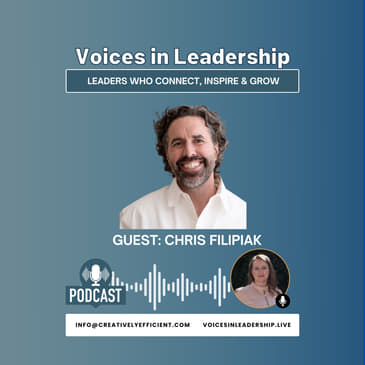

Christopher Filipiak, a former engineer turned sales consultant, brings a refreshing perspective to the crossroads of engineering and sales in our latest episode. As he shares his evolution from Ford Motor Company engineer to a guiding force for CEOs, Christopher reveals how the principles of Lean Six Sigma have seamlessly translated into his unique sales strategy. With an emphasis on reducing waste and enhancing processes, he helps leaders align their business strategies with desired outcomes, showcasing the power of system sophistication. Christopher's journey is a testament to the transformative potential of applying engineering mindset to the sales domain, making it an insightful listen for any leader seeking to optimize their business operations.
We also explore the psychological hurdles technical leaders often face with sales, unraveling societal narratives that contribute to this discomfort. Christopher sheds light on the SPIRIT framework, which has been pivotal in his coaching approach, driving both personal and professional growth. His collaboration with coach Tristan has not only honed his skills but also spurred significant business development by fostering authenticity and alignment with personal values. Highlighting the importance of recognizing a coach's values and sacrifices, Christopher's mission empowers CEOs to embrace their true selves and master financial competencies, crafting a company culture deeply rooted in these principles.
00:03 - Dr. Angela J. Buckley (Host)
Welcome to Voices in Leadership, where leaders who connect, inspire and grow come to share their stories. Live. I'm your host, dr Angela J Buckley. Join us as we explore authentic leadership, gratitude and the power of connection through powerful conversations with inspiring voices. Let's inspire, uplift and elevate leadership that truly makes a difference together. Well, hello and welcome back to another episode of Voices in Leadership. I am here today with Christopher Filipiak, and my name is Dr Angela Buckley. I am so glad to be introducing a fellow engineer, automotive recovering individual who is now working more with sales and making sure that your CEO is sales ready. We have both done our due diligence in the automotive industry, helping people reduce waste and be Lean Six Sigma kind of people, and have moved on to different parts of our careers. So I am very much excited to have this conversation with Christopher. I think we are going to have a lot of fun today. Christopher, tell us how you went from engineer to sales ready CEO. I'm interested.
01:32 - Chris Filipiak (Guest)
Yeah, it's interesting. It's like Steve Jobs says you can connect the dots looking backwards, but you can't connect them looking forward. Looking forward no-transcript. So yeah, it's interesting. You mentioned Lean Six Sigma and I'm sure we'll talk about it today. But you know, one of the main drivers of that science, of that practice, is like the elimination of waste right Excess movement, overproduction, excess conveyance and just getting that out. And there's so much waste in sales and marketing today.
02:43
So I think a lot about how we can become more efficient by removing waste from our business, removing waste from our sales process, from our marketing process. So I grew up outside of Detroit, was really good at math, loved cars and engineers had the highest base salaries based on those governmental statistical books you would read, you'd look those up and like, oh, what do I want to be with my life? And you know, the authorities in my life at the time were like oh, here's some things you can pick from right.
03:22 - Dr. Angela J. Buckley (Host)
So engineering this sounds like a familiar story.
03:29 - Chris Filipiak (Guest)
Yeah, right, I'm sure I think a lot of people you know that grew up in that time, or who you know grew up kind of post-industrial revolution, you know, have been programmed a certain way and we can definitely talk about mindset and how that impacts people. So I grew up in Detroit, was good at math, loved cars and I went to study engineering at the University of Michigan and then graduated into working at Ford Motor Company as an engineer for several years.
04:10
I was a top engineer there, mostly building F-150s and Mustangs, and within the manufacturing plants and doing continuous improvement there and really understood what it was like to work in a big corporate manufacturing environment and how process driven those organizations really really were. What happened is, on my performance reviews I'd always say I want to be with the money and the people, and my engineering managers were like what does that even mean? That doesn't even make sense. But you can be with the machines and the people, but the money and the people I don't know what that, what that means and what I.
04:52
What I came to understand is I just really loved people and I loved sales and I loved marketing and so I went back to school, got my MBA, moved to North Carolina and worked for a like a data consulting firm, a marketing data consulting firm, global company, squarely mid-market small enterprise business selling into Fortune 500 companies, and then from there I ended up working at a startup.
05:20
So one of the things that I noticed, you know, going from a Ford motor company to a mid-market consulting firm to a startup, is like the level of drop-off in terms of process sophistication, system sophistication right, and even at the firm that I worked out out of Charlotte, they were really good at what they do, but the level of processing systems and standardizations and maturity when it came to sales was not adequate for helping them achieve their goals.
05:58
So I started my firm really in 2017, kind of based on that desire to really help people with money and with sales and then having that systems background or that engineering background and going, oh, sales is just a system of systems. It's just like building like a uh for like building a race car or a mustang or an f-150, and it's just a. It's just a process. Literally, all marketing and sales is is just a process that you're just continuously improving and taking waste out of all the time. So I think it's actually a really nice, easy transition into helping with sales operations and sales enablement and go-to-market strategies, because it uses a lot of the same. You can apply a lot of those same engineering principles, ideas into improving any business process or sales process, and that's how.
06:57 - Dr. Angela J. Buckley (Host)
That's how I ended up being a sales consultant and coach for CEOs so a little bit of music to my ears, right, like anytime we say take waste out of the system. But it's interesting because last week I also had a guest on who was talking about how they're helping people CEOs also achieve their financial goals and their sales goals, and he was incredibly focused on being people centric and not necessarily creating sales systems in the same way, although I actually think in the end they're probably very similar. It's just like what your start out or what is. How do you get the people hearing and listening while they're learning in order to get there? So you seem to be very process-driven. How are you reaching those CEOs that need that support? What is the messaging that they're hearing from you need?
08:04 - Chris Filipiak (Guest)
that support? How? What is the messaging that they're hearing from you? Well, I think most people underneath, I think you have two types of messaging going on and the the the first one is the problem or aspiration at someone's current level of awareness, right, so you have your conscious mind and you're walking around, you're looking at your problems, you're looking at your environment, you're looking at your circumstance and you're like, oh, I have to solve this problem or I have to achieve this aspiration. So that's like you have to talk with people, with where they are.
08:41
And so most of my clients like, look, they wanna add revenue, right, they wanna scale, they want to add revenue, right, they want to scale, they want to grow their business by 74% in the next year or two.
08:59
They want to build a sales team, they want more time, they want support, they want to spend more time doing what they love.
09:01
So, like, that's like the surface level, but then under that, I think I think most people are looking to have what they truly desire, get in touch with their purpose and remember who they are. Right, I think underneath that, and I think those, those businesses and those problems are can tend to be like vehicles or things we do or actions we take to try to under under, uncover who we really are and what we really desire and what our purpose actually is. So you want to speak to, like you know, the current level of awareness, but also you want to speak to the heart and the truth of who that individual is. Yeah and it's. I don't think it's about you know, trying to go like, hey, you need to be system centric or you need to be people centric. I think there's a recognition of you know, sales is a system and people are part of that system. They're a really important part of a business system, but it is. It is a system.
10:08 - Dr. Angela J. Buckley (Host)
So it is a system.
10:09 - Chris Filipiak (Guest)
Yeah.
10:11 - Dr. Angela J. Buckley (Host)
So it's very interesting. We often reference the Nobel Prize winners of 2017, kahneman and Taller, on this show, because that was that was the year that they really proved that the purchase is often made emotionally and then justified rationally and the challenges that we have, especially those of us who work in the engineering world and trying to approach that with a value add sales first, approach from rational numbers, when in fact, it's really been shown that it's an emotional purchase, with rationalization afterwards.
10:56 - Chris Filipiak (Guest)
Yeah, 100%, angela. 100%. That's how it is and that's why you know when I'm talking about sales, you know one of the most important things in your sales conversations is try to help that person get in touch with what they truly want, right, and not many of us are actually taught or even allowed when we're young children to know how to do that. Like it gets programmed out of us at a very young age which goes back to like here's your choices, here's what you can be when you grow up, instead of like oh, what do you actually really, really want, what's your real truth in there? And so when you can start to help people get in touch with that, that's how that's. I think that's that's messaging that really resonates.
11:50
And you know, if it is, if it is emotional and emotional, it's not bad and it doesn't. It can be used to manipulate, right. But you know it depends where you're coming from, what your intention is in sales. If you're really looking to help people and influence them to get clear on what they want, there's going to be an emotional component of that and I don't think that's manipulative. And that's where I really talk about this idea of like sales as an expression of love or sales as an act of love, because it really is because you're.
12:24
The coolest thing about sales is when someone buys from you, that you, in that moment, sure, like the, there's an exchange of dollars and service and value, but the coolest thing is like you're helping that person change their life. Yeah, whatever you sell like that, that sale represents change and growth for that, for that person, and I think that's showing up to do that. Like that, that sale represents change and growth for that, for that person, and I think that's showing up to do that Like that is an act of love or that is an expression of love to do that for someone else.
12:54 - Dr. Angela J. Buckley (Host)
It helps solve a problem. If you're doing sales correctly, you're solving a problem. Yep, so it's. It's powerful. So, while you were gone, so it's powerful. So, while you were gone, one of the questions that I suggested we would be posing is how do you turn your employees into salesmen as well? One of the challenges I've often heard in our corporate settings was that our employees need to think more like entrepreneurs, and the pushback that I often gave was are you going to give them the freedom that we give entrepreneurs? So we want them to be thinking with the freedom of an entrepreneurial mindset, but we want them to behave within the structure of a large scale corporation. How do we, how do we help people kind of find the right balance for their organization? The answer may be different for different places, but how do we help people get there?
14:00 - Chris Filipiak (Guest)
Yeah, it's a really interesting question because fundamentally, an entrepreneur is very different from someone who has a job yes, right does.
14:11
It's like there there's just completely different set of truths instead of realities for those, for those people, um, people, and you know some things that are coming up and I don't know like it's something we can explore right now and I, you know, you know, I think training and culture like come to mind. I think you have to build, build a team or build a culture, I mean, or build a culture. I mean. The thing about entrepreneurship is that the level of personal responsibility is so high for meeting your own needs in life and being able to create what you want whenever you want and need it, right and like. That's on you, you, and that's very different than having a having a job where you're going to show up to work and you're going to get paid, whether you make sales or do a good job that day.
15:15
For the most part, no matter what, and so you kind of and there you kind of um hand over the responsibility for you and your life to your employer to some extent, like you're part of the team and you're part of co-creating. But I think that speaks to building a culture of 100% responsibility for your life. I think that's what that mindset really comes. I think that's part of it. And then I think there's a commitment of helping your team get in touch with what they really want and what they really desire and how. The job is a vehicle to achieve that right. The job isn't a vehicle for money coming into your life. The job is a vehicle to achieve that right. The job isn't a vehicle for money coming into your life. The job is a vehicle for helping you discover who you really are and what you want, and be part of a part of a team. Let's see if there's some more, anything more there to help that team be more. Oh, I think you know and this is like just some fundamentals of a team is like look, you have to have clear agreements, clear expectations, psychologically safe, normalizing mistakes Like those are all things that entrepreneurs start to understand and start to be in their person. Right, that you can build a culture around you know, but it's to your point, angela, like if you're not creating an environment that is psychologically safe, free to make mistakes, free to make decisions right and you're trying to. Free to make mistakes, free to make decisions right, and you're trying to. You have this very hierarchical leadership style, right, and you're not letting your team make decisions or be responsible for creating the outcomes. You're just not your mindset. Your strategies and tactics are not set up to create an entrepreneurial workforce, right? So you have to really look at what is the effect that you want, right? And if it's to be more creative or be more agile or be more competitive, be more competitive, whatever that is. And the strategy and tactic is to have a entrepreneurial team or hire entrepreneurial employees or hire more sales people, whatever that strategy and tactic is.
18:07
You want to look at the things that actually create that yourself and really ask yourself is that, um, an effect of what I want, because it's something I talk about my client, with my clients all the time. Is this this idea of getting to the truth? And one of the truths is that we live in a world that's based on cause and effect, and, as an engineer like I'm sure you appreciate that, right? So it's like people will come up with these ideas, you know, oh, we need a more entrepreneurial team. And I'm like, well, do you? Or we need, we need to write a book, or we need to fix our website, or we need to hire more salespeople. And it's like those are causes, they're not effects. And I go, hey, wait, let's slow down. What is the effect that you're actually trying to create, right?
18:50
Right so if you can know the effect, then you can reverse, engineer the right causes and maybe it's an entrepreneurial team, maybe it's not an entrepreneurial team. It depends what you're trying to do, like if you're. You know, if you're building a, an amazing football team, you're not looking for a bunch of entrepreneurial people on on your team. If you're building a highly creative, fast moving startup, maybe you do want a culture that's more entrepreneurial. If you're building a or running a I don't know a legacy bank or risk management institution or a military outfit, maybe you don't want an entrepreneurial team. So I think it's. It's understanding, going like, hey, this is the effect that I want. Now, what are the, what's the strategy and tactic that'll cause that? And then also what's the mindset that I need to be bringing in terms of helping create that right, and that's kind of a framework that you know my clients use and the audience can use in terms of building a really strong team.
20:05
To answer your question about the sales people like, hey, we want more people. Thinking like sales people, that's really kind of a decision to go like hey, the truth is we're kind of all born with sales skills, like we know how to exchange things with other people, like you know, humans are really good at exchanging things and all sales is is an exchange of money for goods and services, and money is a tool to facilitate the change. So, yeah, you can improve at your sales skills, but I think it's, you know, understanding that sales is something that we all are and the challenge with sales is like sales for whatever reason, has started to be attached with this like icky, not good, and there's so many stories around strangers and money and rejection, and you know sales touches all of that. So it can be really it can be something that people resist and have a an inappropriate mindset around and that that has to be reprogrammed first so people can recapture, like the truth, that sales is amazing, like it's fine, it's something that we naturally do as humans.
21:26 - Dr. Angela J. Buckley (Host)
So. So sales is something we naturally do as humans. And yet I'll just say, many people that I've met coming out of high school, and certainly in the engineering world, are uncomfortable with sales. And if you're looking at maybe more techie CEOs, how do you help them go from the tech to the value add, to the sales you said before sales leadership. What does that mean?
22:06 - Chris Filipiak (Guest)
Well, I think they're not uncomfortable with sales. I think they're uncomfortable with something inside themselves, right, where, you know, they either have stories about money or they have stories around rejection, or they have stories around stories or programming or beliefs around, um, what sales is right? Like they think that it's something that they do to people instead of something that they do for people. And so all of that mindset, all that subconscious material right, and all the sensations it creates in our body, is what they actually are uncomfortable about. They're also uncomfortable about strangers. So, like, as little children, we get programmed in all this material around strangers and money and what we can and can't do and what is and what isn't safe. And, as you grow up, a lot of those patterns that we developed as children are still operating, right as 30 year olds, 40 year olds, 50 year olds, 60 year olds. Sometimes it all operates all the way until we're dead, you know, and that stuff gets passed down and that that's what's uncomfortable.
23:22
So, you know, and there could be a little sure there could be a little skill gap as well, right With just like how to have a sales conversation which is not that hard to have, or how to do some of the business things you need to do, but it's really working with someone. But it's really working with someone. This is why coaching is so important. For the technical leaders that I work with and the technical CEOs is you have to really look with. You can't just work with being uncomfortable. It's like, okay, cool, if I'm just going to focus on problem solving or uncomfortableness, you're working with what you don't want right.
24:15
Instead of working with what you actually do want, so great, you're uncomfortable. What's your goal? Oh, I want to bring more money and revenue into the business. I want to be better at sales. Cool, how can I do that? And part of that's just the decision going oh shit, like that's an area where I need to grow right, like those uncomfortable moments in your life or those triggers or that resistance. That's where your body is going. Oh, that's an area where there's something that's out of alignment some wounding, some trauma. That's a place where I can grow.
24:51 - Dr. Angela J. Buckley (Host)
Chris, can I see if I understood what you were talking. Maybe just rephrase that? See if I'm clear. You're suggesting that a ceo can recognize that they're uncomfortable and grow through that, as opposed to just staying uncomfortable and then shying away from it. Yeah, that that's the, that's what you're expressing in this 100 and they're not.
25:19 - Chris Filipiak (Guest)
You're not going to get to where you need to be unless you grow through that discomfort.
25:25 - Dr. Angela J. Buckley (Host)
Got it.
25:26 - Chris Filipiak (Guest)
You know why.
25:29 - Dr. Angela J. Buckley (Host)
Why Tell me?
25:30 - Chris Filipiak (Guest)
You end up making decisions from the discomfort instead of truth, okay, and those decisions determine the actions that you take and those actions create your results. So, if you're uncomfortable, you're going to avoid making decisions that that trigger you to be uncomfortable. And again, we live in a world that's based on cause and effect right, so you want to be making decisions from a place of truth and cause and effect, not your own discomfort.
26:01 - Dr. Angela J. Buckley (Host)
Instead of hiding.
26:03 - Chris Filipiak (Guest)
Instead of hiding or doing whatever self-sabotaging, resisting like picking things that are easier, yeah.
26:10 - Dr. Angela J. Buckley (Host)
Got it, got it. I just wanted to make sure I was clear with your discussion.
26:16 - Chris Filipiak (Guest)
Yeah, awesome.
26:17 - Dr. Angela J. Buckley (Host)
So, Chris, Christopher, I apologize. When do people recognize that they need your help?
26:28 - Chris Filipiak (Guest)
People recognize they need my help when they aren't doing the work that they love. They want to add money to their business, or they want to add revenue to their business. Yeah, um, and I think the the the point is when they look around at their environment or their life and they're like, oh, this isn't what I want, want something different, or I I want to be. It's really two things. It's it's I mean, at the current level of awareness.
27:01
It's like I want to add more revenue, I want to grow revenue, or I want to feel good, and most of my clients want to do both. Like the feeling good, because CEOs are under a lot of pressure and stress and they're overworking and they're on the edge of burnout and they're not doing what they love and they have teams that are, you know, at various levels of performance or non-performance and they're holding all of that right. And so the CEOs I work with are like, oh, I'm ready for some space and some freedom and some relief and some strategy and some more money in my pocket. Right, that's when my clients reach out and work with me okay, okay.
27:47 - Dr. Angela J. Buckley (Host)
And what's the first um interaction with you? What does that look like for them? What's their experience?
27:55 - Chris Filipiak (Guest)
my business does three things because I think they're they're critical to creating a result. And this is where I think a lot of other coaches and consultants miss. And you know, I think they get into the trees right and they get very specialized out at what they do. And part of what I help my clients do is go hey, let's think of this from a place of cause and effect. And when, when we do that, there's always three. In my experience, in knowing angela, there's three main causes.
28:28
It's, it's mindset, and I just loosely define mindset as how you think and operate your body right. Like, what are you doing with this package that you showed up on earth with? Like, do you know you know how to operate it? Do you know how to feel? Do you know how to think? Do you know how to sense your body sensations? Like, what do you do with all that? When those uncomfortable feelings come up? Like, how do you actually think? And so that's mindset. Then strategies and tactics is just like the thing that you do that you think will get you the result. And then the activity is just how consistently you do it. So you know, a simple example is like you, you want to get stronger right. So your mindset is some mindset skills around. That is, clarity on what it is you actually want, like what does it mean to get stronger? Is that your arms, your legs, your butt Like? Is butt like? Is it running, is it biking like?
29:26
let's create some clarity around them both right both I'm a triathlete, so yes, yeah, there you go there you go, um, so that's your, that's, that's some mindset skill. And then you know, when you get tired or sad or happy, like, what do you do with those body sensations and those feelings? Your strategy and tactic is probably going to be to ride your bike or go to the gym, right. It's not going to be to eat pizza or sit on the couch, like you're going to have. It's not going to be to make sales, right. It's not going to be to start a business, like. You're going to pick a strategy and tactic that's based on what it is you want. And then the activity cool, you have the right mindset, you got the perfect strategy and tactic. You've hired the best you know biker, you've hired the best runners, you've hired the right coaches. But again, if you don't, if you're, if you only do that twice a year, you're not going to get the effect right that you, that you want. So the activity is like a skill set within its own thing as well. So when I work with clients, we work in those three buckets, because coaching helps with mindset. So we want to do coaching and we want to do some work with the body to help move your trauma, feel your feelings, like that has to happen. We work on strategies and tactics, which I call mainly.
30:49
My business uses a framework that I call a sales ready organization. That goes let's look at your mindset, leadership, marketing, sales and project management for your sales operation. Like that, start to put in those, those, those pieces of the system, like I think of a race car, like that's the tires and the engine and the chassis and the body and the wing right and the driver, and all that part becomes part of the strategy and tactic and that becomes a sales ready organization. And then the last thing is just helping with activity, like my firm does, daily selling support, because CEOs have a lot on their plate and they tend to be really inconsistent with their sales activity.
31:36
And you have to do sales every day, but you don't have to necessarily do it all day and all by yourself. That's why having you know I always think of it like a pit crew. Having a pit crew, someone to help you out, is a game changer. So when I start with my clients, we typically will start with coaching and an assessment of what's currently going on, like, come on, let's just get an understanding of what's you're doing well, because you've grown to whatever level you've grown at, what's working, what's missing, what needs improvement, and then that's really start with coaching to really dial in on what's required to bring the beliefs up to match the desire and what that actually desire. What is? What is it that you really, really want? Like, what are you doing with this one wild and precious life?
32:29 - Dr. Angela J. Buckley (Host)
The one wild and precious life. Absolutely so, chris. That brings us to the next section of our show, which is the spirit of acknowledgement, and if you recall back, I know it's been a few months since we actually started our conversations. I asked you to bring one person that you would like to recognize for helping you along your journey, and so I would love to have that conversation right now.
33:03 - Chris Filipiak (Guest)
Yeah, for sure.
33:05 - Dr. Angela J. Buckley (Host)
So who would you like to recognize today?
33:09 - Chris Filipiak (Guest)
I would love to recognize my my first mindset coach Tristan Duttner.
33:14 - Dr. Angela J. Buckley (Host)
Okay.
33:15 - Chris Filipiak (Guest)
I've coached with Tristan Tristan for many, many years.
33:20 - Dr. Angela J. Buckley (Host)
All right.
33:21 - Chris Filipiak (Guest)
He um one day in February of like 2018, changed my life, you know Okay. And has continued to so.
33:33 - Dr. Angela J. Buckley (Host)
So let's go through the spirit of acknowledgement framework and stitch together a very concise thank you. Is that all right?
33:43 - Chris Filipiak (Guest)
Of course I love that.
33:45 - Dr. Angela J. Buckley (Host)
Okay, so SPIRIT stands for specific, personal, impactful, relevant, inclusive and timely. So what did Tristan do for you specifically?
34:00 - Chris Filipiak (Guest)
Well, specifically, he coached me.
34:02 - Dr. Angela J. Buckley (Host)
Okay.
34:04 - Chris Filipiak (Guest)
So we coached together on a weekly basis and I think what I think there's two things that he did for me. One was to help me get in touch. Remember. Heal like who I was in my relationship to like all of life.
34:29 - Dr. Angela J. Buckley (Host)
Okay.
34:30 - Chris Filipiak (Guest)
And I think the other thing that he he did is he, he, he helped, he helped me get in touch with what, what it is that I really want, right, I think that's what a coach is there to do.
34:43 - Dr. Angela J. Buckley (Host)
I think coaches have many different functions, so that is absolutely powerful, and if it is exactly what you needed, then he's done a good job, right.
34:54 - Chris Filipiak (Guest)
Yeah.
34:55 - Dr. Angela J. Buckley (Host)
So, and how do you think his actions reflected on his personal values, or what did it cost him?
35:08 - Chris Filipiak (Guest)
to be a coach for you. What do you mean?
35:13 - Dr. Angela J. Buckley (Host)
So the P, when we talk about being personal, it is a recognition of their personal values and their personal costs for pouring into you right For the specific actions that they took. So what do you see? That reflecting what did his specific activities in coaching either cost him, like energy, time, skill set, or reflect on his personal values, like showing them, shining his values through.
35:50 - Chris Filipiak (Guest)
I don't know if this answers the question, so if it doesn't, we can dial it in, but I think it's really love. He taught me love in a different way.
36:06 - Dr. Angela J. Buckley (Host)
He taught me love in a different way, and love is a value that he espouses. Love of self and love of mankind.
36:15 - Chris Filipiak (Guest)
I'm asking you, yeah, I think, love of himself and love of mankind and love of your clients.
36:22 - Dr. Angela J. Buckley (Host)
Okay.
36:23 - Chris Filipiak (Guest)
Yeah.
36:24 - Dr. Angela J. Buckley (Host)
All right, nice, thank you. And then, how did that action of coaching and helping you heal have an impact on your career?
36:40 - Chris Filipiak (Guest)
Well, I think I I learned to show up more from a place of truth.
36:44 - Dr. Angela J. Buckley (Host)
Well, I think I learned to show up more from a place of truth.
36:48 - Chris Filipiak (Guest)
Okay, be more honest and just understand. I think the other thing is you know, when you invest in yourself and coaching right, you know you become a much, much better coach yourself. You become a much, much better coach yourself Like if you're willing to like, be in the work and do the work right. You gain the experience of doing that and then you can speak and teach and coach from that experience.
37:21 - Dr. Angela J. Buckley (Host)
Can you please give me metrics Like what are the metrics of that Like did you become a better coach? Did you get more clients? The impact one is truly a metric measurement.
37:36 - Chris Filipiak (Guest)
Yeah, so I'm a way better coach today than I was when I started my business eight years ago, like okay, so the the speed at which I can help my clients get results is way faster.
37:52 - Dr. Angela J. Buckley (Host)
That's a great metric. Do you have like a percentage or something on two X, four X?
37:58 - Chris Filipiak (Guest)
I don't have like I don't know. Like in the beginning you know it could take months or months and months for clients to get results. Right In the beginning you kind of think you know what you're doing but your clients are like you're kind of in this weird, like hey, I'm helping you but your clients are helping me, like you're learning from each other as you. But like once you, once you stay in business and you help enough people, you start to recognize patterns and really understand like what's required to get a result really, really quickly. So most of my clients like I just started working with a client and most of my clients are getting results within days or weeks with me instead of months or years, and so that makes a big difference. And I think you know, just in terms of my own business, like my revenue and the level of client that I'm working with is way different than when I started working with Tristan, and he's a big part of that.
39:09 - Dr. Angela J. Buckley (Host)
Okay, thank you. And how does that specific coaching and the love that you're talking about show the relevance of you personally or of the company that you're that you are now leading and guiding? So this, this ties back to company values okay, could you ask the question again? Yep. So when we talk about r for relevance, we talk about how the specific actions. So in this case, he was helping you find your personal truth, and how does that relate to who you are and who you, how your company functions now?
39:57 - Chris Filipiak (Guest)
yeah, well, in terms of you know who I am, it's, it's been, it's been a personal journey for me around understanding what I really want to be doing with my life and who I, who I really am.
40:11
And I think when, when I do that, what happens is as I build my company, I want to give that as a gift to my clients as well. Like I want to be safe space for people to be who they are and I want to help them have the money to do it right, like and so like, my whole business is about helping CEOs remember who they are and have and grow and like, have like master money so that they don't have, so they don't ever have to worry about it anymore. Right Cause, once you develop a competence around money and it is just a skill set, you know, and a sales is a part of that money skillset and you develop a competence around operating your body and and and have, having space to be who you actually are. That's like that's been my journey and that's what that's the company that I'm building and that's what I help my clients with Okay.
41:15
Yeah.
41:16 - Dr. Angela J. Buckley (Host)
Okay, so is it. I'm going to try to put all of that together. Okay, so, when you talk about specific personal, impactful and relevant, the second I is inclusive. So when you talk about specific personal, impactful and relevant, the second I is inclusive. So, kind of making it public or you follow this method If you're in a team, you would give this recognition in front of the team to a person.
41:39 - Chris Filipiak (Guest)
And.
41:39 - Dr. Angela J. Buckley (Host)
T for timely means right, similar to SMART goals. You want to be as close to the event as possible to capture that emotional wave.
41:49
These are retrospectives, so we don't worry about the t as much for this situation yeah so, tristan christopher would like to thank you for the energy that you poured into him as a coach, for teaching him specifically how to heal, get in touch with himself and understand money systems and who he is, so that he's got he is working within his own truth.
42:25
This has been a reflection of you and the love that you hold for yourself, for your clients, and helping them also extend that out to the fellow mankind. This impact on Christopher's career specifically has been that he has been able to increase the number of clients, the level of clients, as well as help his clients achieve their goals, not within months or years, but sometimes even within weeks and days. So that constant pouring in and that constant refining and coaching of his work has extended out beyond just him, also to his clients. And the relevance of all of this is that Christopher is able to love himself and walk within his own truth. So thank you for all of the time and effort that you poured into Christopher as he has developed along his career.
43:39 - Chris Filipiak (Guest)
That's so beautiful, Angela.
43:42 - Dr. Angela J. Buckley (Host)
Does that work?
43:44 - Chris Filipiak (Guest)
Yeah, what a beautiful practice of gratitude and acknowledgement for the people helping you in your life.
43:53 - Dr. Angela J. Buckley (Host)
Thank you, I appreciate your your words. It's interesting how long it takes sometimes to like find all of the elements to put it together. So I think, as we get practiced, just as you were saying, right, we do it more and more. And I can do this in my life because I'm looking a little bit more, I can do it more quickly. But the first time I did it and it and it's a little bit vulnerable, right, like you have to really know the person to be able to talk about what it costs them to help you.
44:34 - Chris Filipiak (Guest)
And the first time I did one of these kind of up up front in a room and had like a little bit of sweat going on, right, so it but you're, but it's a touching you're, you're building relationships with a thank you yeah, I think that's a really good you know, like um, recognizing that and and I think you know when I, when I think about sales or I think about like being a buyer, recognizing that that person is showing up to change your life Right, and like buyers aren't walking around like being like super grateful or acknowledging that, that, that, that, that that cost that person to something to show up and help you.
45:24 - Dr. Angela J. Buckley (Host)
Right.
45:25 - Chris Filipiak (Guest)
And and most, most buyers think that they're they're the one giving, right there because they're giving their money.
45:34
But when you, you, you start to come from, like I talk about that sales is an expression of love, and you start to embody the truth that you're the one who is, of course, you're giving service and helping create change, but like, you're there giving a gift to that other person and it costs you something to do that, and you want, you want to make sure that the people who you're spending your life with, that you're you're helping, are really the people. And that's where you, when you can show up with that, from that place of truth, when like, oh, I really can help this person and it's going to cost me something to do that, do I really want to do that? And then you're evaluating the situation from a from a completely different perspective, and that's if you do that. As a technical engineering founder, you're there's not going to be anything uncomfortable about doing that, because you're not trying to get anything. You're, like, thinking through it, going like, oh, this is actually going to cost me something. Do I want to help this person?
46:38 - Dr. Angela J. Buckley (Host)
Yes, right, yes, yeah. So, um, christopher, tell people how they can get ahold of you, please.
46:48 - Chris Filipiak (Guest)
Yeah, for sure you can find me on my website. There's some great articles about sales, especially around how feeling your feelings helps you make more sales, and also some an invitation to CEOs to really lean into mastering their own sales effort and skill. Those are on my blog, on my website. My website's ChristopherFilipiakcom, and then you can find me on LinkedIn LinkedIn forward slash ChristopherFilipiakcom. So that's the best way to do that.
47:23 - Dr. Angela J. Buckley (Host)
Okay, well, Christopher, it has really been a joy listening to you and understanding a little bit more about sales mindset and how CEOs can take that next step, so thank you very much for joining us today.
47:37 - Chris Filipiak (Guest)
Yeah, you're so welcome. Thanks for inviting me on to be a guest and thank you so much to the audience for taking the time to be here and listen to us today.
47:48 - Dr. Angela J. Buckley (Host)
Great, this podcast will drop next week. I'll let you know.
47:53 - Chris Filipiak (Guest)
Cool.
47:54 - Dr. Angela J. Buckley (Host)
This is Dr Angela Buckley. We are signing off for this episode of Voices in Leadership. Thank you for listening. Thank you for joining us on Voices in Leadership, where leaders who connect, inspire and grow share their stories. I look forward to welcoming you back to our next conversation. In the meantime, visit www.voicesinleadership.live to access show notes, links and to subscribe and stay connected. And in the spirit of gratitude, let's remember to thank one person near you Until next time. This is Dr Angela J Buckley signing off.